Triumph Dolomite and Toledo: Canley's small saloons, from 1300 to 1850HL (1970–1980)
The Toledo of 1970 turned Triumph's front-wheel-drive 1300 into a cheap rear-drive saloon, and the Dolomite 1850 of 1972 added the slant-four engine Triumph had designed and sold to Saab. The 1976 rationalisation, the 1300, 1500HL and 1850HL, how few survive and what to check before buying one.
Built 1970–1980 39 recorded sales
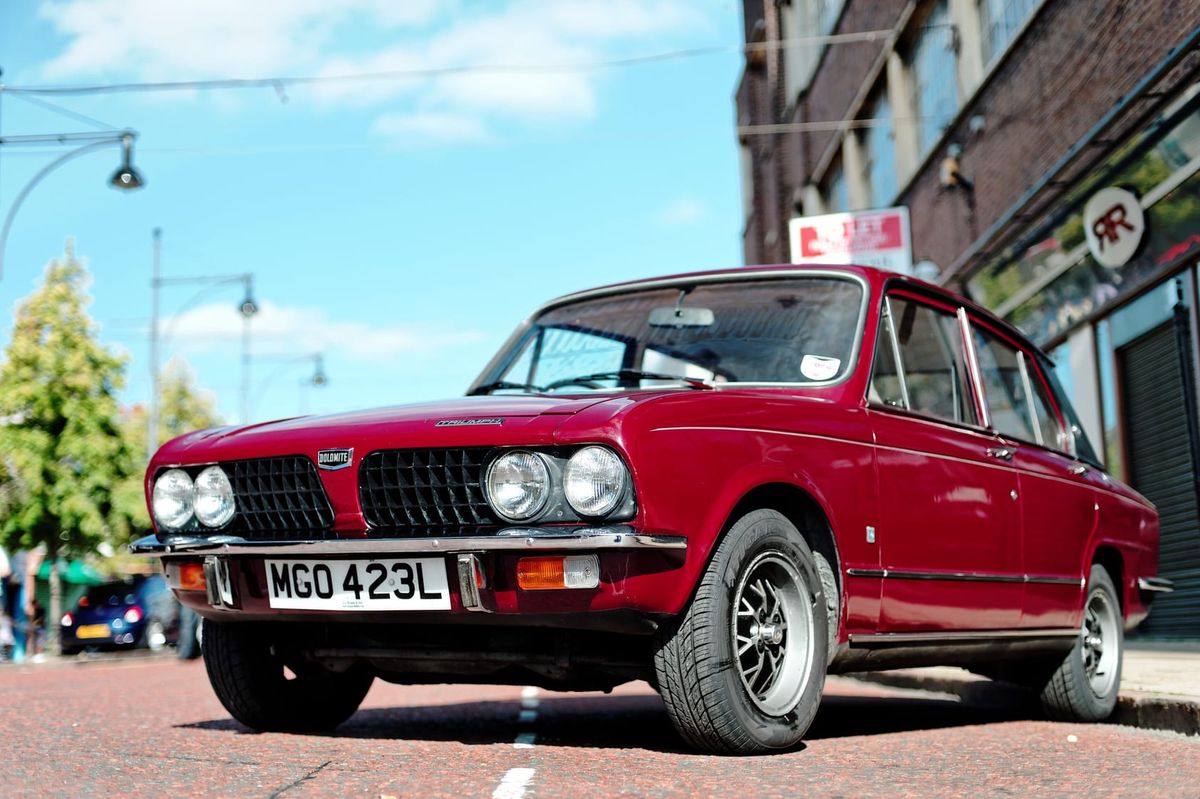
At a glance
- Years
- 1970–1980
- Body styles
- Two-door saloon (Toledo, to 1975), four-door saloon
- Drivetrain
- Rear-wheel drive
- Engines
- 1.3 and 1.5 OHV fours; 1.85 slant-four OHC; 2.0 16-valve in the Sprint
- Power
- 58 bhp in the Toledo 1300 to 91 bhp in the 1850; 127 bhp in the Sprint
- Trim levels
- Toledo 1300 and 1500; Dolomite 1300, 1500, 1500HL, 1850HL, 1500SE, Sprint
- Production
- 119,182 Toledos; Dolomite totals vary by source from about 177,000 to 204,000
- Assembly
- Canley, Coventry; Toledos also at Speke
- Designer
- Giovanni Michelotti
- UK survivors
- Mid-2026 DVLA figures: 140 Toledos taxed and 168 on SORN; 93 Dolomite 1850HLs taxed and 98 on SORN
- Values
- Around £3,900 median at auction; most cars £3,000 to £5,000, the best 1850HLs much more
The models
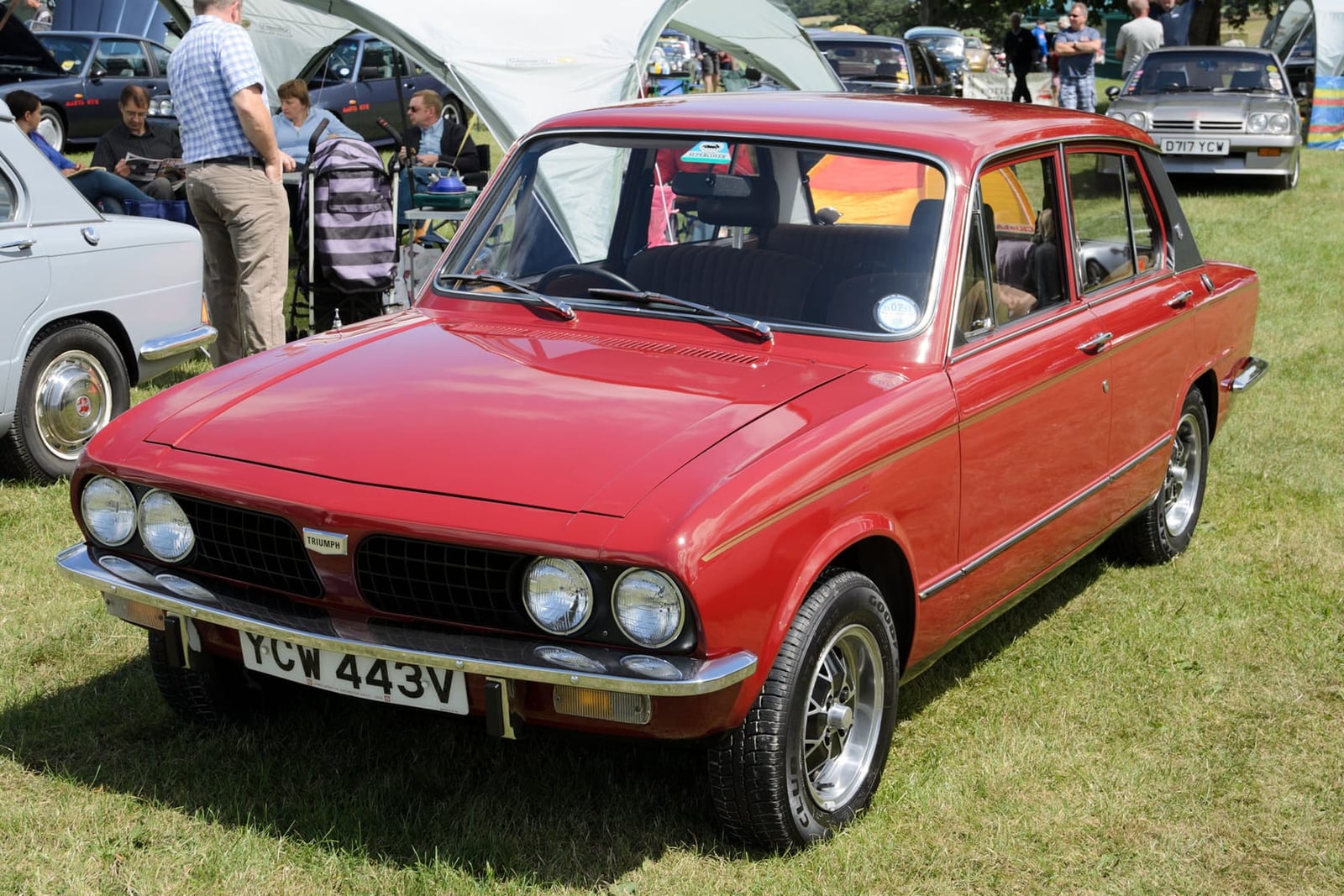
Triumph’s small saloons of the 1970s confused buyers at the time, and they still confuse people now. One Michelotti body was sold as the front-wheel-drive 1300 and 1500, the rear-wheel-drive Toledo and 1500TC, the Dolomite 1850 and the Dolomite Sprint, until in March 1976 Triumph gave up and called every one of them a Dolomite. The rear-drive cars below the Sprint have their own story, their own survivors and a much cheaper market.
The Toledo: a cheaper way to build it
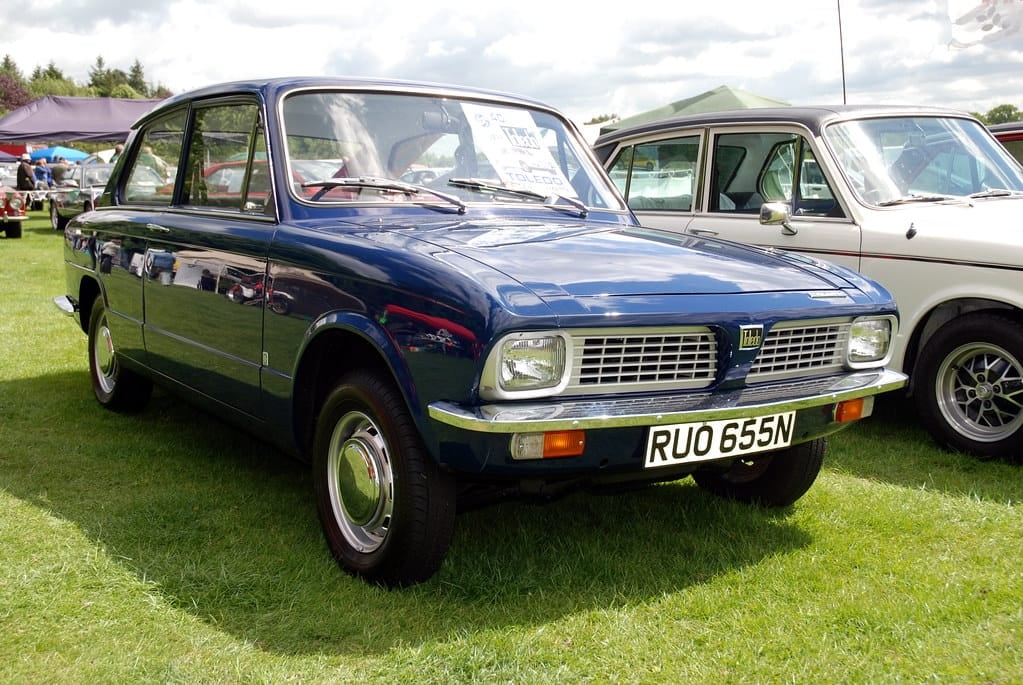
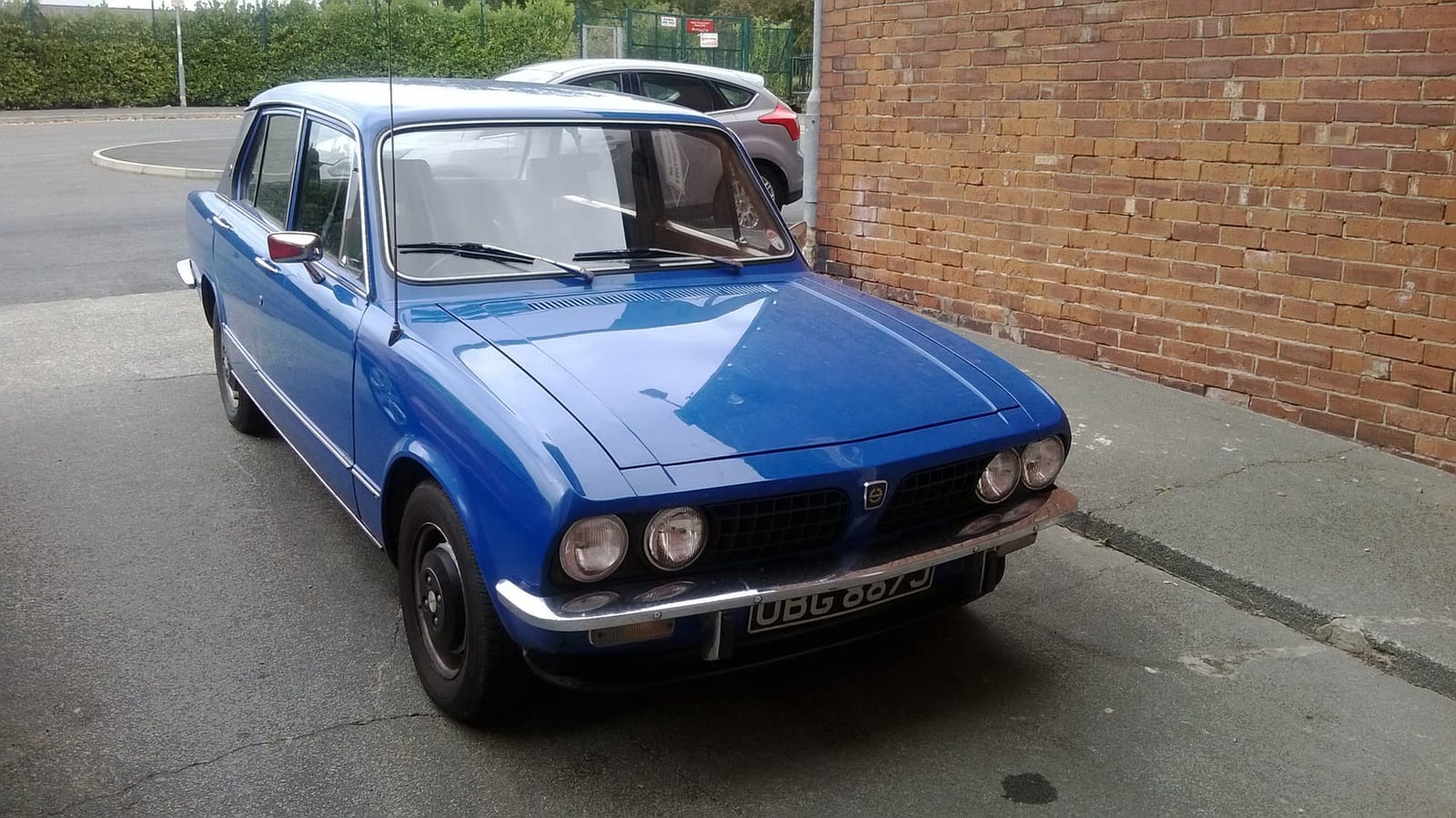
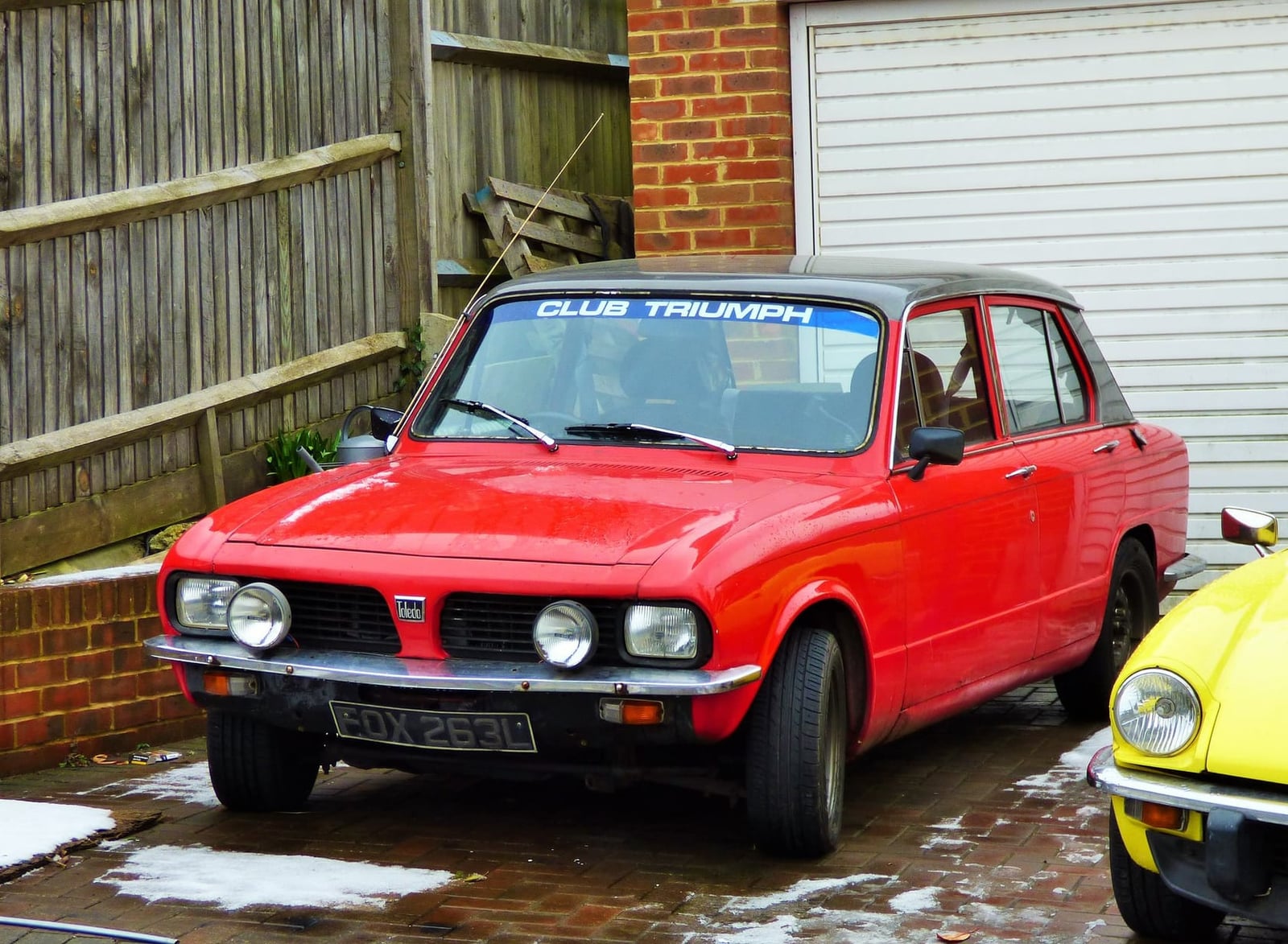
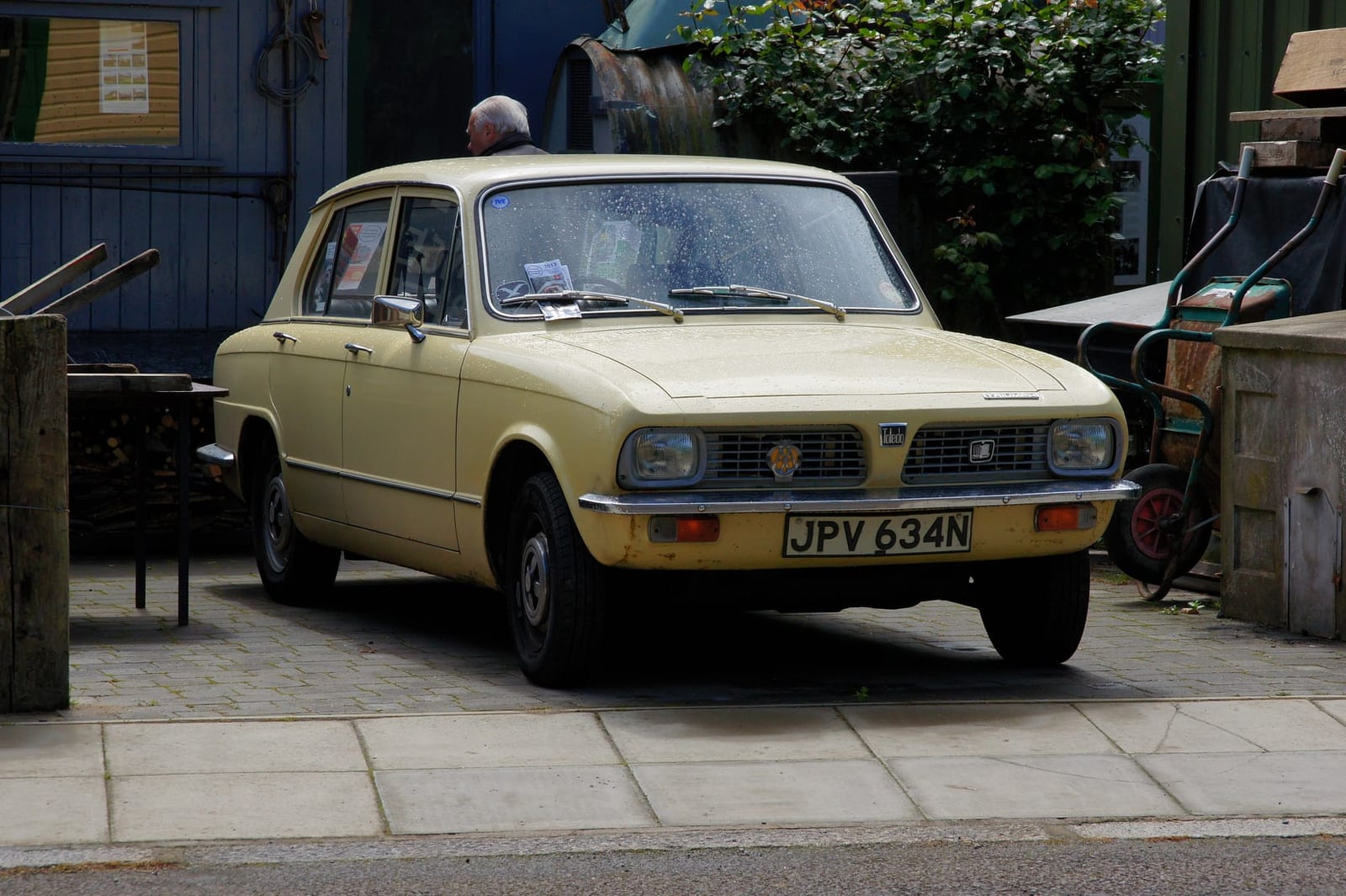
The shape began with Giovanni Michelotti’s Triumph 1300 of 1965, a front-wheel-drive saloon with an independent rear. It was too expensive to build for the money, so in August 1970 Triumph launched the Toledo: the same body and cabin with a cheaper rigid rear axle and rear-wheel drive. It began as a two-door, with a four-door arriving in Britain in 1971.
The Toledo used the 1,296cc overhead-valve four at 58 brake horsepower, with a 1,493cc engine joining later, and it was frugal, at around 35 miles per gallon, if slow. Front disc brakes became standard in October 1972. In August 1973 Triumph recalled about 103,000 Toledos to fix the front radius struts, at the time the largest recall Britain had seen.

The Dolomite 1850 and the slant-four
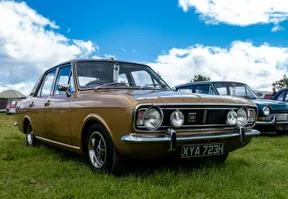
The Dolomite proper was unveiled at the London Motor Show in October 1971, though strikes at British Leyland held production back and it reached buyers in 1972, at £1,399. It wore a longer tail and four headlamps, came only as a four-door, and used an engine that already had an interesting history.
The slant-four was a Triumph design. It had been supplied to Saab for the 99 from 1968 in 1,709cc form, and the Dolomite 1850 was the first Triumph to use it, at 1,854cc, with an alloy head on an iron block and twin SU carburettors. With 91 brake horsepower it would top 100 mph and reach 60 mph in about 11 seconds. Overdrive and a Borg-Warner automatic were on the options list. The same engine family went on to power the Triumph TR7, and in 16-valve form, the Sprint.

The Sprint, in brief
The Dolomite Sprint arrived in June 1973 with a 1,998cc, 16-valve version of the slant-four and 127 brake horsepower, and 22,941 were built. It is the Dolomite that won races and awards, and the one most people mean when they say the name.
1976: one name for four cars
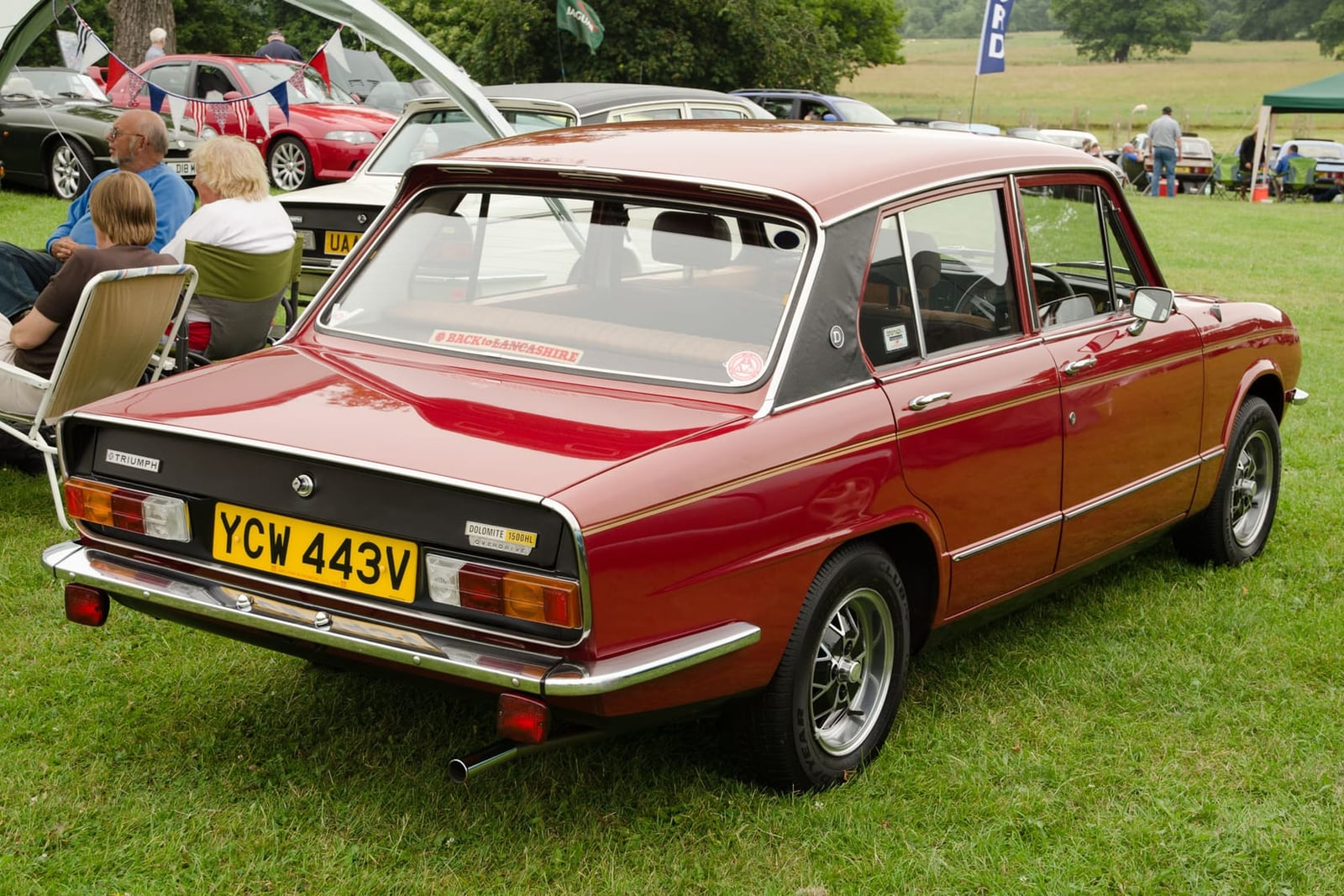
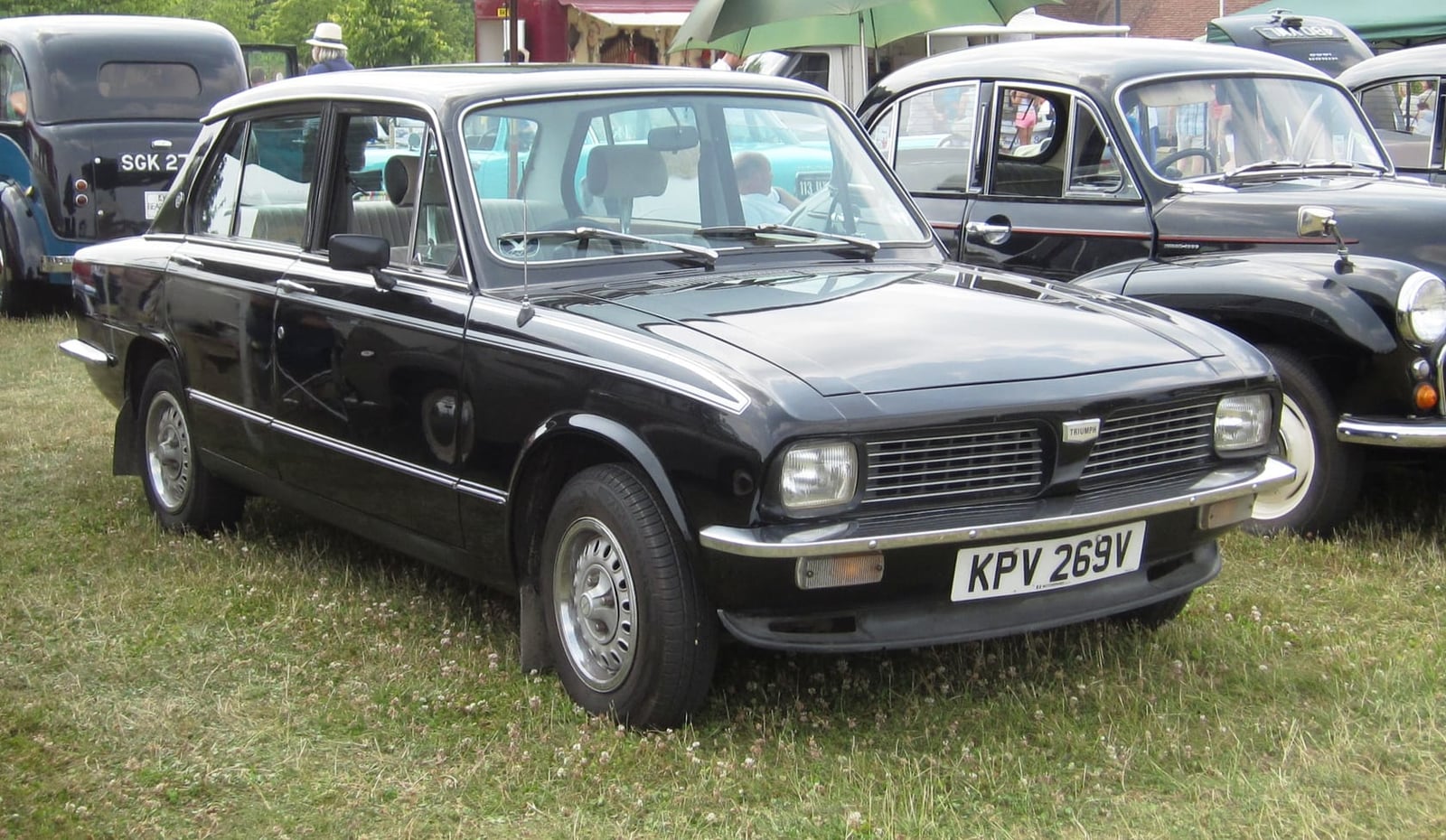
By the mid-1970s Triumph was selling one basic car under four names, and in March 1976 it tidied up. The new line-up was the Dolomite 1300, 1500, 1500HL, 1850HL and Sprint, and the Toledo and 1500TC names were dropped. Every car gained a laminated windscreen, head restraints and new switchgear. The 1300 and 1500 kept the shorter Toledo-style body and nose; the HL models had the long tail and four headlamps. Prices that March ran from £2,070 for the 1300 to £2,723 for the 1850HL and £3,283 for the Sprint.
Little changed after that. A 1500SE special edition in 1979, 2,163 cars in black with silver stripes, walnut and velour, was the last notable variant, and production ended at Canley in the autumn of 1980. Among 1970s British saloons the Dolomite sold steadily, and sales faded only as the car aged and its price rose.

Buying a Dolomite or Toledo today
Survivors are thinner than many people assume. DVLA figures at mid-2026 show 140 Toledos taxed and 168 on SORN, 110 Dolomite 1300s taxed and 105 on SORN, and 93 Dolomite 1850HLs taxed and 98 on SORN. The Sprint, with 419 taxed, outnumbers each of them.
Rust is everywhere on these cars. Check the wheel-arch lips and inner arches, door bottoms, headlamp surrounds, bonnet, boot floor, bulkhead and front door pillars, the chassis rails where the front subframe attaches, and underneath any vinyl roof. Pre-1976 cars are generally said to rust less than the later ones.
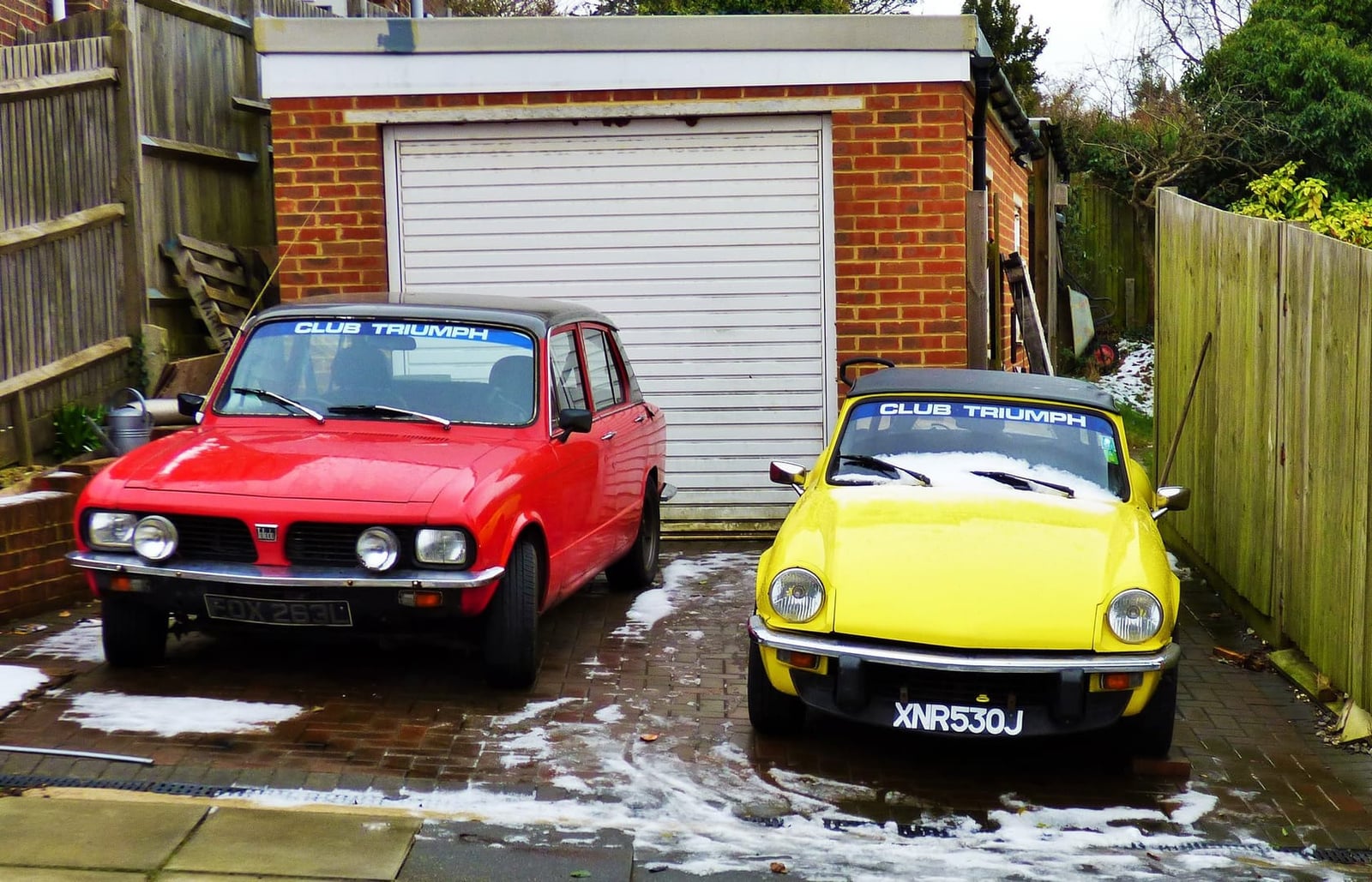
The slant-four lasts well if it has been serviced, with regular oil changes and the correct coolant and inhibitor. Overheating is its enemy, because it warps the alloy head. The water pump is driven from a jackshaft, and a failing pump causes overheating that can be mistaken for a head gasket fault. Overdrive problems are usually the relay or the wiring. Mechanical parts are easy to get from specialists; wood, velour and switchgear are not. The Triumph Dolomite Club, Club Triumph and the Triumph Sports Six Club all look after these cars.

Where the Dolomite sits in the market
The Dolomite and Toledo are among the cheapest ways into a 1970s Triumph, with a typical car changing hands at auction for about £3,900, and condition counts for more than the badge on the boot. The Sprint is a separate and dearer market. The record, version by version and year by year, is on the page showing what a Triumph Dolomite sells for.
The Dolomite’s replacement was not a Triumph design at all. The Triumph Acclaim of 1981 was a Honda Ballade built at Cowley.
More photos
How the Dolomite changed
- Aug 1970The two-door Toledo launches as a rear-drive version of the Triumph 1300.
- Oct 1971The Dolomite 1850 is unveiled at the London Motor Show; strikes delay production into 1972.
- Aug 1973About 103,000 Toledos are recalled over front radius struts, then Britain's largest recall.
- June 1973The 16-valve Dolomite Sprint joins the range.
- Mar 1976The range is rationalised as Dolomite 1300, 1500, 1500HL, 1850HL and Sprint, and the Toledo name ends.
- 1979The Dolomite 1500SE special edition, 2,163 cars in black with silver stripes.
- Autumn 1980Production ends at Canley.
Before you buy a Dolomite
Rust
- Wheel-arch lips and inner arches, door bottoms and headlamp surrounds
- Bonnet, boot floor, bulkhead and the front door pillars
- Chassis rails where the front subframe attaches, and under any vinyl roof
Slant-four engines
- Look for signs of overheating; an alloy head warps if the engine has boiled
- The water pump is driven from a jackshaft, and a failing pump can look like a head gasket fault
- Ask about oil changes and the correct coolant with inhibitor
Other checks
- Overdrive faults are usually the relay or the wiring
- An 1850HL radiator is not up to a Sprint engine if one has been fitted
- Wood, velour and switchgear are the hard parts to replace
What the Triumph Dolomite sells for at auction
| Variant | Sold | Typical range | Median |
|---|---|---|---|
| Dolomite 1850HL | 15 | £2,380 - £7,550 | £3,808 |
| Dolomite 1300 | 6 | £3,450 - £4,622 | £4,218 |
| Dolomite 1500HL | 5 | £5,000 - £6,134 | £5,054 |
| Toledo | 5 | £2,812 - £4,669 | £3,825 |
Show the year-by-year mediansHide the year-by-year medians
| Year | Sold | Median | In 2025 money |
|---|---|---|---|
| 2026 (so far) | 5 | £5,264 | |
| 2025 | 10 | £4,218 | £4,218 |
| 2024 | 5 | £5,040 | £5,233 |
| 2023 | 6 | £3,990 | £4,281 |
| 2022 | 3 | £5,054 | £5,788 |
- £5,264Dolomite 1850HL
- £550Triumph Dolomite
- £6,400Dolomite 1500HL
- £6,600Dolomite 1850HL
- £2,268Dolomite 1500HL
Thin evidence. Only 39 recorded sales: read the figures as a sketch of the market, not a price. Based on 39 sold results from public classic car auctions (2004 to 10 August 2026). Sold prices, not asking prices, and not a valuation: condition, history and specification vary from car to car. Inflation-adjusted figures use the ONS CPIH index, in 2025 money.
Frequently asked questions
What is the difference between a Triumph Toledo and a Dolomite?
Did the Triumph Dolomite use a Saab engine?
How many Triumph Dolomites are left?
When was the Triumph Dolomite made?
What should I check before buying a Triumph Dolomite or Toledo?
How much does a Triumph Dolomite sell for?
What is the most expensive Triumph Dolomite ever sold at auction?
How often does a Triumph Dolomite come up for sale?
Related across themes
More from Triumph


Recently added

Austin Maestro: the hatchback that talked, and the van that kept going (1983–1994)

What a Morgan 4/4 sells for: eight decades of cars in one price band, and a third lost since 2021

What a Rover P6 sells for, and how much of that is the V8
