Austin Montego: the last Austin, and the estate that outlived it (1984–1994)
The Montego of April 1984 was BL's fleet saloon, built at Cowley on a stretched Maestro platform, with a talking dashboard, a seven-seat estate, the MG Turbo and a Perkins diesel. How it lost its Austin badge, what the testers said, what rots, how few are left, and Montego prices at auction.
Built 1984–1994 16 recorded sales
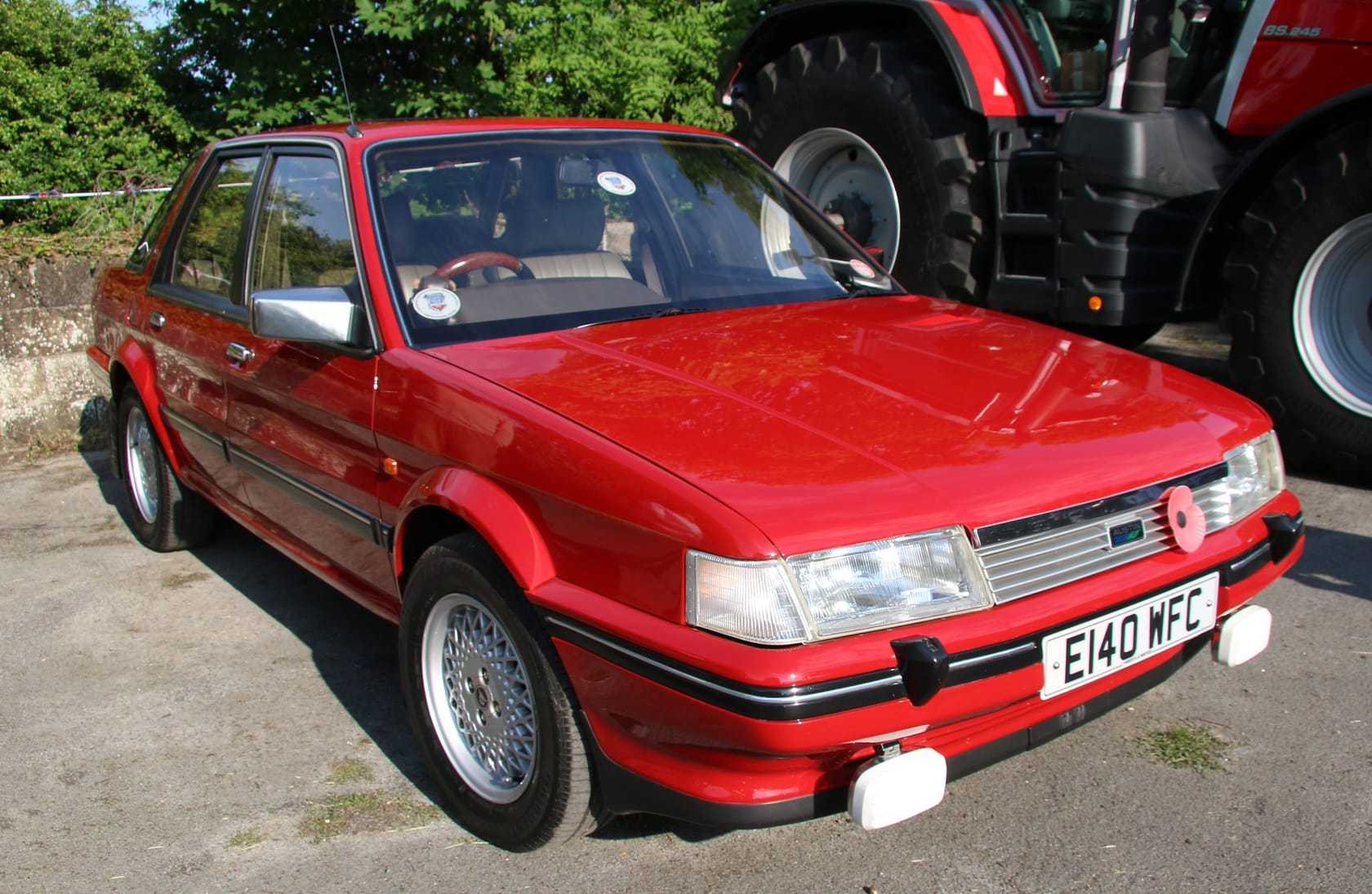
At a glance
- Years
- 1984–1994
- Body styles
- Four-door saloon, five-door estate
- Drivetrain
- Front-wheel drive
- Engines
- 1.3 A-Plus, 1.6 S-Series, 2.0 O-Series (carburettor, EFi and Turbo), 2.0 Perkins Prima turbo diesel
- Power
- 68 bhp in the 1.3 to 150 bhp in the MG Montego Turbo
- Trim levels
- L, HL, Mayfair, Si, Vanden Plas, Countryman estate; MG EFi and MG Turbo
- Production
- 571,460 built at Cowley, 1984 to 1994
- Assembly
- Cowley, Oxford
- Designer
- Ian Beech and Roger Tucker, with late changes under Roy Axe
- UK survivors
- Mid-2026 DVLA figures: nine Montego Ls taxed and 81 on SORN
- Values
- Around £4,500 median at auction on a small sample; the best into five figures
The models
The Montego was the last new car launched as an Austin. Launched on 25 April 1984 as British Leyland’s answer to the Ford Sierra and the Vauxhall Cavalier, it was a decent, roomy saloon let down by early quality problems that coloured its reputation for good. By the time the last estate left Cowley in December 1994, 571,460 had been built and almost all of them have since disappeared.
LM11
The Montego was project LM11, the saloon and estate partner to the LM10 Austin Maestro, and it sat on a stretched version of the Maestro’s platform. Its shape came from two designers. Ian Beech drew the hatchback cabin and Roger Tucker the notchback ends, and the two were put together at a design viewing at Longbridge in 1977. Roy Axe, who replaced David Bache as chief stylist in 1982, made late changes to the bumpers, lamps, bonnet and rear screen before launch, but the car was not his design.
It replaced the Morris Ital and the Austin Ambassador, and it was aimed squarely at the fleet market, with British Leyland hoping to sell around 4,000 a week and to send six in ten of them to fleets. Every car was built at Cowley in Oxford.

A-Plus, S-Series and O-Series
The engine range was a tour of BL’s parts bins. The 1275cc A-Plus made 68 brake horsepower and was underpowered in a car this size. The 1.6 S-Series made 86, and the 2.0 O-Series around 102 with a carburettor or 115 with Lucas fuel injection in the EFi models.
At the top sat the MG Montego Turbo, announced in 1985 with a Garrett T3 turbocharger and an intercooler. Its 150 brake horsepower gave 0 to 60 mph in about 7.3 seconds and 126 mph, and in January 1987 it cost £11,396. The other end of the range came in mid-1988 with the Perkins Prima, a 2.0 turbo diesel developed from the O-Series by Perkins and Rover, at around 80 brake horsepower. Car magazine’s diesel group test in March 1989 put the Montego behind the Peugeot 405 and Citroën BX overall but declared it the winner on economy.

The talking dashboard
Higher-specification cars launched with a digital instrument panel, a trip computer, a synthesised voice and a car graphic that showed open doors and lamps. The system was unreliable and was dropped within a year or so in favour of conventional dials. Working digital units are now rare and hard to replace, which makes an early car with a working talking dash something of a curiosity.

Saloon, estate, Vanden Plas and MG
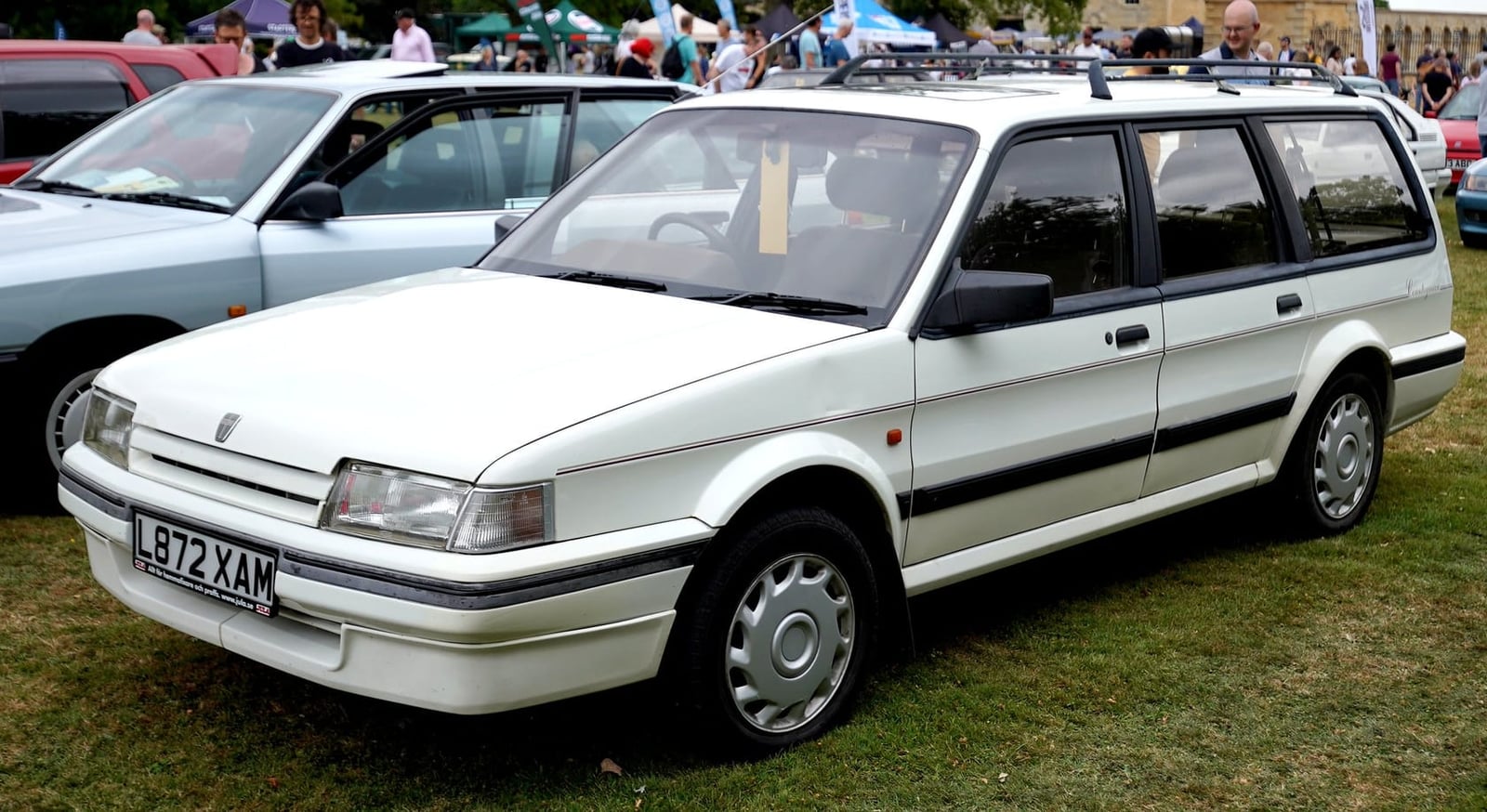
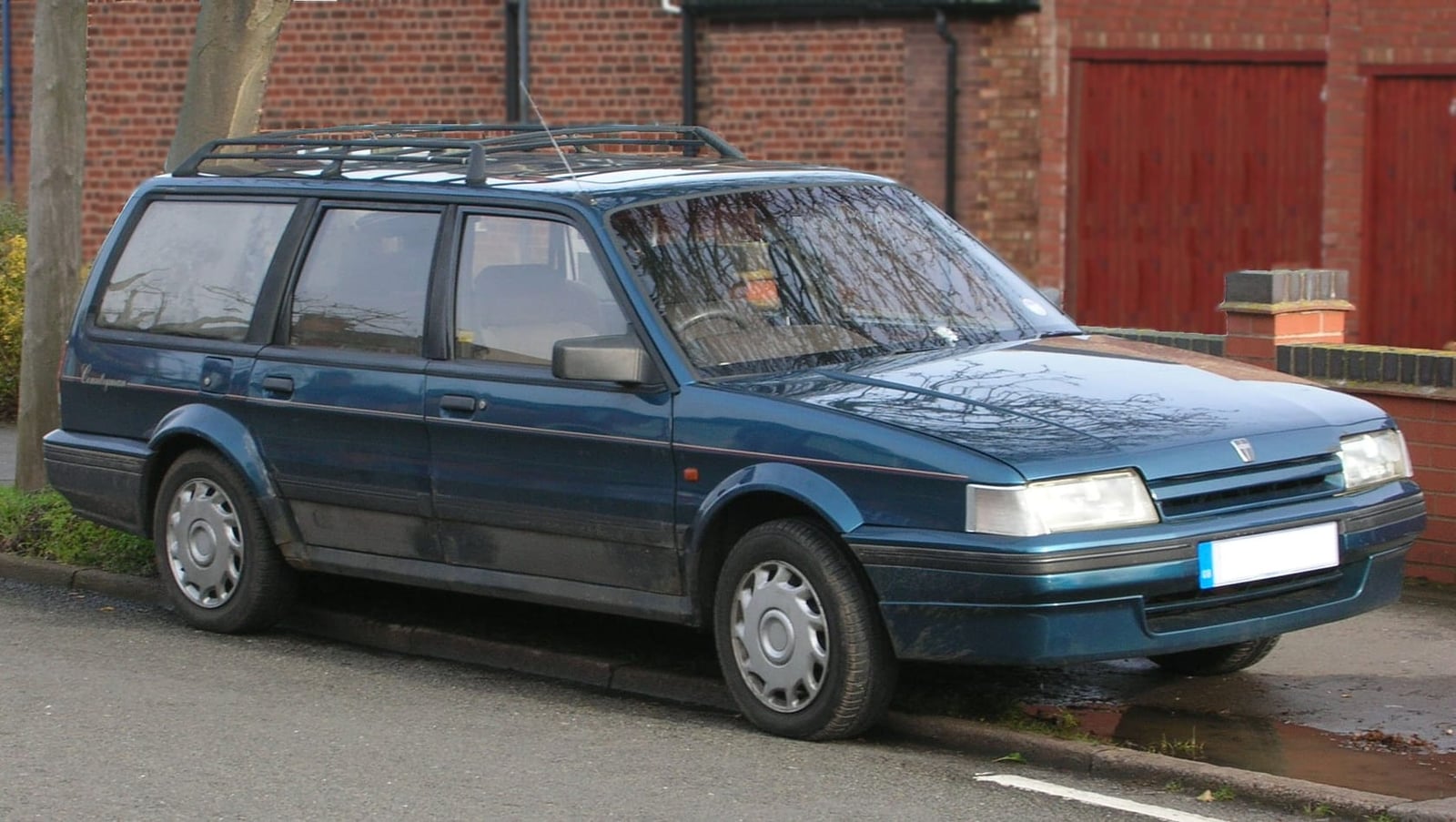
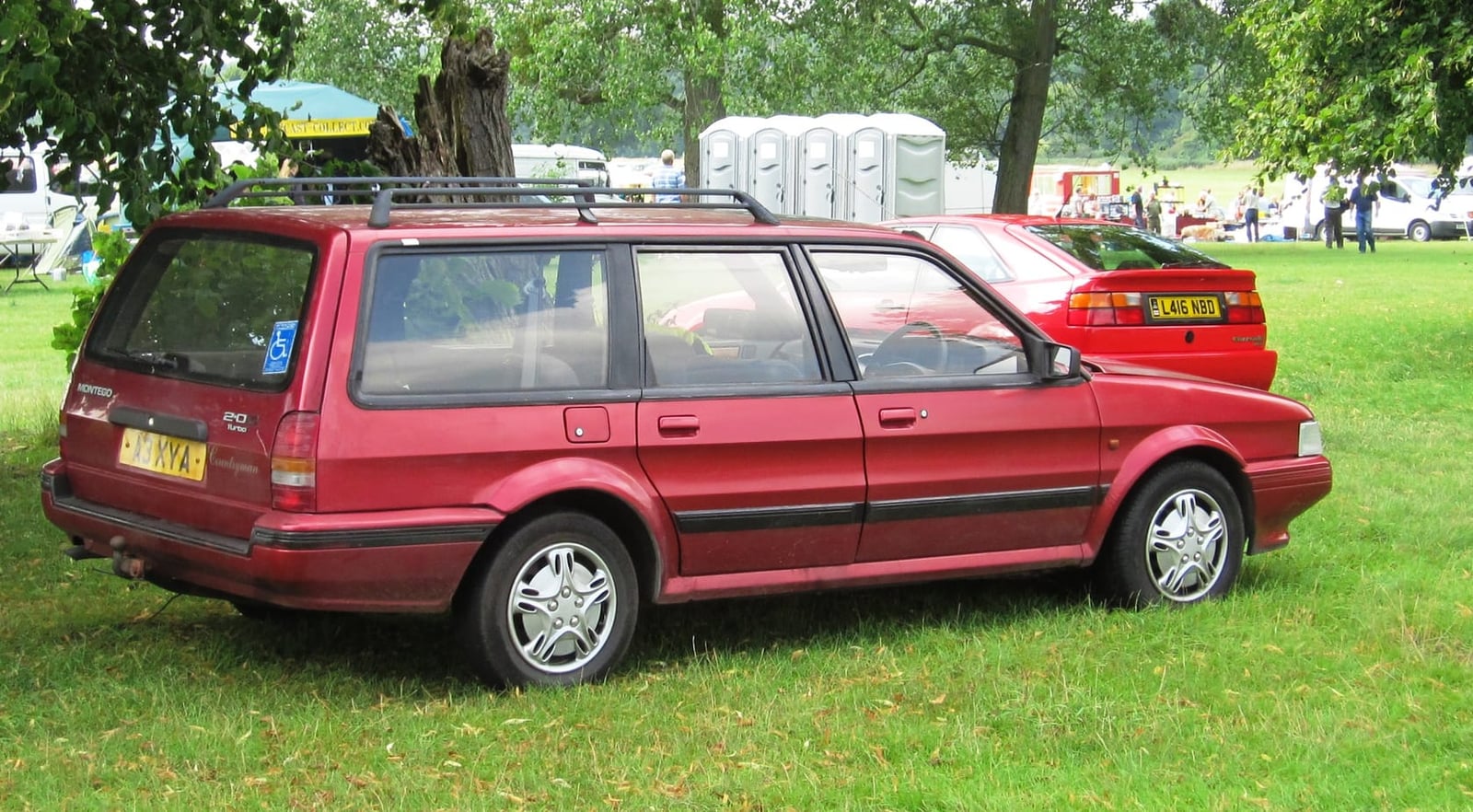
The estate, shown at the British International Motor Show in October 1984, was the best Montego. It could be specified with two rear-facing child seats in the boot to make a seven-seater, and the Countryman added self-levelling rear suspension and a roof rack. It outlived the saloon by almost two years.
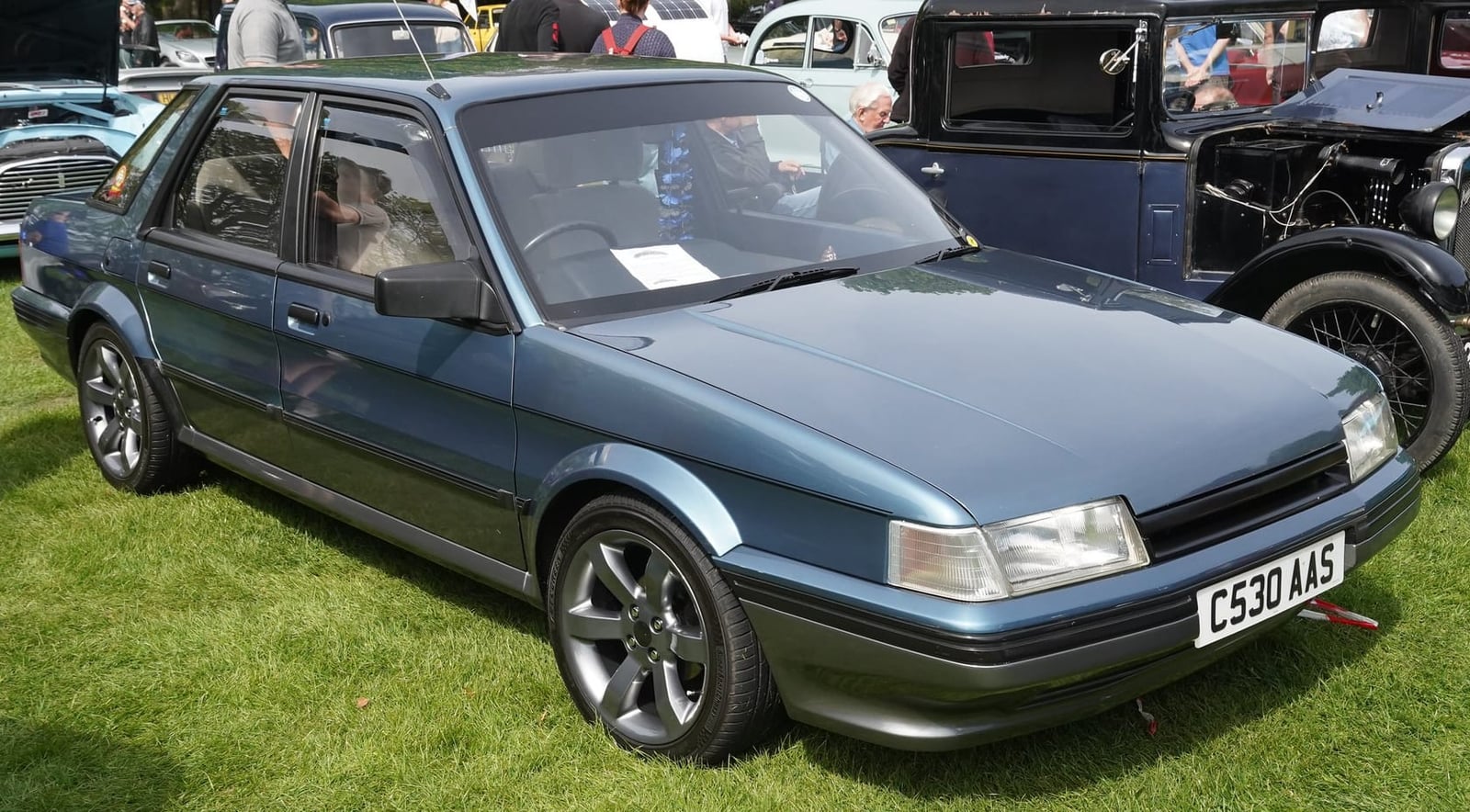
The trim names ran L, HL, Mayfair, Si and Vanden Plas. The Vanden Plas was a 2.0 with wood fillets, electric windows and central locking, with leather on the EFi version and an optional automatic. The MG Montego EFi added a deeper front spoiler, a boot spoiler and a red accented interior, and the Turbo sat above it. Those names, along with Countryman, are the ones that turn up in the classifieds now.

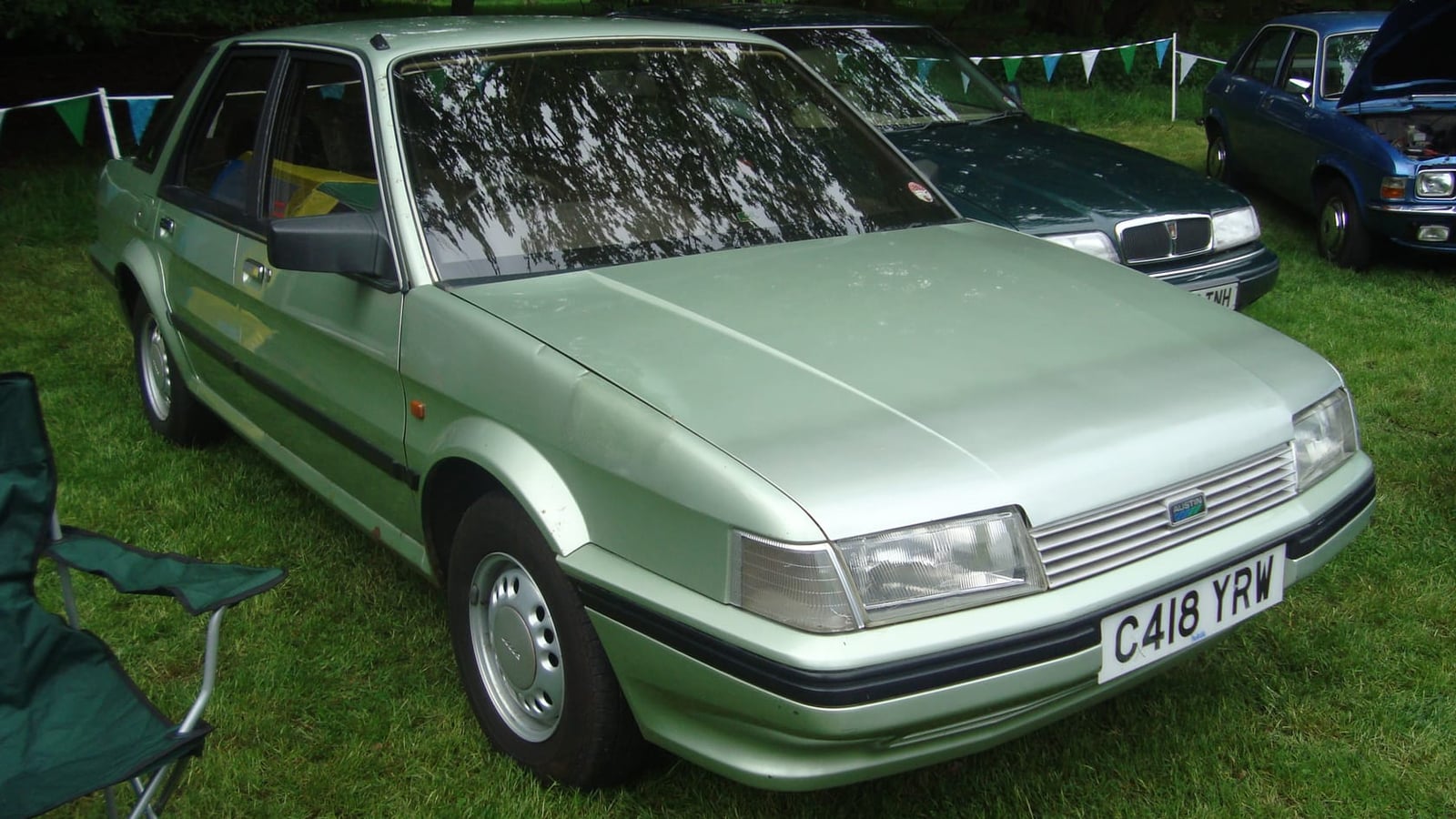
Losing the Austin badge
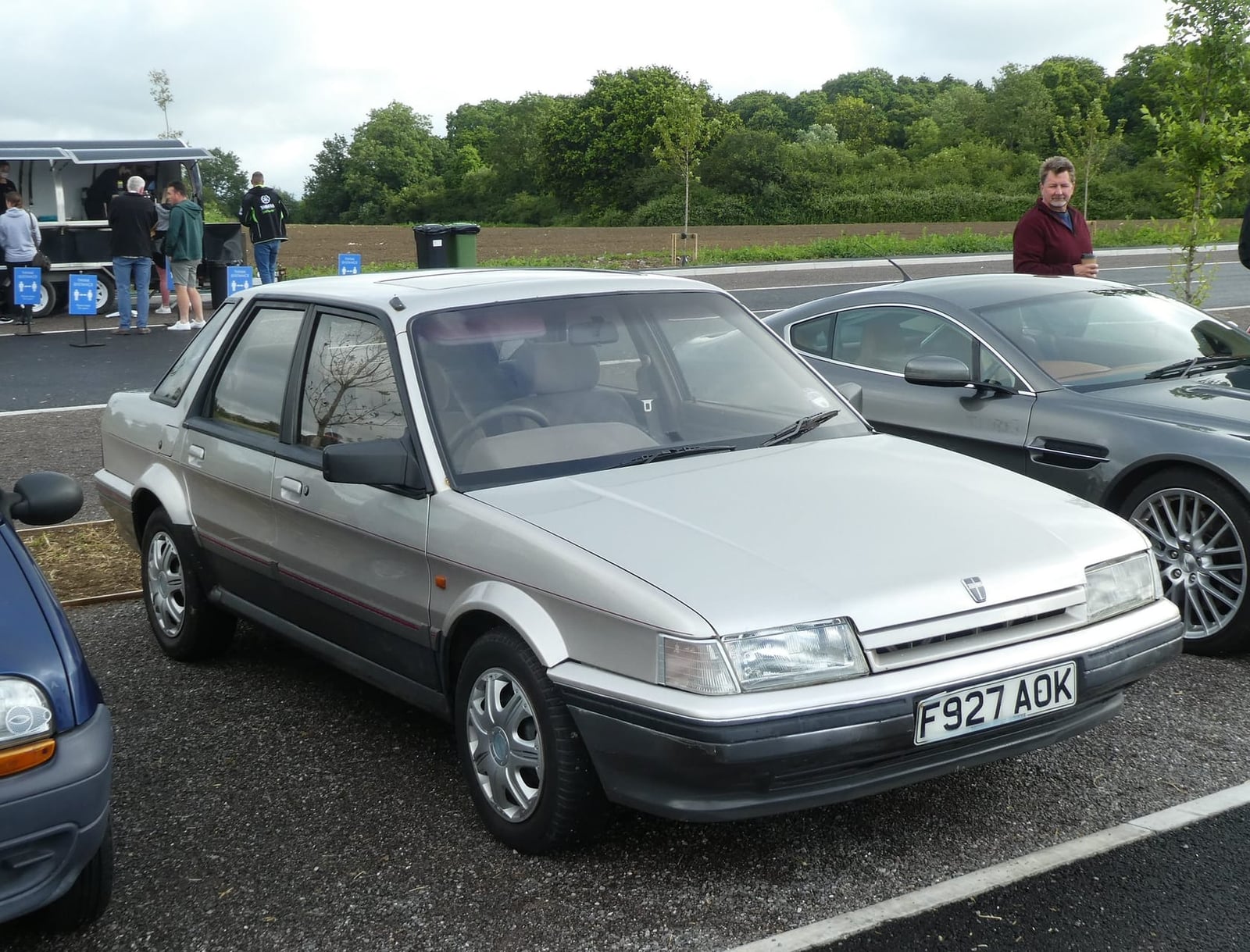
The Austin name began disappearing from the cars in late 1987 and was gone by 1988, after which British Montegos carried a longship-shaped badge with no marque name at all. They never wore a Rover badge in Britain; Rover Montego was the name used in export markets. The facelift shown at the October 1988 Motor Show brought new instruments, a new centre console, a Rover 800-style grille and smoother rear lamps.
The saloon ended in early 1993, when the Rover 600 arrived, and the estate in December 1994. By then the car had quietly become good. What Car? summed it up in March 1993 as a car that had “matured into a very decent car, but nobody noticed”. With it went the Austin name, which had been on British cars since 1905. Among the 1980s fleet saloons it is now one of the rarest survivors.

Buying a Montego today
Survivors are scarce. DVLA figures at mid-2026 show nine Montego Ls taxed and 81 on SORN, and three HLs taxed and 38 on SORN, with most other trims in single figures. Estates are hard to count, because the DVLA records them under several trim names.
The Maestro and Montego Owners Club’s guide is clear about rust. Check the top of the windscreen, the windscreen pillars, the rear wheel arches and the tops of the rear suspension turrets, the sills, which are structural, the join between sill and rear wing, the door bottoms and the leading edge of the bonnet. The plastic bumpers go brittle and are expensive to replace.
The O-Series engine is noisy, and a slight tick is normal. Look for oil leaking from the head gasket near number four cylinder and around the distributor, and renew the timing belt if there is no record of it, because a broken belt damages the 2.0. The diesel shares the O-Series weaknesses but can cover big mileages. Electrics are the other worry: central locking, electric windows, the heater matrix and digital dashboards all fail, and some alloy wheels take metric tyres that are now costly.

Values: a market measured in single sales
Only sixteen Montego sales are on record since 2018, most of them MG Montegos, so treat the figures as a sketch. The median is near £4,500, with the middle range between about £2,900 and £8,300, and the best result is £18,169 at Mathewsons in September 2022. Ordinary Austin saloons barely appear at auction at all, which says more about how few remain than about what they are worth.
More photos
Montego: the short history
- 25 Apr 1984The Montego saloon is launched, built at Cowley on a stretched Maestro platform.
- Oct 1984The estate is shown at the British International Motor Show.
- 1985The MG Montego Turbo is announced, with 150 brake horsepower.
- 1987 to 1988The Austin name disappears from the cars.
- Mid-1988The Perkins Prima turbo diesel arrives; a facelift follows at the October Motor Show.
- Early 1993The saloon ends as the Rover 600 arrives.
- Dec 1994The last estate leaves Cowley, the 571,460th Montego.
Montego: what to check before you buy
Rust
- The top of the windscreen and the windscreen pillars
- Rear wheel arches and the tops of the rear suspension turrets
- Sills, which are structural, the join between sill and rear wing, door bottoms and the bonnet's leading edge
Engines
- The O-Series is noisy and a slight tick is normal; look for oil leaking from the head gasket near number four cylinder and around the distributor
- Renew the timing belt if there is no record; a broken belt damages the 2.0
- The 1.3 is best avoided in a car this heavy
Electrics and trim
- Central locking, electric windows and the heater matrix all give trouble
- Digital dashboard units fail and are now rare
- Plastic bumpers go brittle, and some alloy wheels take expensive metric tyres
What the Austin Montego sells for at auction
The Austin Montego comes to auction only occasionally: 16 recorded sales since 2018, typically making between £2,938 and £8,334 . With so few sales, treat any single result as a data point rather than a market price.
- £2,900Montego
- £8,500Montego
- £576Montego
- £11,504Montego
- £3,871Montego
Thin evidence. Only 16 recorded sales: read the figures as a sketch of the market, not a price. Based on 16 sold results from public classic car auctions (2018 to 10 August 2026). Sold prices, not asking prices, and not a valuation: condition, history and specification vary from car to car.
Frequently asked questions
How much is an Austin Montego worth?
How many Austin Montegos are left?
When did the Montego stop being an Austin?
What engine did the MG Montego Turbo have?
When was the Austin Montego made?
What is the most expensive Austin Montego ever sold at auction?
How often does an Austin Montego come up for sale?
Related across themes

More from Austin


Recently added

What a Jensen Interceptor sells for, now the long climb is over

Ford Granada Mk2: Cologne V6s, Ghia X and the executive Ford of the 1980s (1977–1985)

How much is a Sunbeam Tiger worth? Nearly five Alpines, and falling since 2020
