What a Morgan 4/4 sells for: eight decades of cars in one price band, and a third lost since 2021
A 1990s Morgan 4/4 1800 sells for about what a 1960s Series V makes, because on a car that barely changed the ash frame sets the price and the year hardly does. Across 255 recorded auction sales, what each series fetches and why the median has fallen by a third in cash since 2021.
Built 1936–2018
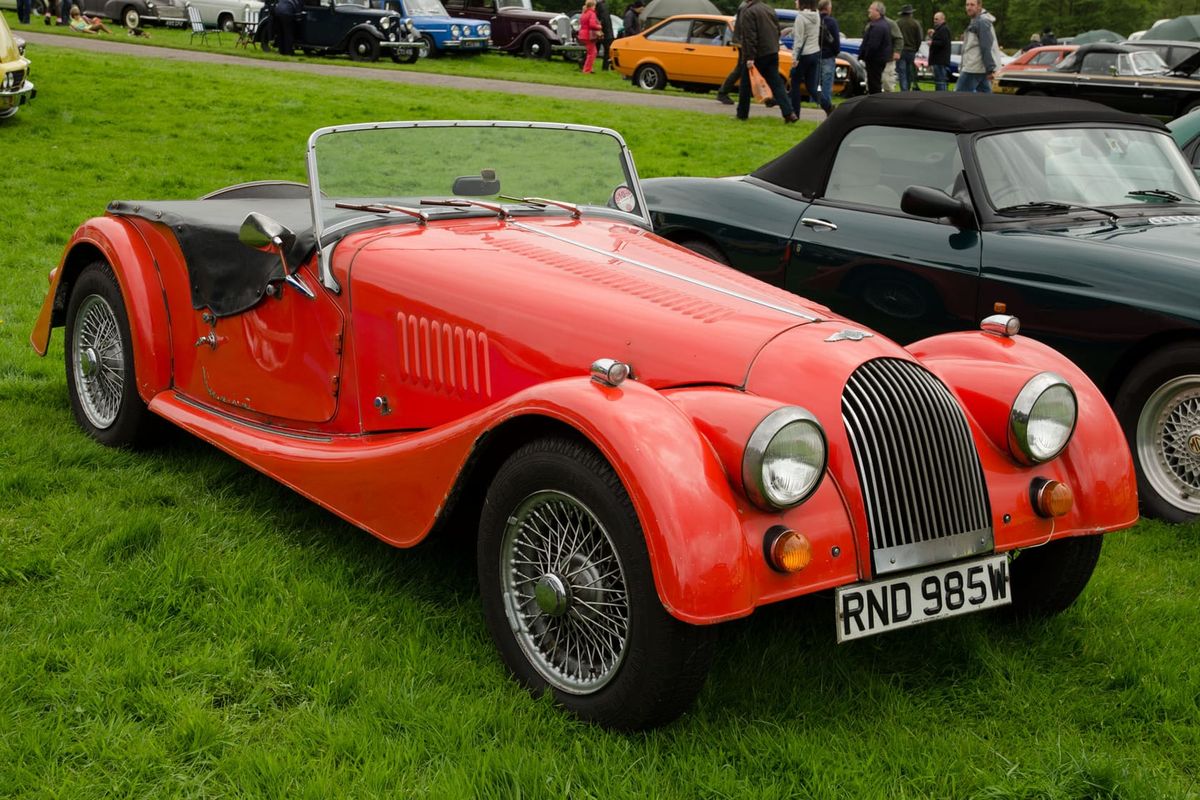
What the Morgan 4/4 sells for at auction
In 2025 the median Morgan 4/4 sold for £14,750 across 43 sales, 8% down on 2024. In real terms, typical Morgan 4/4 prices were down about 42% over the five years to 2025, once inflation is accounted for.
| Variant | Sold | Typical range | Median |
|---|---|---|---|
| 4/4 | 190 | £11,662 - £21,607 | £16,225 |
| 4/4 1600 | 29 | £14,300 - £20,646 | £17,488 |
| 4/4 Series V | 12 | £13,946 - £28,113 | £23,596 |
| 4/4 Series I | 10 | £18,560 - £26,578 | £20,532 |
| 4/4 1800 | 7 | £20,559 - £25,444 | £23,052 |
Show the year-by-year mediansHide the year-by-year medians
| Year | Sold | Median | In 2025 money |
|---|---|---|---|
| 2026 (so far) | 26 | £13,370 | |
| 2025 | 43 | £14,750 | £14,750 |
| 2024 | 21 | £15,979 | £16,592 |
| 2023 | 30 | £16,718 | £17,940 |
| 2022 | 20 | £19,376 | £22,190 |
| 2021 | 25 | £22,627 | £27,980 |
| 2020 | 17 | £20,025 | £25,376 |
| 2019 | 11 | £15,433 | £19,757 |
| 2018 | 7 | £15,106 | £19,666 |
| 2017 | 12 | £17,991 | £23,965 |
| 2016 | 14 | £17,280 | £23,610 |
| 2015 | 5 | £20,720 | £28,594 |
| 2014 | 9 | £18,400 | £25,494 |
| 2013 | 3 | £17,488 | £24,576 |
| 2011 | 4 | £13,350 | £19,683 |
| 2006 | 4 | £8,016 | £13,590 |
- £12,8804/4
- £14,1124/4 1800
- £11,6484/4
- £26,8804/4 1600
- £23,3004/4
Strong evidence. 255 recorded sales and a dozen or more a year: the median and the range are well founded. Based on 255 sold results from public classic car auctions (2006 to 10 August 2026). Sold prices, not asking prices, and not a valuation: condition, history and specification vary from car to car. Inflation-adjusted figures use the ONS CPIH index, in 2025 money.
Morgan 4/4 values follow an unusual rule: the age of the car hardly enters into it. Across 255 recorded auction sales since 2006 the median 4/4 made £16,900, and the middle half sold between about £12,300 and £22,500. A 1990s 4/4 1800 sits at a median of £23,052 and a 1960s Series V at £23,596, with the original Series I a little below both, so thirty years between two cars buys almost no difference in price. What moves the money is the timber under the paint and, since 2021, a market that has been heading one way.
The Morgan 4/4 guide covers the series, the Ford engines and the ash-frame checks that decide whether a car is sound. This page is about the money: what each series fetches, what the slide since 2021 does and does not mean, and how to put a figure on one.
One price band for eight decades of cars
Most of the record does not say which 4/4 it is. The plain “4/4” row holds 190 of the 255 sales, cars listed without a series or an engine, and it sits at a median of £16,225 with a middle half of £11,662 to £21,607. In principle that row can hold any car from the run, and it is the honest guide to what an ordinary 4/4 makes.
The named rows are all small samples and should be read as a direction rather than a price list. The 4/4 1600 sits at £17,488 across 29 sales, the Series V at £23,596 across 12, the Series I at £20,532 across 10 and the 4/4 1800 at £23,052 across just seven. Every one of them sits above the plain row, which probably says as much about descriptions as about cars: a seller who can name the series usually has the paperwork to prove it, and a vague listing is often a vague car.
What the rows do not show is a ladder by age. The Series I and the 1990s 1800 sit within a few thousand pounds of each other, and the gap between any two named series is smaller than the spread inside the plain row. On a car that barely changed, the series moves the price by a few thousand pounds at most and condition moves it by more. The one result that leaves the band entirely, £55,372 for a Series IV in 2016, is a single sale and no guide to the rest.

Timber and paperwork, not the year
The ash frame is the price. A car whose frame has been renewed by someone who knows the work, with the invoices and photographs to prove it, sells at the top of the range whatever its series; one with soft timber at the sills, door posts or rear panel sells as a project whatever its badge. The Ford engines and gearboxes inside it are cheap by comparison.
One regional sale at the end of July 2026 shows the order of things. A 4/4 1600 made £26,880, a plain 4/4 made £11,648 and a later 4/4 1800 made £14,112, so the older car fetched nearly twice the newer one in the same room on the same day. Factory records that confirm a car’s identity and original specification add to the price, and so does a documented sprint or trials history, which on a Morgan reads as provenance rather than wear. The record does not separate two-seaters from four-seaters, so whatever premium the four-seater carries cannot be measured here.

A third off since 2021, and how much of that is real
The yearly medians ran £22,627 in 2021, £19,376 in 2022, £16,718 in 2023, £15,979 in 2024 and £14,750 in 2025, with 2026 at about £13,370 on 26 sales so far. That is four years down in a row in cash, a fall of about a third. Restated in today’s money the same run reads £27,980, £22,190, £17,940, £16,592 and £14,750, so the median car has lost nearly half its real value since 2021, and the 2025 figure is the lowest real-terms reading in the record apart from a four-sale year in 2006.
There is a caveat, and on this car it is a large one. A record that mixes cars built eighty years apart is sensitive to which ones came up: a year heavy with tired seventies two-seaters reads lower than one with a run of restored Series V cars, and the 43 sales of 2025, the most of any year, probably brought more ordinary cars to market. Some of the slide is mix. But the direction has held for four years on 20 to 43 sales a year, the largest samples in the record, and that is more than mix can explain. The fair reading is that 4/4 prices have fallen, by an amount the record cannot pin down exactly, and that nothing in the figures supports calling the market steady. The years before 2014 rest on three or four sales each and say very little.

Seven in ten find a buyer
Of 359 4/4s offered at auction, 255 sold, which leaves about three in ten going home unsold. In a falling market the likeliest reason is reserves set against the prices of 2021 rather than today’s, and a car that fails to sell is often available afterwards for a sensible offer.
The volume is British and regional. Five sales between 29 July and 5 August 2026, across three rooms, ran from £11,648 to £26,880, a spread wider than the record’s whole middle half inside eight days; a plain 4/4 made £12,880 at Brightwells and another £23,300 at Mathewsons. The specialist rooms take the occasional exceptional car, which is where the £55,372 Series IV sold, at Bonhams. Whether a recorded price includes the buyer’s premium varies by sale.

Agreed values and the reframe sums
For an agreed-value policy, a sound car with a documented frame belongs in the upper half of its range, roughly £17,000 to £22,500, rather than at the median, which is pulled down by cars waiting for timber. A value agreed in 2021 deserves a second look: a figure set near the top of the market then is above what most cars make now, and the policy should follow what a car like yours sells for today.
The reframe sums are unkind. With the middle half of the record topping out at about £22,500, a full reframe and repaint on an ordinary 4/4 rarely comes back in the sale price, which is why the car that has already had its timber done is nearly always a better buy than the cheaper one that still needs it. If you are selling, photograph the frame and the underside, put the factory records and the invoices on the table, and price against this year’s sales rather than the 2021 ones.
Related
The 4/4’s nearest rival in spirit is the MG T-Series, the other traditional British roadster that kept a pre-war shape into the 1950s. For the bigger-engined cars from the same works, see the Morgan Plus 8 and the Morgan Plus 4, and for the whole marque, the Morgan range. For the periods the 4/4 spans, see British classic cars of the 1930s and the 1960s. For how all the figures on this site are compiled, see the sold-price index.
Frequently asked questions
How much is a Morgan 4/4 worth?
Does an older Morgan 4/4 sell for more than a later one?
Are Morgan 4/4 prices falling?
What should I pay for a Morgan 4/4?
What does a Morgan 4/4 project cost?
What is the most expensive Morgan 4/4 ever sold at auction?
How often does a Morgan 4/4 come up for sale?
Related across themes
Recently added

Austin Maestro: the hatchback that talked, and the van that kept going (1983–1994)

Triumph Dolomite and Toledo: Canley's small saloons, from 1300 to 1850HL (1970–1980)

What a Rover P6 sells for, and how much of that is the V8
