What a Rover P6 sells for, and how much of that is the V8
Rover P6 values split on the engine, with a 3500 V8 at about £6,200 and a four-cylinder 2000 at about £3,600 across 259 recorded auction sales. Why the later 2200 sells for less than either, and why a cash price that has barely moved since 2021 has lost about a quarter in real terms.
Built 1963–1977
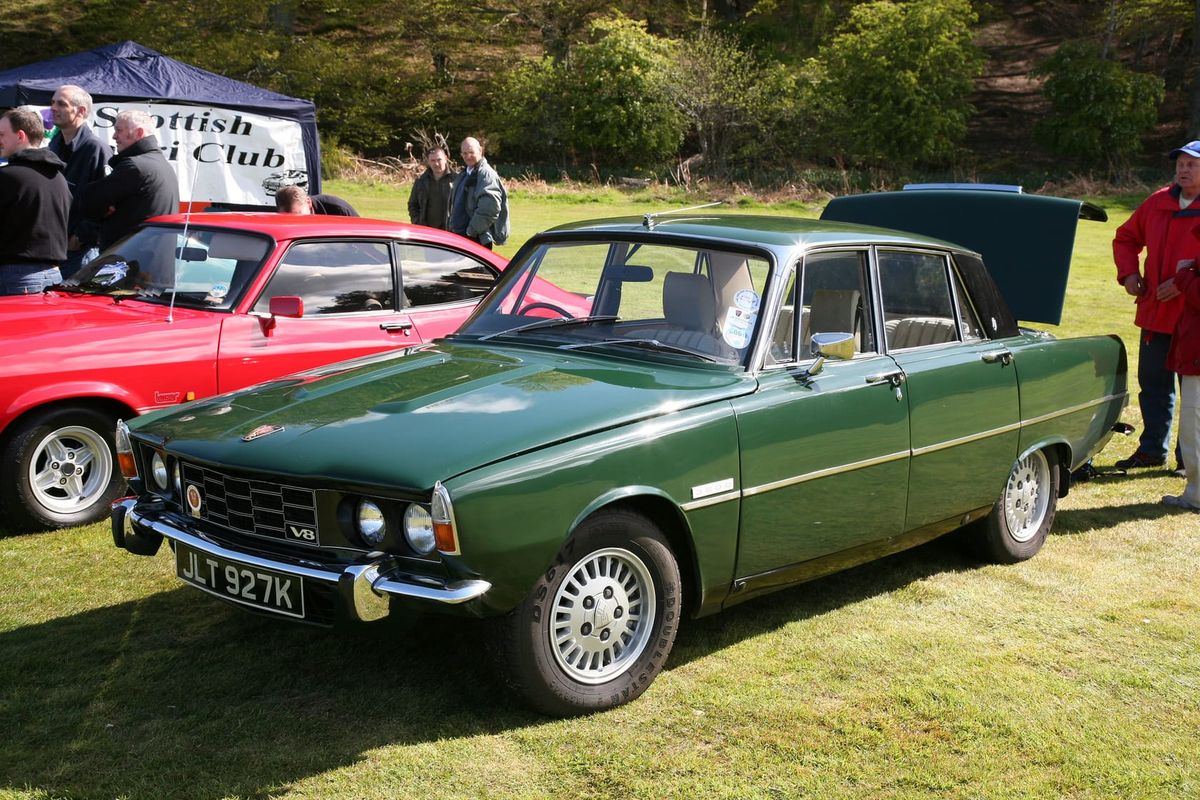
What the P6 2000 & 3500 sells for at auction
In 2025 the median P6 2000 & 3500 sold for £4,360 across 31 sales, 22% down on 2024. In real terms, typical P6 2000 & 3500 prices were down about 46% over the five years to 2025, once inflation is accounted for.
| Variant | Sold | Typical range | Median |
|---|---|---|---|
| P6 3500 | 139 | £4,000 - £8,648 | £6,188 |
| P6 2000 | 85 | £1,520 - £5,064 | £3,564 |
| P6 2200 | 22 | £1,892 - £4,499 | £2,544 |
| P6 | 13 | £3,600 - £7,000 | £6,000 |
Show the year-by-year mediansHide the year-by-year medians
| Year | Sold | Median | In 2025 money |
|---|---|---|---|
| 2026 (so far) | 29 | £5,220 | |
| 2025 | 31 | £4,360 | £4,360 |
| 2024 | 25 | £5,600 | £5,815 |
| 2023 | 28 | £5,057 | £5,427 |
| 2022 | 33 | £4,275 | £4,896 |
| 2021 | 34 | £4,684 | £5,793 |
| 2020 | 12 | £6,425 | £8,142 |
| 2019 | 9 | £4,500 | £5,761 |
| 2018 | 12 | £6,904 | £8,988 |
| 2017 | 16 | £3,712 | £4,945 |
| 2016 | 13 | £1,805 | £2,466 |
| 2015 | 6 | £7,719 | £10,652 |
| 2004 | 3 | £1,100 | £1,951 |
- £1,125P6 2000
- £7,750P6 3500
- £3,100P6 3500
- £12,000P6 3500
- £18,000P6
Strong evidence. 259 recorded sales and a dozen or more a year: the median and the range are well founded. Based on 259 sold results from public classic car auctions (2004 to 10 August 2026). Sold prices, not asking prices, and not a valuation: condition, history and specification vary from car to car. Inflation-adjusted figures use the ONS CPIH index, in 2025 money.
Two engines, two prices, one shell. Rover P6 values sit at a median of £4,725 across 259 recorded auction sales since 2004, with the middle half of the market between £2,590 and £7,296. That is not much money for a car with this much engineering in it, and it is spread unevenly: a 3500 makes about £6,200 at the median and a four-cylinder 2000 about £3,600, so the V8 alone is worth roughly £2,600 before condition is counted. The oddest line in the figures sits lower still. The 2200, the last and largest of the fours, sells for less than the 2000 it replaced.
The Rover P6 guide covers the base-unit structure, the range from 2000 to 3500S and where to look under the panels. This page sticks to the money: which P6 to pay for, what the last few years have done to the price, and why three in ten cars offered go home unsold.
Four cylinders or eight
The 3500 is both the commonest P6 in the sale rooms and the dearest: 139 of the 259 sales, a median of £6,188 and a middle half of £4,000 to £8,648. The 2000 follows at £3,564 across 85 sales, with a middle half of £1,520 to £5,064. The two rows barely meet. The cheapest quarter of 3500s begins above the price of a typical 2000, which makes the engine the first question on any P6 and condition the second.
The 2200 is the puzzle. Twenty-two sales at a median of £2,544 put it about a thousand pounds under the 2000, although it had the bigger engine and the later build. Twenty-two is a small sample, and two or three tired cars move a figure like that, so read it as a tendency rather than a price. The figures give no reason; one plausible reading is that four-cylinder buyers go looking for the early cars, and the last of the fours is the one nobody seeks out. The thirteen sales filed simply as P6, with no engine named, sit at £6,000, too few and too vaguely described to read much into.
What the rows cannot do is split the manual 3500S from the automatic, or a twin-carburettor TC from a single-carburettor car. Those are the distinctions enthusiasts care about most, so expect a well-kept 3500S to sit in the upper half of the V8 range rather than at its median, and treat any asking price that assumes a large S premium as a claim to be tested.

Six years at the same money
The early part of the chart is noise. Before 2021 no year holds more than 16 sales, and the medians jump accordingly: £7,719 in 2015 on six sales, £1,805 in 2016 on thirteen. From 2021 the figures carry about 30 sales a year, and the story they tell is steady: £4,684 in 2021, £4,275 in 2022, £5,057 in 2023, £5,600 in 2024 and £4,360 in 2025. The part year of 2026 is running at £5,220 on 29 sales, a better showing, but still inside the band the market has held since 2021.
In cash, that is flat. In real money, it is a fall. Restated in 2025 pounds the same run reads £5,793, £4,896, £5,427, £5,815 and £4,360, so the median P6 lost about a quarter of its value against prices generally while its price tag barely moved. The five-year comparison shown with the figures above starts from 2020, a twelve-sale year with a high median, and so reads steeper still; the quarter since 2021 is the sounder number. Either way nobody is buying a P6 to make money, and nothing here suggests they should.

From front garden to show field
The full spread runs from £230 to £29,509, the latter a 3500 at Artcurial in February 2023, and most of it comes down to the skeleton under the panels. Because every outer panel bolts on, a P6 can look straight and be rotten, and bidders price that risk in. The bottom quarter of the market, everything under £2,590, is where cars whose structure nobody has checked tend to sit, and it is why the advice on bidding on a car you have not seen applies to this car more than most.
The arithmetic on a project is unkind. A full base-unit repair with retrimmed seats and a fresh dashboard costs more than the £7,296 that marks the top quarter of the market, and a complete original cabin is worth paying for, because box-pleat leather and dashboard mouldings are the parts that survive worst. The cheap car is cheap for a reason. The sorted car at the top of its row is nearly always the better buy, unless the restoration itself is the point.

Sale rooms, and the three in ten that go home
The P6 sells mainly through British regional rooms, and the latest results show the whole market inside a fortnight: a 2000 at £1,125 at Brightwells on 5 August 2026; three 3500s at Mathewsons across 30 and 31 July at £3,100, £7,750 and £12,000; and a P6 at £18,000 at H&H on 29 July. Three V8s at one sale, spread from £3,100 to £12,000, is the clearest picture of what structure and history do to a P6 price.
About 71 per cent of the cars offered find a buyer, lower than many cheap classics manage. A gap like that usually means reserves pitched above what bidders will pay for an unproven shell. Whether any single figure here includes the buyer’s premium varies by sale.

Insuring and selling one
For an agreed-value policy a sound 3500 belongs in the upper half of its row, between about £6,200 and £8,600, and a good 2000 nearer £5,000 than £3,600, because the medians are pulled down by unproven cars. A documented structural restoration earns its own figure, backed by the invoices. When selling, the same logic runs the other way: photographs of the sills, floors and rear elbows do more for the price than a polished bonnet, and a car whose skeleton is on record is the one that clears at the top of its range.
Related
The P6 sold alongside the bigger, older Rover P5 and P5B, whose V8 car sells for well over half as much again as a 3500. Its rival from Coventry, the Triumph 2000, sells for a little less; the Jaguar XJ for somewhat more. The V8 went on into the Range Rover Classic, which makes more than three times the money, and the P6 itself gave way to the SD1. For the period, see British classic cars of the 1960s and 1970s, and for every model on the site, classic car sold prices.
Frequently asked questions
How much is a Rover P6 worth?
Is a Rover 3500 worth more than a 2000?
Why does a Rover 2200 sell for less than a 2000?
Are Rover P6 prices going up?
What should I pay for a Rover P6?
What does a Rover P6 project cost?
What is the most expensive P6 2000 & 3500 ever sold at auction?
How often does a P6 2000 & 3500 come up for sale?
Related across themes
Recently added

Austin Maestro: the hatchback that talked, and the van that kept going (1983–1994)

What a Morgan 4/4 sells for: eight decades of cars in one price band, and a third lost since 2021

Triumph Dolomite and Toledo: Canley's small saloons, from 1300 to 1850HL (1970–1980)
