Ford Escort RS Cosworth: the whale tail that ate the 1990s (1992–1996)
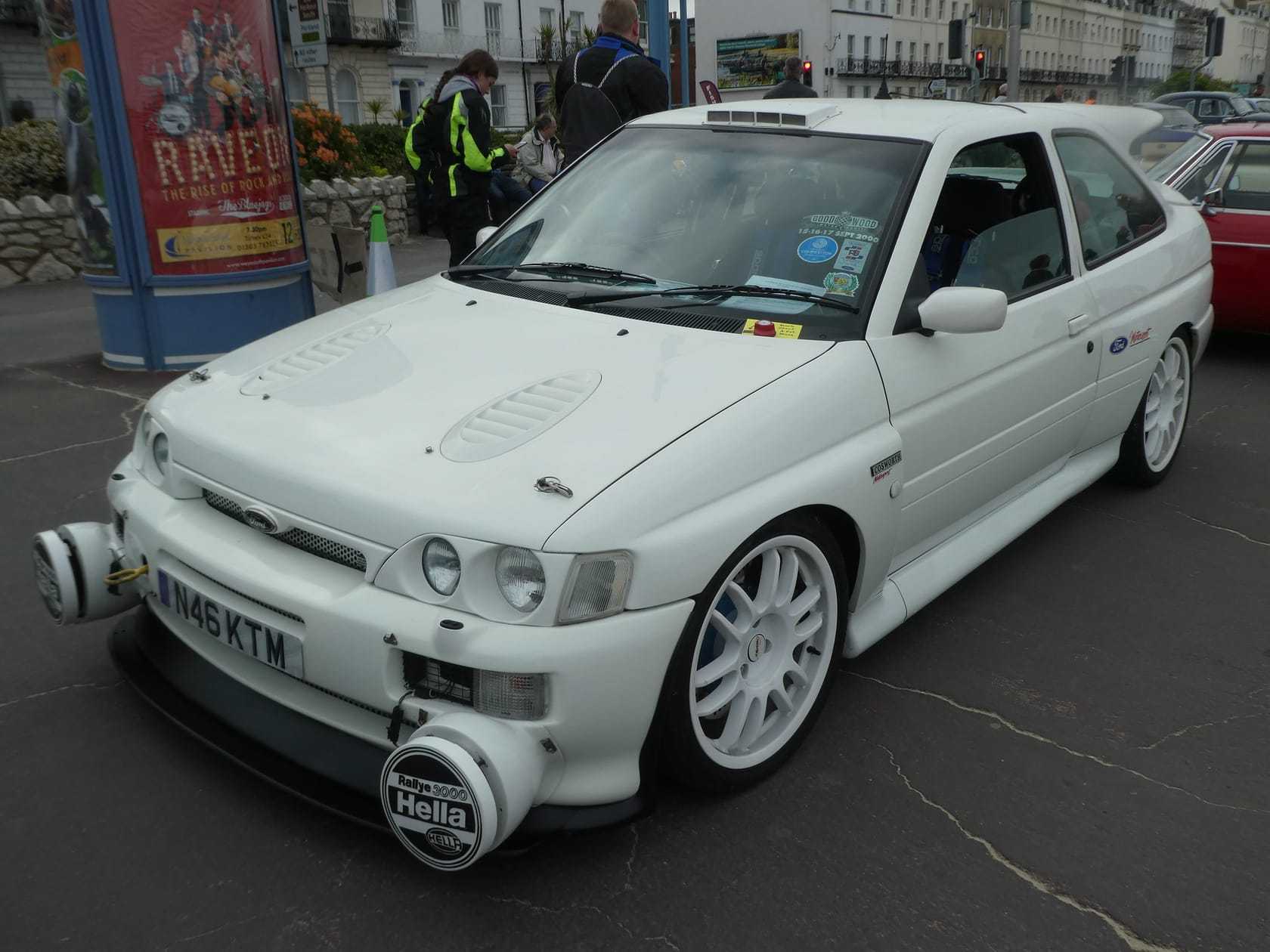
The Ford Escort RS Cosworth was a rally homologation special wearing an Escort suit over Sierra Cosworth four-wheel-drive bones, its whale-tail wing the defining fast-Ford image of the 1990s. A guide to big-turbo and small-turbo cars, the rally record, the replica problem, buying checks and values.
Built 1992–1996 121 recorded sales
At a glance
- Years
- 1992–1996
- Body styles
- Three-door hatchback
- Drivetrain
- Permanent four-wheel drive, 34/66 torque split
- Engines
- 1993cc Cosworth YBT/YBP turbocharged four
- Power
- 227 bhp (road cars)
- Top speed
- About 140 mph; 0-60 in around 5.8 seconds
- Trim levels
- Standard and Lux; big-turbo (1992–94) and small-turbo (1994–96); Monte Carlo edition
- Production
- 7,145 in total, including 2,500 early homologation cars
- Assembly
- Karmann, Rheine, Germany
- Designer
- Stephen Harper (exterior); SVE engineering under Rod Mansfield
- Values
- Usable cars from around £35,000; good examples £45,000-£65,000; the best beyond £80,000
- The wing
- The adjustable whale tail was homologated for rally downforce, and became a bedroom-poster icon
- The bones
- A shortened Sierra Cosworth 4x4 platform wearing Escort-shaped clothes
The models
The Ford Escort RS Cosworth wore its Escort suit over Sierra Cosworth bones, carried a wing that made schoolboys drop their bikes, and won world championship rallies straight out of the box. It completes the fast-Escort dynasty as its most valuable member, and the auction record now treats it as the blue-riband fast Ford of its generation.
The whale tail and the homologation brief
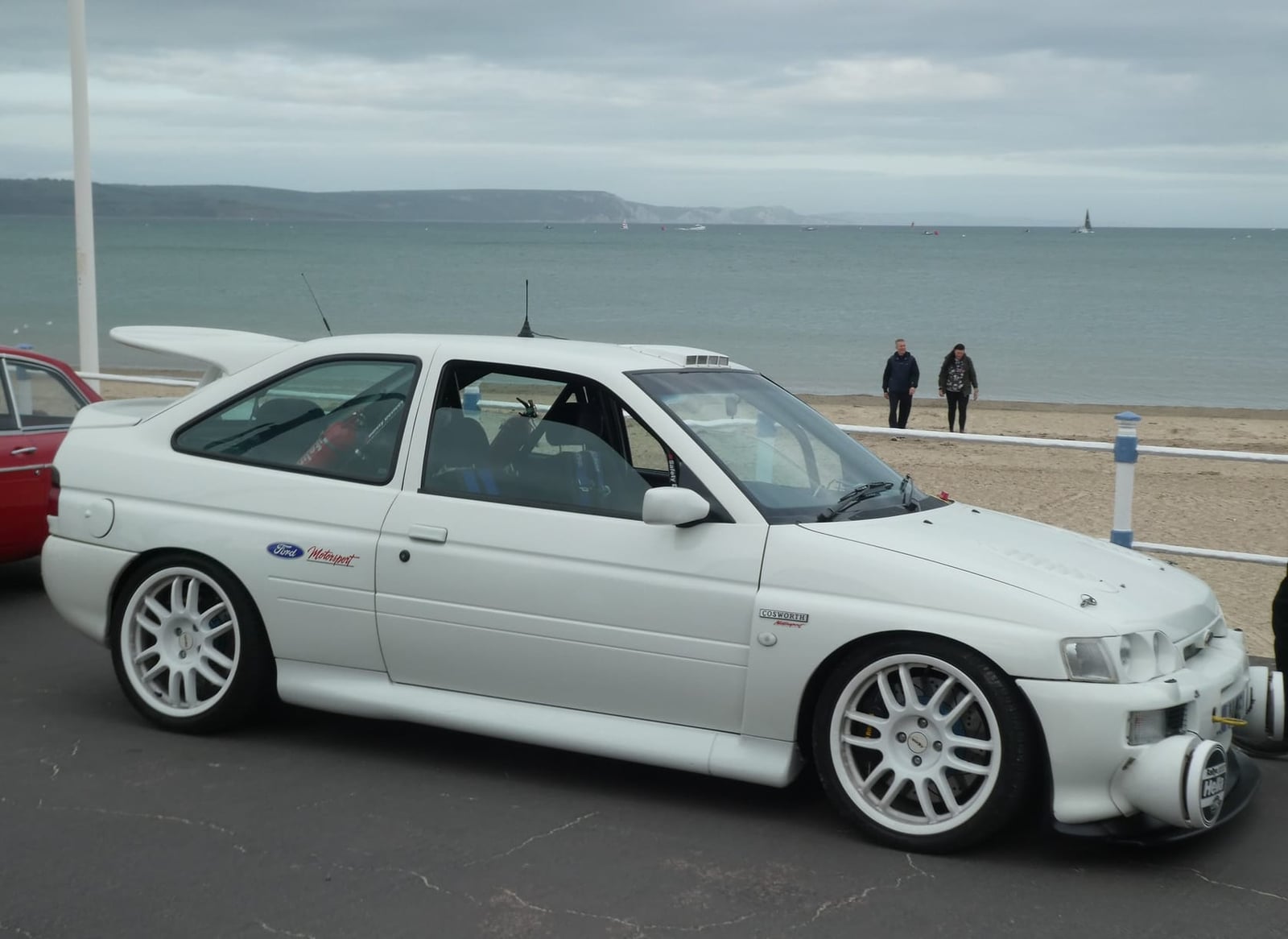
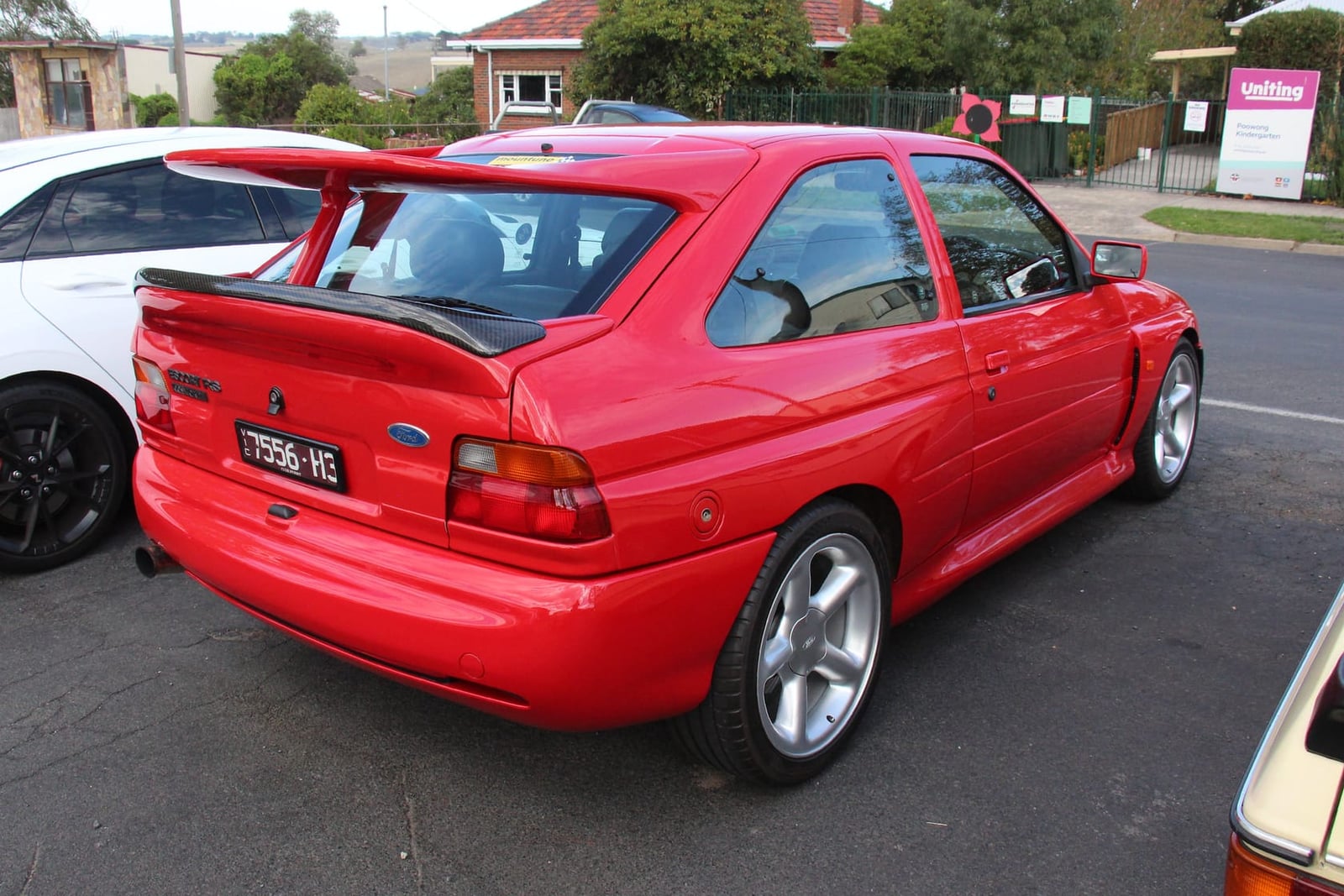
Ford’s problem in 1990 was simple: the Sierra Cosworth was too big for modern rallying and the front-drive Escort too soft. The answer was audacious: shorten the Sierra 4x4 platform, keep the 227 bhp YB turbo and the 34/66 four-wheel-drive split, and dress it as the new Mk5 Escort with every aerodynamic addition the regulations allowed. The double rear wing, adjustable and genuinely load-bearing at speed, was the first on a mass-market car since the Plymouth Superbird, and Karmann of Rheine built the result from 1992: 2,500 homologation cars first, 7,145 in all.

Big turbo, small turbo
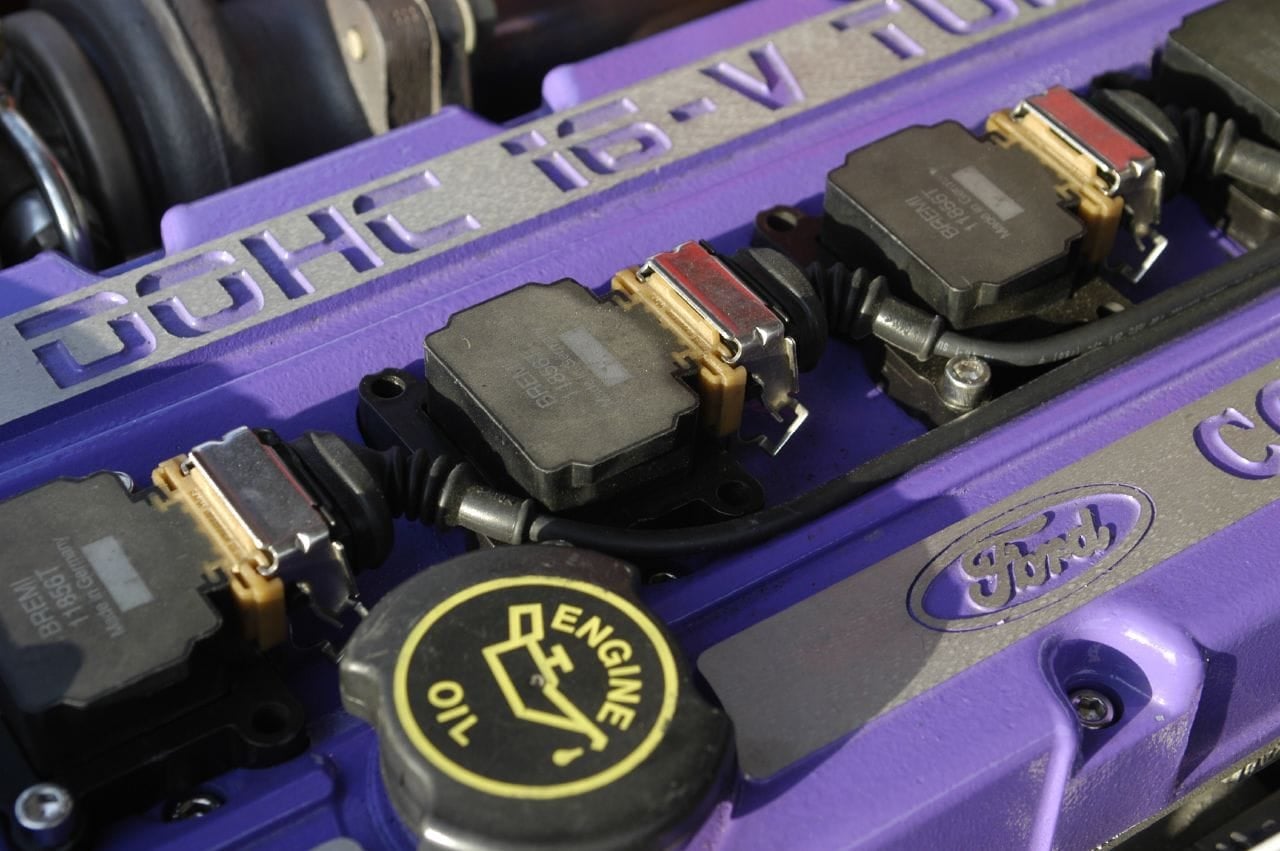
The road cars split into two eras. Big-turbo cars (1992–94) carried the Garrett T34 the rally engine needed, all-or-nothing below 3,500 rpm and ballistic above, plus the motorsport-first details collectors now chase. The 1994 revision brought the smaller T25 turbo, softer manners, earlier boost and the friendlier YBP engine, making the small-turbo cars the sweeter road machines. Lux trim added electric comforts to either; the run-out Monte Carlo edition celebrated the rally record. The market currently pays the homologation premium, but a documented small-turbo car is the connoisseur’s daily-usable answer.

The rally record
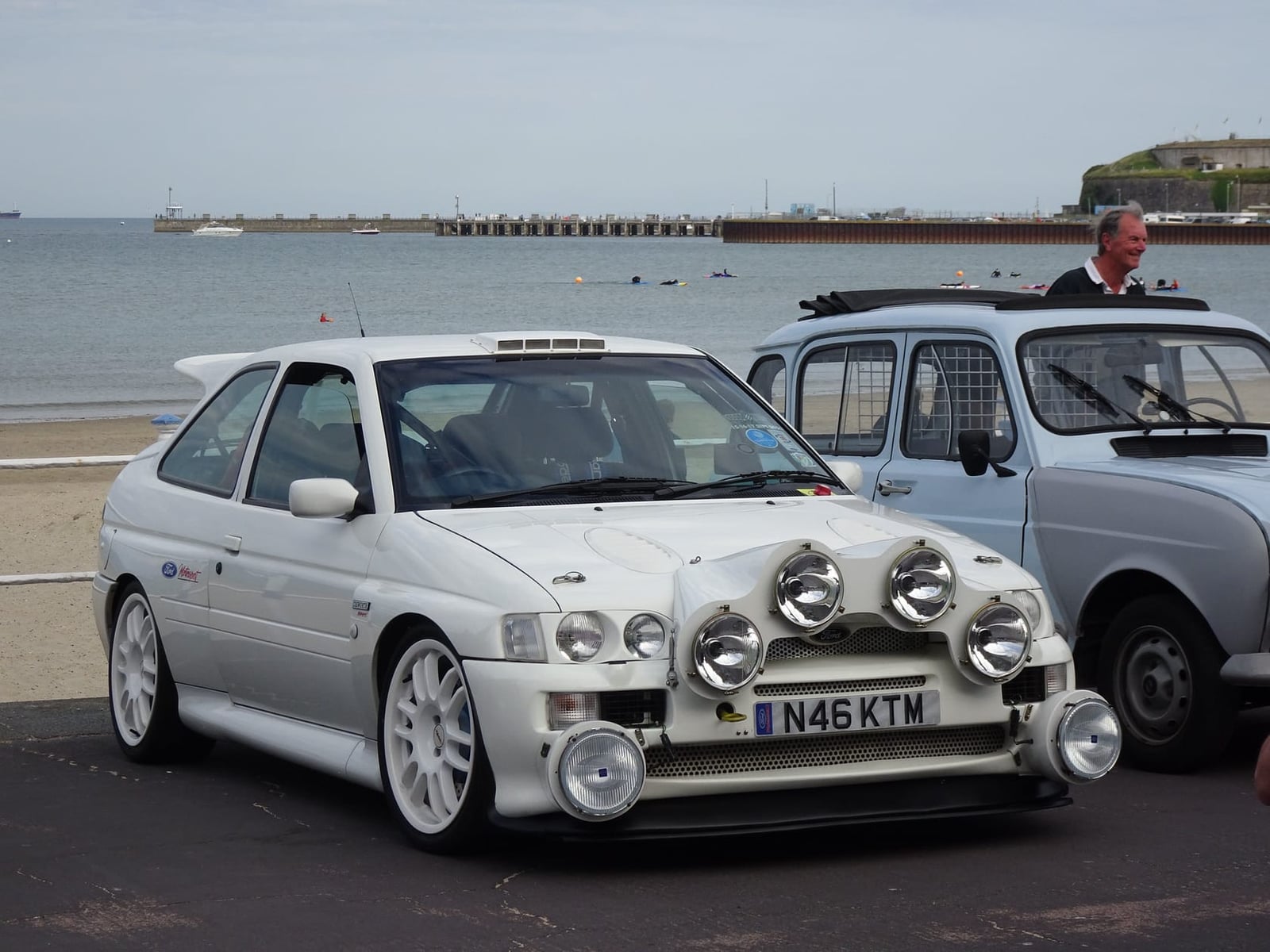
The competition case was made immediately: five world championship wins in the 1993 debut season, Delecour and Biasion trading victories from Portugal to Catalunya, and the car stayed front-running through the mid-1990s before evolving into the Escort WRC. National championships fell across Europe, and the customer motorsport catalogue kept clubmen in Cosworths for a decade. The rally-bred Escort tradition that began with Mk1s in the forests thus closed its circle: the last true RS Escort was also the most successful since the originals.

The theft years and the replica problem
The RS Cosworth’s 1990s were spent on two front pages: rally wins and crime statistics. It was briefly Britain’s most stolen car, insurance groups went stratospheric, and hard lives, track days and ringers thinned the 7,145 badly. The consequence today is a provenance-first market: VIN and engine numbers against Ford records, AVO club knowledge, and documented history decide everything, because Sierra-based replicas and reshelled cars circulate constantly. A genuine car with folder beats a shinier unknown by tens of thousands of pounds, and rightly.
What one is like to drive
Driven today, the Cosworth remains an event. The chassis is the star, four-wheel-drive traction with genuine adjustability, and the steering talks in a way moderns have forgotten; the big-turbo engine demands commitment and repays it with a shove that still feels serious, while small-turbo cars flow better on British roads. The cabin is pure 1990s Ford with Recaros. It shrinks distances and draws crowds equally, and unlike most poster cars, the reality outdrives the memory.

Living with a legend
Ownership today is a specialist affair with a friendly heart. Servicing costs sit closer to performance-car than fast-Ford norms, insurance wants agreed value and secure storage (the theft years cast long shadows), and values reward museum-grade originality, yet the community keeps cars driven: owners’ clubs run track days, the RS scene’s shows treat Cosworths as royalty, and parts supply, shared with the Sierra programme, remains healthy. It is that rare collector car still cheap to fuel with joy rather than concours anxiety, provided the paperwork was right on purchase day.

Buying an Escort RS Cosworth today
Provenance first, always: verify identity through Ford and club records before anything else. Then the mechanical honesty: YB engines are strong when maintained but expensive when neglected, so look for boost-hose health, cooling-system care, evidence of sympathetic mapping rather than crude chips, and a transmission without whines or snatch. Bodywork hides accident history under wide arches, so panel gaps and paint depth matter. Standard cars now carry the premiums; period-modified cars are buyable but price accordingly. The clubs know most survivors by name.

Values: the blue-riband fast Ford
At a measured median of £51,750 across 121 sales, with the best cars past £80,000 and the record at £202,500, the Escort RS Cosworth has completed its journey from stolen-car statistic to collector-grade Ford, and shows no sign of reversing. For the 1990s generation it is the poster made metal; for the fast-Ford collection it is the capstone; and for the market it is proof that homologation specials with real competition records outrun every fashion.

More photos
RS Cosworth: what changed and when
- 1990Ford needs a homologation answer, the Sierra Cosworth being too big for modern rallying and the front-drive Escort too soft.
- 1992Karmann of Rheine begins building the car, 2,500 homologation cars first and 7,145 in all.
- 1992Big-turbo cars carry the Garrett T34 the rally engine needed, all-or-nothing below 3,500 rpm and ballistic above.
- 1993Five world championship wins in the debut season, Delecour and Biasion trading victories from Portugal to Catalunya.
- 1994The revision brings the smaller T25 turbo, earlier boost and the friendlier YBP engine.
- 1996Production ends, the run-out Monte Carlo edition celebrating the rally record.
RS Cosworth: what to check before you buy
Provenance, before anything else
- VIN and engine numbers against Ford records
- Club knowledge and documented history decide the price here
- Sierra-based replicas and reshelled cars circulate constantly
The YB engine and transmission
- Boost-hose health and evidence of cooling-system care
- Sympathetic mapping rather than crude chips
- A transmission without whines or snatch
Body and accident history
- Wide arches hide accident repair, so panel gaps and paint depth matter
- Standard cars now carry the premiums
- Period-modified cars are buyable, but price them accordingly
What the Escort RS Cosworth sells for at auction
In 2025 the median Escort RS Cosworth sold for £53,760 across 20 sales, 15% up on 2024. In real terms, typical Escort RS Cosworth prices were down about 12% over the five years to 2025, once inflation is accounted for.
| Variant | Sold | Typical range | Median |
|---|---|---|---|
| Escort RS Cosworth | 88 | £39,375 - £63,248 | £47,694 |
| Escort RS Cosworth Lux | 32 | £50,906 - £67,078 | £56,816 |
Show the year-by-year mediansHide the year-by-year medians
| Year | Sold | Median | In 2025 money |
|---|---|---|---|
| 2026 (so far) | 12 | £55,625 | |
| 2025 | 20 | £53,760 | £53,760 |
| 2024 | 16 | £46,622 | £48,411 |
| 2023 | 22 | £55,908 | £59,995 |
| 2022 | 5 | £62,176 | £71,206 |
| 2021 | 13 | £66,700 | £82,478 |
| 2020 | 8 | £48,308 | £61,216 |
| 2019 | 6 | £45,506 | £58,254 |
| 2018 | 6 | £55,125 | £71,767 |
| 2017 | 3 | £39,375 | £52,449 |
| 2016 | 5 | £42,932 | £58,660 |
- £56,816Escort RS Cosworth Lux
- £54,562Escort RS Cosworth
- £40,479Escort RS Cosworth
- £56,250Escort RS Cosworth
- £42,187Escort RS Cosworth Lux
Reasonable evidence. 121 recorded sales: enough for the range to mean something, though a few unusual cars can still move a single year's median. Based on 121 sold results from public classic car auctions (2012 to 10 August 2026). Sold prices, not asking prices, and not a valuation: condition, history and specification vary from car to car. Inflation-adjusted figures use the ONS CPIH index, in 2025 money.