Ford Capri vs Escort Mk2: the same engines in two different bodies, and the plain saloon now costs more
Both built at Halewood, both on Kent and Pinto engines, both sold in the millions. One was the car you always promised yourself and the other was a family saloon that won the RAC Rally five years running. Nine hundred auction results on why the Escort is worth nearly twice the Capri today, and whether that makes sense.
Part of: Owning and running a classic car in the UK, the practical guide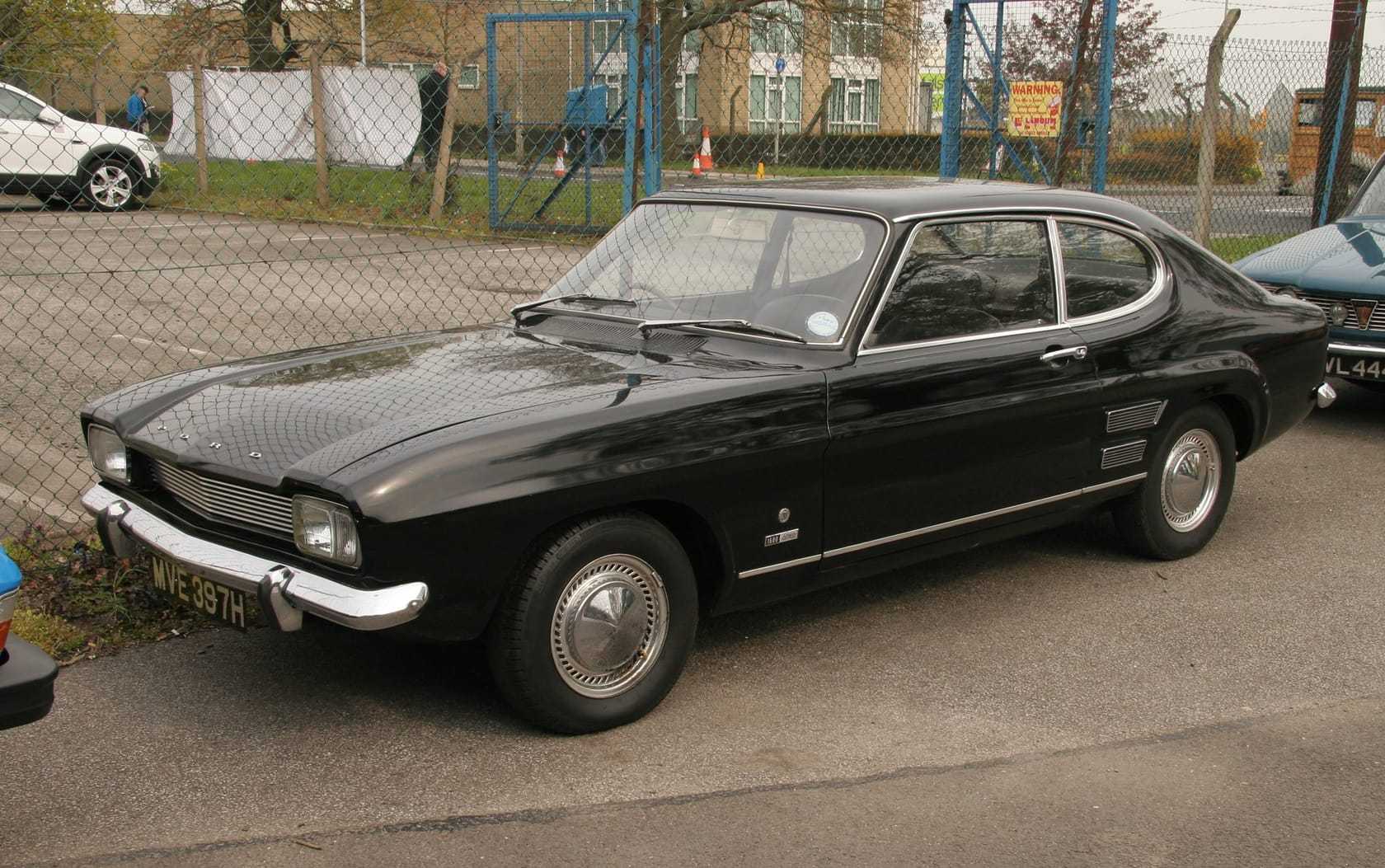
The guides
In 1975 these two sat next to each other in every Ford showroom in Britain, and the Capri was the one you aspired to. The Escort was the family car; the Capri was the car you always promised yourself. Fifty years on the auction record has reversed the order, and a plain Escort saloon now sells for more than a median Capri. Here is how that happened and whether it makes sense.
At a glance
| Ford Capri | Ford Escort Mk2 | |
|---|---|---|
| Built | 1969 to 1986; Halewood until 1976, then Cologne | 1975 to 1980; Halewood and Saarlouis |
| Production | 1,886,647 across three marks | 1,808,395 in Europe (960,007 at Halewood) |
| Engines | Kent 1.3/1.6; Pinto 1.6/2.0; Essex 3.0 V6; Cologne 2.8 V6 | Kent 1.1/1.3/1.6; Pinto 1.6 (Mexico) and 2.0 (RS2000); Cosworth BDA 1.8 (RS1800) |
| Power | Around 50 bhp (1.3) to 160 bhp (2.8 Injection) | 48 bhp (1.1) to 115 bhp (RS1800) |
| Top speed | 115 mph (3.0, 1969); around 130 mph (2.8i) | Around 110 mph (RS2000) |
| Layout | Front engine, rear-wheel drive, live axle on leaf springs | Same |
| Body | Two-door fastback coupe (Mk1); hatchback from Mk2 | Two- and four-door saloon, estate, van |
| Median auction price | £12,849 (566 sales) | £24,012 (304 sales) |
| Price range, middle half | £7,800 to £21,800 | £14,500 to £34,900 |
Auction figures are from our own dataset of UK results, compiled to 10 August 2026, using the median sold price.
What they were
The Capri was Ford of Europe’s Mustang: a long bonnet, a short tail, a fastback roof, and whatever engine the buyer could afford, from a 1.3 Kent that took a long time to reach 80 mph to a 3.0 Essex V6 that did 115. It was unveiled at Brussels in January 1969 and sold from February, built at Halewood until October 1976 and at Cologne thereafter, and it went through three marks: the Mk1 coupe, the Mk2 hatchback of 1974 and the Mk3 of 1978, which ran to the end of 1986. The car everyone wanted by then was the 2.8 Injection, with 160 bhp from the Cologne V6, 130 mph and 0-60 in under eight seconds. Our full history is in the Capri page.
The Escort Mk2 was the 1975 re-skin of the car that had already won everything. The square body sat on the Mk1’s floorpan and running gear, the mainstream cars ran the 1.1, 1.3 and 1.6 Kent crossflow, and above them sat the homologation specials: the Mexico with the 1.6 Pinto, the RS2000 with the 2.0 Pinto, 110 bhp and the polyurethane droop-snoot nose, and the RS1800 with the Cosworth BDA, of which around 109 road cars were built. The works cars won the RAC Rally every year from 1975 to 1979 and took Ford the 1979 World Championship for manufacturers. The history is in the Escort Mk2 page, and the fast versions have pages of their own: the RS2000 and the Mexico.
They were, under the skin, close relatives. Both used the Kent and Pinto fours, the same four-speed gearboxes, MacPherson struts at the front and a leaf-sprung live axle at the back, and both were built at Halewood and Saarlouis. The Capri’s advantage was the V6 engines the Escort never had, and its body.
What they are like
The Escort is the driver’s car. It is short, light, rear-driven and direct, and a decade of rally development went into making it do what the driver asks. An RS2000 with 110 bhp reaches 60 mph in around nine seconds and 110 mph flat out, which is not fast by modern standards, and it does not matter, because the car’s pleasure is in its balance. A 1.6 Sport with 84 bhp gives most of the feel for a fraction of the price.
The Capri is the grand tourer. Longer, heavier, lower, and built for the straight road, it is at its best as a V6. The 3.0 Essex of 1969 was criticised in period for hard springing and a low axle ratio; the 2.8 Injection of 1981, with lowered suspension, Bilstein dampers and wide tyres, was the car the Capri had always promised to be. A four-cylinder Capri is a pleasant, handsome car that is not quick, and it is the cheapest way into the shape.
What they cost to own
The same, in most respects, because they are the same underneath.
Both rust in the same places: the front strut tops and inner wings, the chassis legs, the A-pillars and scuttle, the sills and jacking points, the floors and the rear spring hangers. On both, the spring hangers are a safety item. The Capri adds front wings that rot above the headlamps and behind the wheels, because there were no inner liners, and a scuttle that rots from the inside and shows as bubbling on the outside. Our guide to rust on a classic covers what to look for.
Mechanically both are simple. The Kent is as easy an engine as exists; the Pinto needs its camshaft oil spray bar clear and its cambelt changed on time, on both cars. The Capri’s Essex V6 has a timing gear that specialists replace as a matter of course, and the Cologne V6 gives little trouble. Parts for both are good but not at MGB levels, because neither has a new bodyshell industry behind it, and Escort Mk2 panels in particular are in demand from the rally world.
The ownership difference is authenticity. The Escort’s rally values have produced a replica industry: a Mk2 dressed as an RS2000 or a Mexico is common, the replicas sell at a discount in the auction record, and there is no factory heritage certificate for a Ford. The owners’ club registrar and the build plate are the checks. The Capri has the same problem at the top of its range, where a 3.0 S or a 2.8 Brooklands carries a premium that a repainted base car can imitate.
Both are past the forty-year line for tax and MOT exemption in their earlier forms; a 1986 Capri has not quite reached it.
What the auction record says
Our dataset holds 566 Capri sales and 304 Escort Mk2 sales.
The median Capri sold for £12,849, with the middle half between £7,800 and £21,800. The median Escort Mk2 sold for £24,012, with the middle half between £14,500 and £34,900. The Escort is worth nearly twice the Capri at the median, and the gap runs through the whole distribution.
The Escort figure is a rally figure. The RS2000 accounts for nearly half the sales at a median of around £31,000, the Mexico sells at a similar level, and the eight RS1800 sales in the dataset have a median of around £84,000 with a top price well over a quarter of a million. A plain Escort Mk2 sells for around £18,000 and a base 1.3 for around £9,000, which is where the ordinary buyer comes in.
The Capri’s spread is about the engine. A four-cylinder Mk3 sells for around £8,850, a 2.8 Injection for £12,000 to £13,300, a Mk1 3000 for around £20,000, a 3.0 S for around £21,000 and a 2.8 Brooklands for around £25,000. The top sale, a Mk3 3.0 S at £186,750 in 2023, was an outlier with a story behind it.
The trends diverge. The Capri’s median has run between £12,000 and £14,000 in nominal terms since 2016, which is a fall of about a fifth in real terms. The Escort Mk2 has gone the other way: its median rose from around £13,000 in 2015 to around £29,000 in 2023 and has run around £24,000 in the last three years, which in real terms is a rise of roughly half over the decade. That makes it one of the few British classics in our dataset to have beaten inflation, and the reason is that its buyers are rally people rather than classic-car people.
The question behind the question
“Which is the better investment?” The Escort has been, and the reason it has been is structural rather than a fashion: the historic rally world needs Mk2 shells and there are no more being made. Whether that continues is not knowable. The Capri has been flat, which for a car to drive is a reasonable state of affairs.
“Which should a first-time fast-Ford buyer choose?” The Capri, on price. A good four-cylinder Mk3 at £8,000 to £9,000 or a 2.8i at £13,000 is a handsome, simple car with a club scene and a following, and it costs what a base Escort costs. The Escort’s rally premium means the affordable ones are the slow ones.
“Which is more fun?” On a B-road, the Escort. On a motorway, the Capri. In a car park, the Capri, because more people will come and talk to you. Both were built for the same buyer, and the buyer has grown up and can now afford the one they wanted, which is a large part of why either is worth what it is; our guide to what makes a car a classic calls this the nostalgia cycle, and these two are its textbook case.
The honest verdict
The Capri was the car you promised yourself and the Escort was the car you bought instead, and the market has decided that the car you bought instead was the better one. It is right about the driving and wrong about the glamour. For the ordinary buyer the Capri is the better value by a wide margin, because it has no rally premium to pay, and a good 2.8 Injection remains one of the best fast cars of its era for the money. The Escort is the one to own if the money is not the point.
Frequently asked questions
Which is worth more, a Capri or an Escort Mk2?
Did the Capri and Escort share parts?
Which is the better car to drive?
Which one has the rust problem?
Which is the better first fast Ford?
Related across themes


More from Owning & running


Recently added

Aston Martin DB5: the most famous car in the world (1963–1965)

Aston Martin DB4: the car that made Newport Pagnell immortal (1958–1963)

Jaguar E-Type vs Austin-Healey 3000: the two big British sixes, and what the auction record says about each
