Classic car number plates: black-and-silver eligibility and the UK rules
What number plates a classic car can legally wear in the UK. The black-and-silver eligibility rule (built before 1 January 1980, historic tax class), the British Standard every plate must meet, why show plates are not road-legal, pressed metal versus acrylic, and where to buy compliant plates.
Part of: Owning and running a classic car in the UK, the practical guide
The guides
Putting the right number plates on a classic is one of those small jobs that makes a disproportionate difference to how the car looks, and one of the few places where an owner can accidentally make a perfectly legal car illegal. The pressed aluminium plates and the black-and-silver finish that suit a 1960s or 1970s car are still available and still legal, but only on the right car and only when made to the right standard. The decorative plates sold alongside them at autojumbles mostly are not.
This is what is allowed, what is not, and how to order plates that look period-correct without failing the next MOT. The authority on all of it is the gov.uk guidance on displaying number plates; the points below are a plain-English summary aimed at classic owners, not legal advice.
Can a classic wear black-and-silver plates?
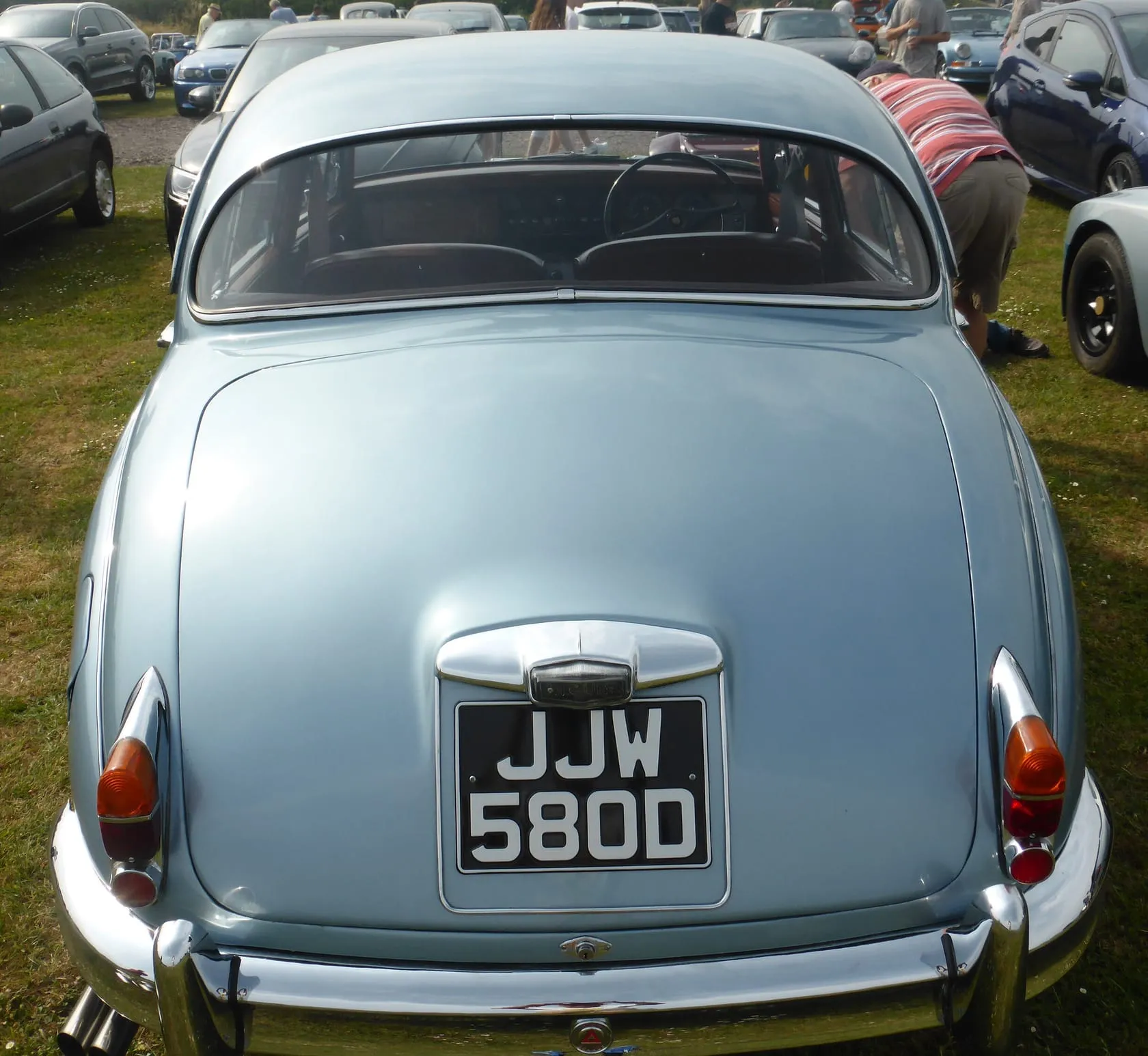
This is the question most classic owners actually want answered, and the rule is now strict. A car may display black-and-silver plates (silver, grey, or white characters on a black background) only if it meets both of these conditions:
- it was constructed before 1 January 1980, and
- it is registered in the historic vehicle tax class.
Both have to be true. Historic tax class on its own is not enough, and age on its own is not enough. The date the car was built and its current tax class are both shown on the V5C registration document, which is the document to check before ordering anything.
The detail that catches people out is that this used to be a rolling date. For years the expectation was that the black-and-silver entitlement would advance every year in step with the forty-year historic vehicle status rule. It does not. From 1 January 2021 the cut-off was fixed at 1 January 1980 and stopped moving. So a car built in 1981, even though it is now well over forty years old and sitting in the historic tax class, cannot legally wear black-and-silver plates, because it falls the wrong side of the 1980 line. The forty year rule still governs tax and MOT exemption on a rolling basis; it no longer governs plate colour.
Black-and-silver plates are the one case where a plate does not have to be reflective. That is the whole point of them: they predate the reflective plates that became standard in the 1970s, and an eligible car is allowed to run the old non-reflective style. Everything else about the plate, the font, the character sizes, the spacing, still has to be correct.
The standard every plate has to meet
Whatever the colour, a road-legal plate has to be built to a British Standard and use the mandatory characters. The current standard is BS AU 145e, and any plate made and fitted from 1 September 2021 has to meet it. The key requirements:
- The Charles Wright font only. This is the standard blocky typeface. Italic, script, and other decorative fonts are not allowed.
- Solid black characters. The raised and shaded styles sold as 3D, 4D, gel, hi-line, or two-tone are no longer permitted under BS AU 145e. The characters must be a single solid black.
- Correct size and spacing. Character height, width, stroke, and the gaps between characters and groups are all fixed dimensions. This is what spaced-out “name” plates get wrong, and it is an offence even when every character is technically present.
- The right backgrounds. White reflective at the front, yellow reflective at the rear, with black characters, on any car not eligible for black-and-silver.
- The supplier mark. A compliant plate shows the manufacturer’s name, postcode, and the British Standard number along the bottom edge.
These rules are why a plate can look wrong and be illegal, or look old and be perfectly legal. The colour and the material are flexible within the rules; the font, the sizing, and the standard are not.
Show plates are for the show, not the road
“Show plates” is the trade name for decorative plates that deliberately break one or more of those rules: a stylised font, a slogan instead of the registration, tight or wide spacing, a coloured or printed background. They are sold for display on a stand at a show, for a car that never moves under its own power, or for off-road use. None of that is a problem until the car goes on a public road.
On the road, a non-compliant plate can mean a fine of up to £1,000 and a straight MOT failure, and a plate that is genuinely hard to read can bring a separate charge on top. The practical line is simple: a period-correct look is fine, but the plate still has to use the legal font, sizing, and (unless the car is black-and-silver eligible) reflective material. If a supplier offers you a “show plate only” plate for a car you intend to drive, that is the supplier telling you it is not road-legal.
Pressed metal or printed acrylic
Most modern plates are printed acrylic: a flat plastic plate with the characters printed under a reflective film. The period-correct alternative is a pressed plate, traditionally aluminium, where the characters are physically stamped and raised from the plate and then painted. Pressed plates are what most cars wore into the 1970s and they suit a classic far better than flat acrylic.
A pressed plate is entirely road-legal as long as it is made to the same standard as any other: Charles Wright font, correct sizing, solid black characters, the supplier and standard mark, and reflective backing unless the car qualifies for black-and-silver. Several registered suppliers specialise in pressed plates for classics and will make them to the legal specification. The thing to avoid is a pressed plate made purely for looks with the wrong font or spacing, which is a show plate in metal.
Original-style registration formats
A classic keeps the registration format of its era. A car first registered in 1965 wears a 1960s-style mark, a 1974 car wears the suffix format of its year, and a pre-1963 car can wear the older format it was issued. You do not, and cannot, modernise the format, and you should not want to, because the original mark is part of the car’s identity and its value.
Two related cases are worth knowing. An imported classic, or one rebuilt from parts, may be issued an age-related registration that matches its period rather than a current mark, which keeps the period look legal. A heavily modified or kit-based car may instead carry a Q-plate, which marks a vehicle whose exact age or identity cannot be confirmed. Both are normal; both affect which plates you can fit.
Where to buy road-legal plates
Number plates have to be bought from a DVLA registered number plate supplier. You cannot simply order a finished plate with no checks, because the supplier is required to confirm you are entitled to the registration. To buy plates you need to show:
- proof of identity, such as a passport or photocard driving licence, and
- proof you can use the registration number, normally the V5C registration document or the green new-keeper slip.
The supplier records the sale. The gov.uk number plate supplier finder lists registered suppliers by postcode, and the specialists who make pressed and black-and-silver plates for classics are registered the same way. If you are ordering black-and-silver plates, expect the supplier to confirm the car passes the pre-1980 and historic-tax-class test first.
A quick checklist before you order
- Check the date of first registration and the tax class on the V5C before assuming black-and-silver is allowed.
- Specify the Charles Wright font, solid black, correct sizing. Avoid 3D, 4D, gel, and two-tone, which fail BS AU 145e.
- For the period look, choose a pressed plate made to standard rather than a decorative show plate.
- Buy from a registered supplier and have your ID and V5C ready.
- Keep the original registration format; never modernise the mark.
Get those right and a classic can wear plates that look exactly of their period and still pass an MOT and a police check without a second glance.
Related
This guide is part of owning and running a classic car, the practical side of classic ownership, where the plate rules sit alongside road tax and the historic tax class, the MOT exemption, low-emission zones, tyres, fuel, and storage.