Preparing a classic for the MOT: what fails most, what the test checks on an old car, and the exempt-car question
A quarter of all defects are lights and a fifth are suspension, and a classic fails on the same cheap things as everything else. The national failure figures, the emissions rule that spares a pre-1975 car the gas analyser, the items the manual exempts by first-use date, and why an exempt car is still worth testing.
Part of: Owning and running a classic car in the UK, the practical guide
The guides
The MOT is the one annual encounter with officialdom that most classics have, and the ones that are exempt from it are the ones that most benefit from it anyway. Here is what the test actually finds, what the inspection manual says about old cars specifically, and why the exemption is a reason to test rather than a reason not to.
What fails, nationally
The Driver and Vehicle Standards Agency publishes the failure figures, and they are consistent year to year. For cars and light vans in 2024 to 2025 the overall initial failure rate was 28 per cent, with dangerous defects found in nearly 8 per cent of tests. The average failing car had between two and three defects.
By category, the share of all defects found was:
| Category | Share of defects |
|---|---|
| Lamps, reflectors and electrical | 25% |
| Suspension | 19% |
| Brakes | 16% |
| Tyres | 13% |
| Visibility | 8% |
| Body and structure | 6% |
| Emissions | 6% |
| Steering | 4% |
The figure to take most seriously is a different one: tyres accounted for 60 per cent of all defects classed as dangerous, with brakes most of the rest. A classic on aged tyres is the single most likely car in the queue to be sent home with a dangerous-defect failure, and the cause is visible on the sidewall before the car leaves the garage.
The lesson in those numbers is that cars fail on cheap, visible things. A bulb, a perished bush, a worn pad, an old tyre. The structural failures that frighten classic owners are a small share, and the subject of our guide to rust and what the MOT requires.
The emissions rule: 1 August 1975
This is the item most classic owners misunderstand, and the manual is precise.
The metered exhaust test, the gas-analyser measurement of carbon monoxide and hydrocarbons, applies to petrol cars first used on or after 1 August 1975. A car first used before that date is outside the metered test altogether.
For cars that are inside it, the limits follow the car’s age. A car without a catalytic converter from the 1975 to 1992 era is tested against default limits that allow far more than a modern car: a carbon monoxide ceiling of a few per cent and a hydrocarbon limit in the low thousands of parts per million, with the exact figures set by first-use band in the manual’s charts. A well-tuned carburettor engine passes them; a badly set one does not, and a carburettor clean and balance before the test is the standard preparation.
A pre-1975 car is not exempt from all scrutiny. The manual fails any car that emits dense blue or clearly visible black smoke for a continuous period of five seconds at idle, and an engine burning oil badly enough to do that is failed on sight regardless of age.
What the manual exempts by date
The inspection manual works by first-use date, and a classic is not required to have what it was never required to have. The thresholds worth knowing:
- Headlamps: vehicles first used before 1 January 1931 do not need them. Everything later is checked for aim with equipment, and aim outside limits is a major defect.
- Mirrors: a car first used before 1 August 1978 needs only one mirror giving an adequate view to the rear. Later cars need more.
- Speedometer: checked for fitment, operation and illumination on vehicles first used on or after 1 October 1937.
- Side repeater indicators: required only on cars first used from 1 April 1986.
- Horn: must be loud enough to be heard by other road users; on cars first used after 1 August 1973 the note must be continuous or uniform. On a car first used before 1906 a gong, bell or siren is acceptable, which is the manual’s best sentence.
Seat belts are inspected wherever they are fitted, including belts an owner has retrofitted to a car that never had them: anchorages, webbing, buckles and retractors are all checked and a stretched or damaged belt is a major defect. A car that was never required to have rear belts is not failed for lacking them. The dates are set out in our guide to how safe a classic really is.
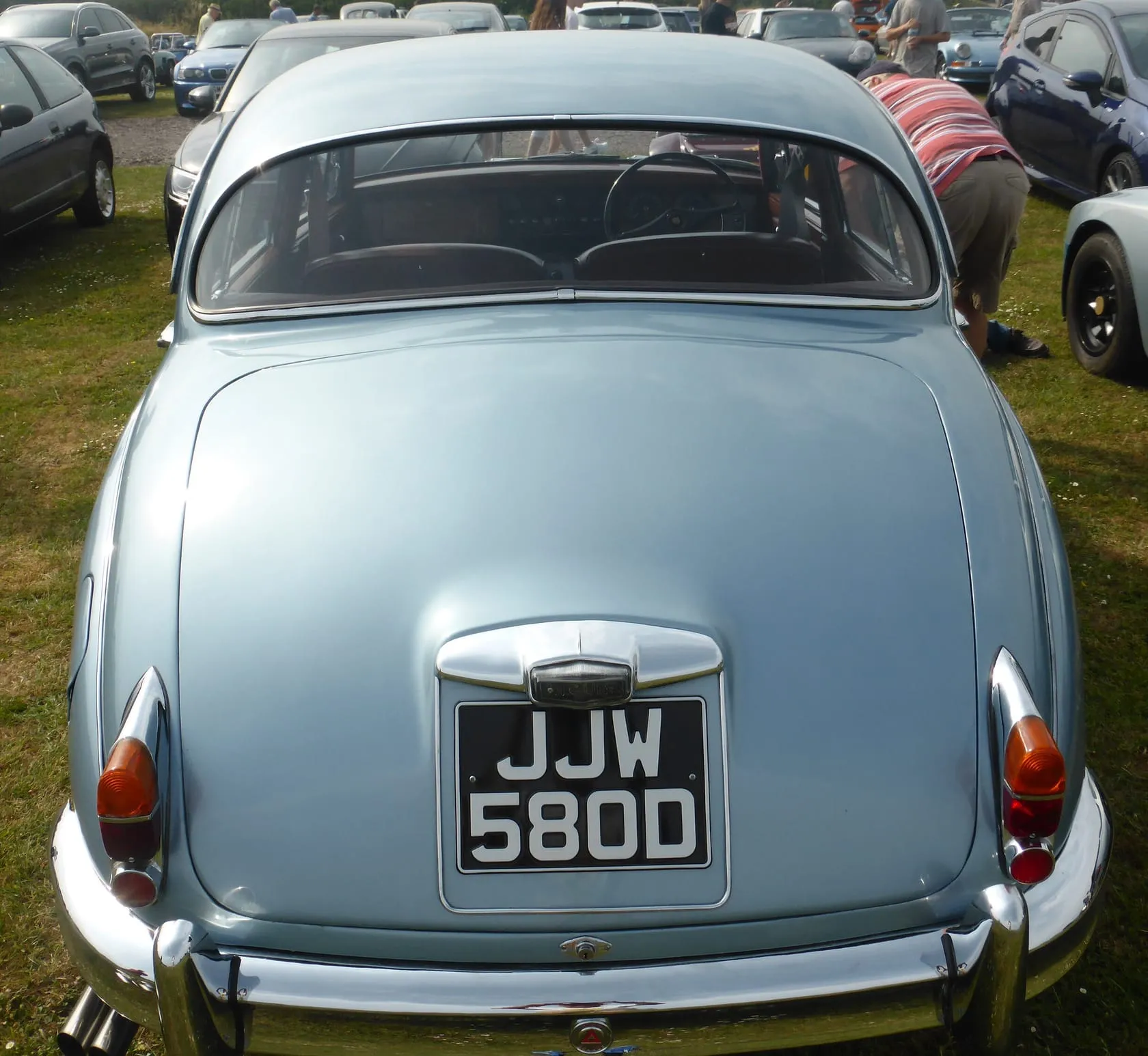
Number plates are checked at the start of the test, and the rules catch classics wearing decorative plates: characters must be the correct size, stroke and spacing in the prescribed font, and plates fitted since September 2021 must meet the current British Standard and be a single shade of black. Black-and-silver plates are permitted on cars manufactured before 1 January 1980, with a tax-class condition for cars built after 1972, all covered in classic car number plates.
The exempt-car question
A car built or first registered more than forty years ago, with no substantial changes in the last thirty, is exempt from the MOT. No application is needed; the owner declares it when taxing the car.
The government’s guidance then says two things that matter. First: the vehicle must be roadworthy whether it is exempt or not, and you may wish to undertake an MOT voluntarily. Second: using a vehicle in a dangerous condition carries a fine of up to £2,500 and three penalty points, and the exemption has no bearing on that.
So the exemption removes the annual check without removing the responsibility the check was performing. For a car in regular, careful use that is fine. For a car that has stood through a winter, or that a new owner has just bought, it is precisely the wrong moment to lose an independent inspection, and a voluntary test at the capped fee of £54.85 is the cheapest pair of expert eyes available.
What happens if an exempt car fails a voluntary test? Legally, nothing in the sense that no certificate was required, so the car is not made illegal by failing to get one. Practically, the owner now has a written list of defects a tester considered serious, and the roadworthiness duty applies regardless. An owner who knows about a dangerous defect and drives anyway is in a worse position than one who never tested, which is the argument for fixing what the test finds rather than for not testing.
Preparing the car: the afternoon before
Given that cars fail on cheap visible things, the preparation is mostly looking.
- Every light. Headlamps on both beams, sidelights, tail lights, brake lights with a helper, indicators all round, number plate light, reversing and fog lamps if fitted. A quarter of all defects is this list.
- Tyres. Tread is the easy part; the date code on the sidewall is the part that matters, and cracking in the sidewall is a dangerous defect. Pressures set.
- Brakes. A firm pedal that does not sink, a handbrake that holds on a slope, no pulling to one side on a test stop. Fluid level and colour.
- Suspension. Bounce each corner; a car that keeps bouncing has a tired damper. Listen for clonks over bumps. Bushes are the commonest suspension failure on an old car.
- Visibility. Wipers that clear rather than smear, washers that work, a windscreen without a crack in the driver’s sweep, mirrors secure.
- Underneath. Look at the sills, floors and the areas around suspension mountings with a torch. You are looking for holes and for softness, which is exactly what the tester will press for.
- Exhaust and emissions. No blowing, nothing loose, and on a post-1975 car a carburettor that is set up rather than hopeful.
- Horn, seat belts, number plates, for thirty seconds each.
Do that the afternoon before and the test becomes a formality, which for a well-kept classic is what it should be. The annual sequence of an MOT in spring after a winter lay-up, whether required or voluntary, is the rhythm that keeps an old car honest.
Frequently asked questions
What do cars fail the MOT on most?
Does a classic have to pass an emissions test?
Which MOT items does an old car not need?
Should I get a voluntary MOT on an exempt classic?
What happens if an exempt car fails a voluntary test?
Related across themes

More from Owning & running


Recently added

Jaguar XK140 values: the one XK where the drophead beats the roadster, and the cheapest of the three at the median

TVR Grantura and Vixen: where Blackpool learned to build sports cars (1958–1973)

Ford Cortina values: the Lotus at three times a saloon, the Mk1 GT and 1600E next, and the ordinary Cortina at hatchback money
