MGB vs Triumph TR6: the two British roadsters everybody cross-shops, compared on the numbers
One sold half a million, the other sold ninety thousand and costs nearly twice as much. Four cylinders against six, Abingdon against Canley, and what four thousand auction results say about which is the better buy today.
Part of: Owning and running a classic car in the UK, the practical guide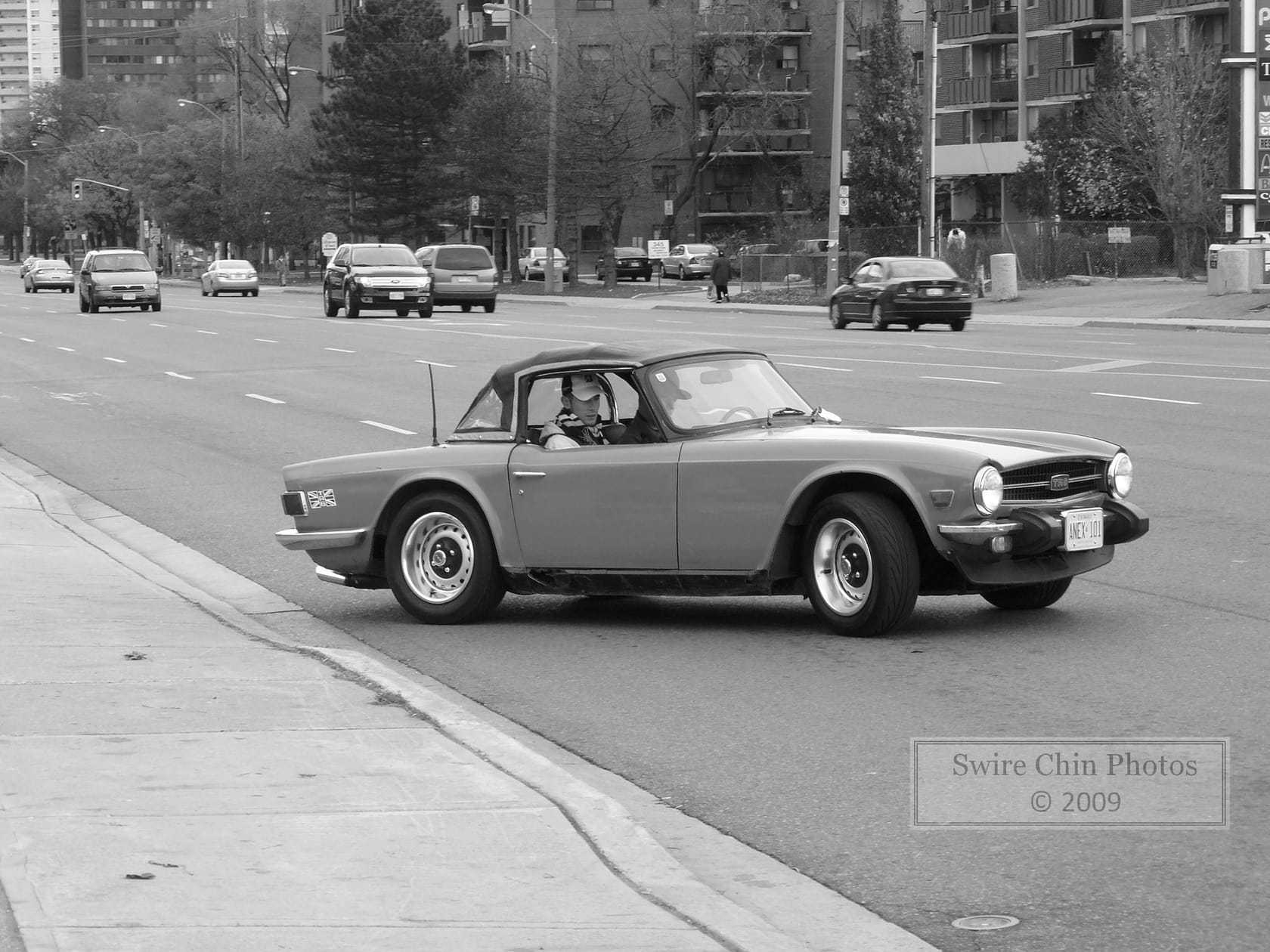
The guides
If you want a British roadster from the 1960s or 70s, you will end up comparing these two, because everyone does. They were built twenty miles apart, sold in the same showrooms to the same buyers, and are still the two most-traded open British classics. They are also more different than the comparison implies.
Here they are side by side: what they were, what they are like, what they cost now according to four thousand auction results, and which one is the right answer for which buyer.
At a glance
| MG MGB roadster | Triumph TR6 | |
|---|---|---|
| Built | 1962 to 1980, Abingdon | 1968 to 1976, Canley |
| Production | About 387,000 roadsters, over 512,000 with the GT | 91,850, around 83,000 exported |
| Engine | 1,798cc B-series four, twin SU carburettors | 2,498cc straight-six, Lucas injection (UK) or carburettors (US) |
| Power | Around 95 bhp | 150 bhp (early UK PI), around 125 bhp (late PI), around 104 bhp (US) |
| Top speed | Around 105 mph | Around 120 mph (PI) |
| Body | Steel monocoque | Steel body on separate chassis, styled by Karmann |
| Median auction price | £7,333 (1,831 sales) | £13,850 (1,280 sales) |
| Price range, middle half | £5,100 to £11,100 | £10,300 to £18,400 |
Auction figures are from our own dataset of UK results, compiled to 10 August 2026, using the median sold price rather than the average.
What they were
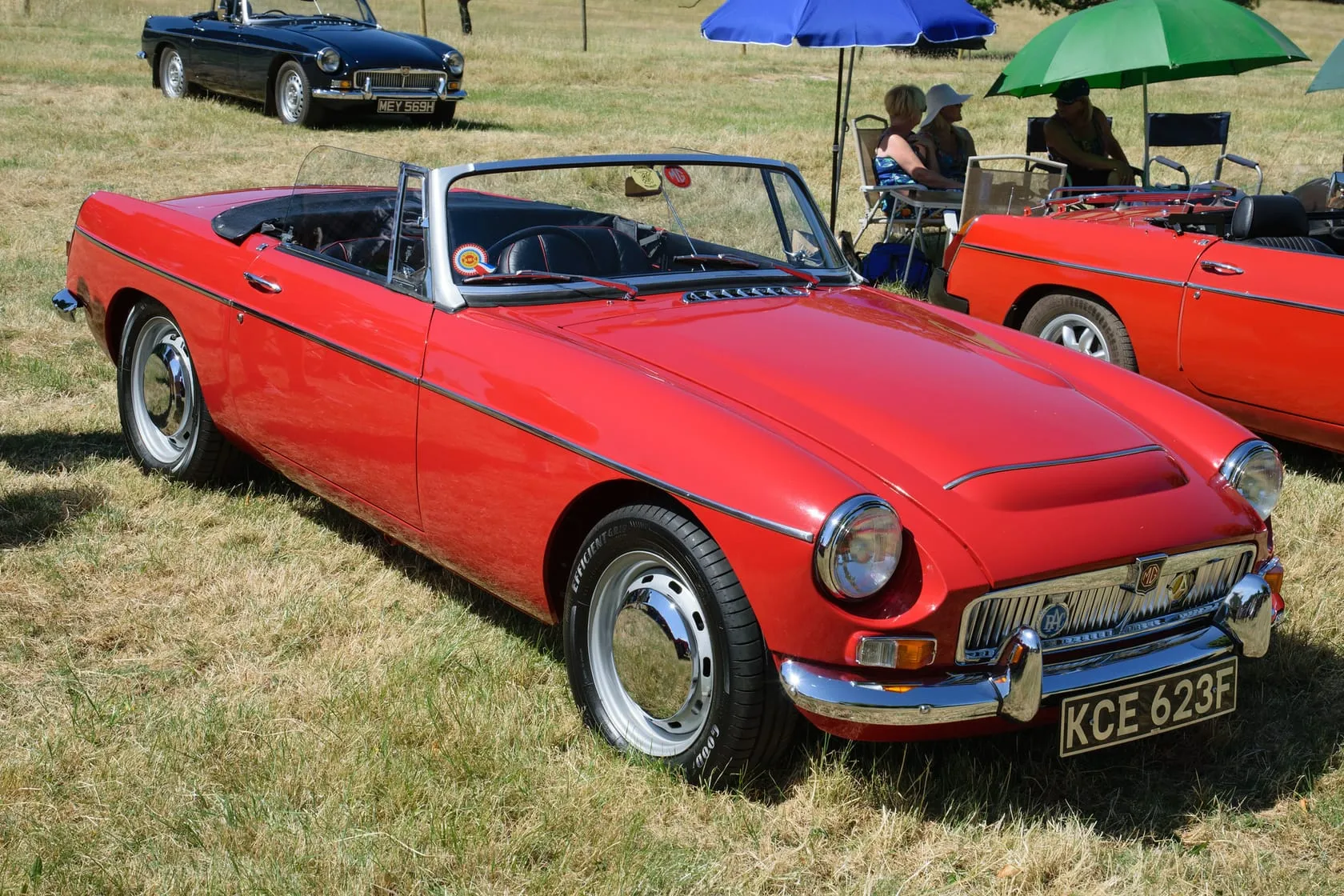
The MGB arrived in 1962 as a modern car: a steel monocoque, wind-up windows, a proper boot, and the B-series engine in its largest form. It was not fast, it was not exotic, and it sold in numbers no British sports car has matched before or since. Over eighteen years it gained a GT coupe in 1965, a five-bearing engine in 1964, and in late 1974 the black bumpers and raised ride height that American regulations demanded. More than half a million were built, and the British sports-car industry was effectively the MGB with other cars around it.
The TR6 was a different proposition. It was the last of a line of increasingly serious Triumph roadsters, a Michelotti TR5 body re-skinned by Karmann in Germany, on a separate chassis, with a 2.5-litre straight-six. In Britain it came with Lucas mechanical fuel injection and 150 bhp, which in 1969 was a great deal of power in a small open car. It was the best-selling TR, but against the MGB’s numbers it was a rare car, and most of the 92,000 went to America with carburettors and a hundred horsepower.
What they are like
The TR6 is the fast one. A UK injection car reaches 60 mph in the eight-second bracket and 120 mph, and the six makes a noise the B-series will never make. It is a muscular, slightly old-fashioned drive: heavy steering, a firm ride, independent rear suspension that works well but rewards respect, and a cockpit that fits a tall driver better than the MG’s. It feels like a bigger car than it is.
The MGB is the balanced one. With 95 bhp it is a twelve-second car to 60 and will cruise at 70 with the overdrive engaged, which is enough. What it has is a chassis that does everything well: light steering, a predictable live rear axle, good brakes, and a roomy cockpit with a decent boot. It is the easier car to drive quickly on a British B-road and the easier car to drive slowly through a town, and it will do both all day.
The summary owners of both tend to reach is that the TR6 is the car you want and the MGB is the car you use.
What they cost to own
Here the MGB wins outright. It is the best-supported classic in Britain: new bodyshells are still pressed from original tooling, every mechanical part is remanufactured, and the B-series is about as simple as an engine gets. The weak points are known and cheap: the rear crankshaft scroll seal seeps, the sills and castle rails rot, and the three-bearing engine of 1962 to 1964 is the one to check. A beginner can learn on an MGB, which is why our guide to maintenance for beginners could have been written around one.
The TR6 is well supported by clubs and specialists, but the ownership is a step up. The Lucas mechanical injection on UK cars is a specialist subject: set up properly it is reliable and gives the car its character, set up badly it is the reason a generation of TR6s were converted to carburettors. The separate chassis rots where the body hides it, particularly around the rear trailing-arm mounts and the differential mounts, and a chassis repair is a body-off job. Parts carry a premium over MG equivalents. And the Triumph six shares the A-series’ reputation for crankshaft thrust washer failure, which is worth checking with a pry bar before buying.
Neither is expensive to run in the fixed-cost sense: both are long past the forty-year line for tax and MOT exemption. The difference is in the variable costs, and there the MGB is the cheaper car by a comfortable margin.
What the auction record says
Our dataset holds 1,831 MGB roadster sales and 1,280 TR6 sales, which makes this one of the best-evidenced comparisons in the British classic market.
The median MGB sold for £7,333, with the middle half of sales falling between £5,100 and £11,100. The median TR6 sold for £13,850, with the middle half between £10,300 and £18,400. The TR6 is worth roughly twice the MGB at every point in the distribution, and the gap has held steady across the last decade: in the most recent three years the MGB’s median ran around £6,700 and the TR6’s around £13,900.
Both have lost real value since the mid-2010s, in common with most British classics, a pattern we set out in our look at a decade of classic values. The TR6 has held its real value marginally better, because scarcity is doing some of the work. The MGB’s half-million production run is a buyer’s friend and a seller’s ceiling: there will always be another one.
Within each model the splits are familiar. Chrome-bumper MGBs command a premium over rubber-bumper cars that the mechanical difference does not justify. UK injection TR6s, particularly the early 150 bhp CP cars, sit above the detuned CR cars and well above imported carburettor cars converted to right-hand drive. On both, originality and a clean shell count for more than anything mechanical.
The question behind the question
Most people comparing these two are really asking one of three things.
“Which is the better investment?” Neither, in the sense that neither has kept pace with inflation, and our guide to what a classic costs to run explains why the budget should not depend on appreciation. If forced to choose, the TR6’s scarcity makes it the stronger hold.
“Which will I enjoy more?” If you want speed, noise and a car that feels like an event, the TR6. If you want a car you will drive every sunny weekend without thinking about it, the MGB. Both answers are correct; they are answers to different questions.
“Which should a first-time classic owner buy?” The MGB, without hesitation. It is cheaper to buy, cheaper to keep, simpler to understand, and better supported than any car of its era. A TR6 is a better second classic than a first one, because by then you will know what the Lucas injection is asking of you.
The honest verdict
The TR6 is the better car and the MGB is the better purchase, and the auction record prices that difference at almost exactly two to one. For the same money as a good TR6 you can buy an excellent MGB and put the difference towards a decade of running it, which for most owners is the arithmetic that decides it.
The buyer who should ignore that arithmetic is the one who has driven both and cannot stop thinking about the six. For that person the TR6 was always the answer, and the numbers above are simply the price of admission.
Frequently asked questions
Which is worth more, an MGB or a TR6?
Which is the better car to drive?
Which is easier to own?
Is the rubber-bumper MGB worth avoiding?
Which one holds its value better?
Related across themes


More from Owning & running


Recently added

MGC values: roadster over GT, double the MGB, half the Healey, and the GTS in a class of its own

TVR M-series: the cars that kept Blackpool alive (1972–1979)

Land Rover Series I values: the 80-inch premium, the factory Reborn cars, and a market off its 2021 peak
