Jaguar XJS vs Triumph Stag: two British grand tourers with a reputation to live down
A V12 coupe and a V8 convertible, both born in the 1970s, both once dismissed as unreliable, and both now priced within a few hundred pounds of each other at auction. Which reputation was deserved, what was fixed, and which is the better car to buy in 2026.
Part of: Owning and running a classic car in the UK, the practical guide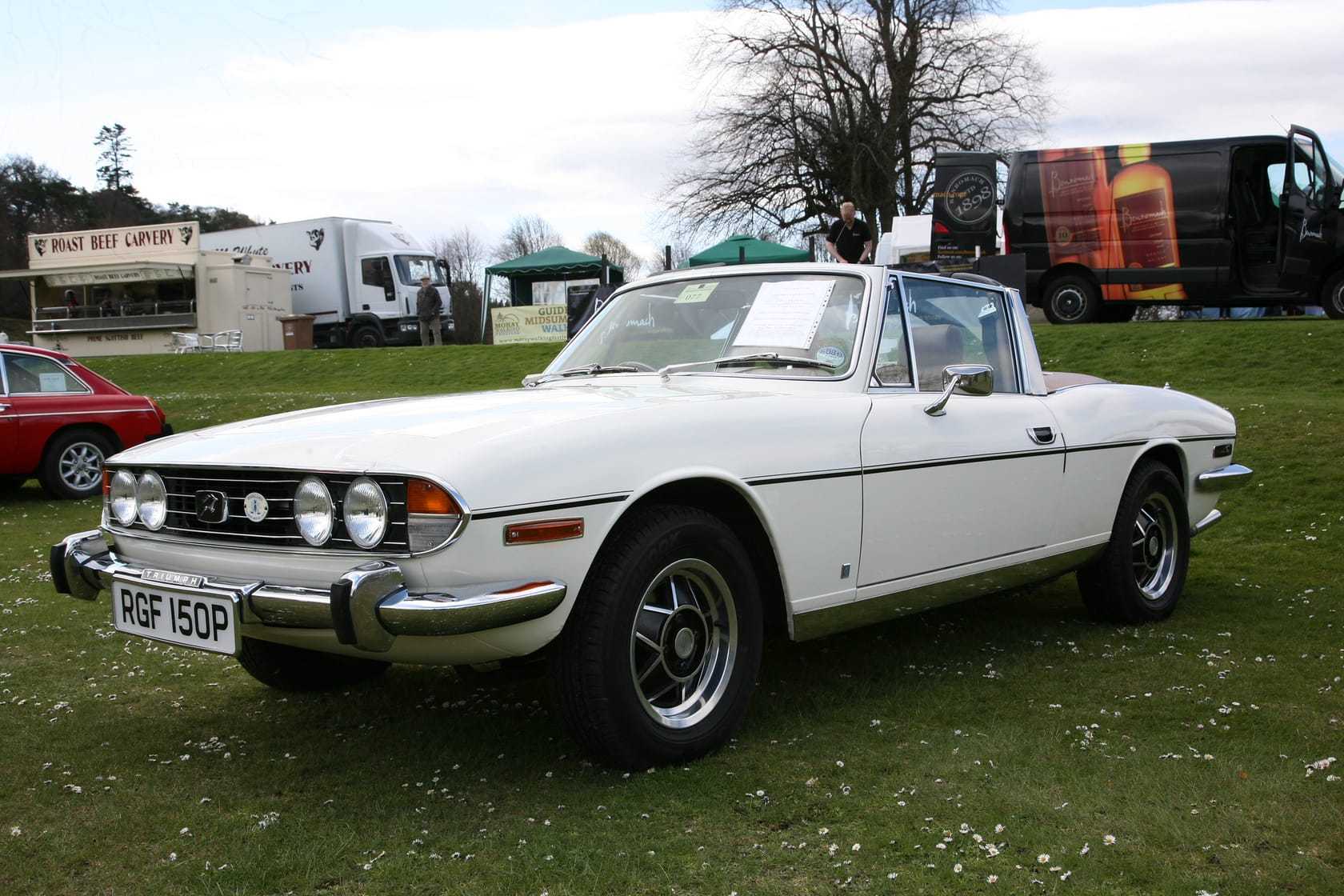
The guides
Both of these were dismissed for thirty years. The Stag was the car with the engine that overheated. The XJS was the car that rusted, had electrics nobody could fix, and drank petrol like a ship. Both reputations had some truth in them, both have been largely answered by the specialists and the clubs, and both cars now sell for almost exactly the same money.
Here is what each actually was, what went wrong and why, what the auction record says, and which one is the right buy in 2026.
At a glance
| Jaguar XJS | Triumph Stag | |
|---|---|---|
| Built | 1975 to 1996, Coventry | 1970 to 1977, Canley |
| Production | More than 115,000 over 21 years | Just under 26,000 |
| Engine | 5.3 and 6.0 V12; 3.6 and 4.0 AJ6 six | 2,997cc Triumph V8 |
| Power | Around 220 bhp (six), 285 to 308 bhp (V12) | Around 145 bhp |
| Top speed | Around 150 mph (V12) | Around 115 to 120 mph |
| Body | Coupe; cabriolet 1983 to 1988; convertible from 1988 | 2+2 convertible with T-bar roll hoop and removable hardtop |
| Median auction price | £8,930 (1,921 sales) | £9,735 (530 sales) |
| Price range, middle half | £5,500 to £13,500 | £6,800 to £13,400 |
Auction figures are from our own dataset of UK results, compiled to 10 August 2026, using the median sold price.
What they were
The Stag was Triumph’s attempt at a Mercedes SL for the British buyer: a 2+2 convertible styled by Michelotti with a T-bar roll hoop that gave it rollover protection and a stiff body, a removable hardtop, and a new 3.0-litre V8 that Triumph developed itself rather than borrowing the Rover unit. It was handsome, well equipped and, in 1970, exactly what the market wanted. It sold just under 26,000 in seven years, most of them in Britain, and then the engine’s reputation caught up with it.
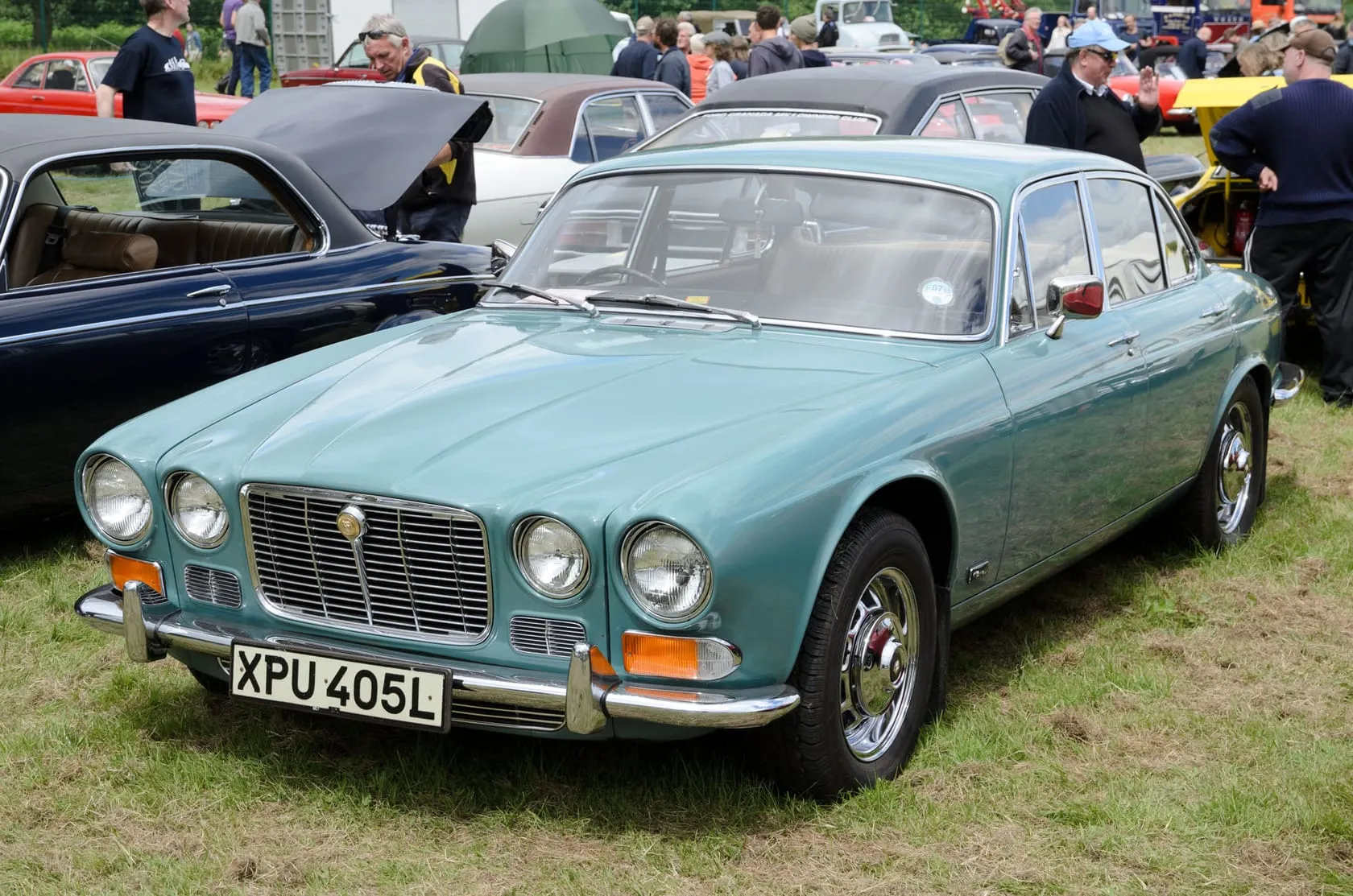
The XJS was Jaguar’s replacement for the E-Type, which was the problem: it was not an E-Type, and the world took fifteen years to forgive it. It was a large, heavy grand touring coupe on a shortened XJ saloon platform, with the 5.3-litre V12, and it was designed for American highways rather than British lanes. A cabriolet came in 1983, a full convertible in 1988, the AJ6 six-cylinder engine from 1983, and a facelift in 1991 that rescued its looks. It ran for 21 years and sold more than 115,000, which for a car everybody said was a mistake is a remarkable number.
The reputations, and what was true
The Stag engine. The Triumph V8 overheated, warped its cylinder heads, and ate its timing chains, and by the late 1970s the received wisdom was that the only good Stag was one with a Rover V8 or a Ford Essex V6 swapped in. The causes are now understood: a cooling system of marginal capacity that silted up if the coolant was not changed, an engine that punished neglect of its coolant with warped heads and head gasket failure, and timing chains that needed replacing at intervals owners ignored. A Stag with modern cooling, the right coolant and its chains changed on schedule is reliable.
The evidence is in the survivors: around 92 per cent of surviving Stags still carry the original Triumph V8. The engine-swapped cars are now the ones worth less, which is the market’s verdict on the reputation.
The XJS. The V12 itself was sound; everything around it was the trouble. The car rusts, at the rear wheel arches, the floors, the sills and around the rear suspension radius arm mounts, and on a car this size the welding is proportionate. The electrics are complex and age badly. And the Delanair climate control fitted to most cars is a specialist repair that XJS owners learn to speak of quietly. The 1991 facelift improved the build and the looks, and the AJ6 six-cylinder cars, though less glamorous, are cheaper to run.
Both reputations, in short, were about maintenance rather than design, and both cars reward the owner who buys a sorted example and maintains it properly. Neither rewards the bargain hunter.
What they are like
The XJS is the better car. It is a genuine grand tourer: the V12 is silent at a hundred, the ride from the XJ’s independent rear end is better than anything of the era, and it will cross a continent in comfort. It is also heavy, enormous, and thirsty in a way that the fuel figures in our guide to running costs make uncomfortable reading. With the roof on it is a coupe; the convertible is the one people want and pays for it.
The Stag is the better experience. The V8 sounds wonderful, the T-bar lets the body stay stiff with the hood down, the back seats are usable for children, and it is a car that turns heads at every stop in a way the XJS coupe does not. It is not fast by modern standards and the handling is period, but on a summer evening with the hood down it is exactly the car Triumph intended.
What the auction record says
Our dataset holds 1,921 XJS sales and 530 Stag sales, and the result surprises people who remember the old price order.
The median Stag sold for £9,735, with the middle half between £6,800 and £13,400. The median XJS sold for £8,930, with the middle half between £5,500 and £13,500. The Stag edges it, and has done for several years: in the most recent three years the Stag’s median ran around £9,600 and the XJS’s around £9,100.
Both have drifted only slightly in real terms over the decade, which puts them among the steadier British classics while the grand 1960s cars fell harder. The Stag’s scarcity, at roughly a quarter of the XJS’s production, is doing the work.
Within the XJS the spread is wide, as the quartiles show: V12 convertibles and late facelift cars sit at the top, early coupes and neglected cars at the bottom, and the six-cylinder cars in the middle. Within the Stag the original-engine cars command the premium, manual overdrive cars sit above automatics, and condition decides the rest.
The question behind the question
“Which is the better investment?” Neither is an investment, but the Stag is the scarcer car and has held its position better. If value retention matters, an original-engine Stag in good order is the stronger hold.
“Which is cheaper to own?” The Stag, once sorted, because it is a simpler car with a cheaper parts bill and a thriving club scene. The XJS costs more in fuel, more in specialist labour and, if the climate control or the electrics need attention, considerably more in repairs. The AJ6 six-cylinder XJS narrows the gap.
“Which should I buy?” For long-distance, all-weather, all-year use, the XJS. For sunny-day pleasure and a car with a story, the Stag. In both cases buy the sorted example and pay the premium for it; the difference between a good car and a bad one is larger here than in almost any other comparison on this site, and a pre-purchase inspection that covers rust, cooling and electrics is not optional.
The honest verdict
Two cars that the market once wrote off now sell for the same money, and both deserve better than their reputations. The XJS is the more capable car and the Stag the more characterful, and the auction record has priced the Stag’s scarcity at a few hundred pounds over the Jaguar’s ability. Buy the one whose story you want to be part of. The full histories are in our pages on the XJS and the Stag.
Frequently asked questions
Which is worth more, an XJS or a Stag?
Was the Stag engine really that bad?
What goes wrong with an XJS?
Which is the better car to drive?
Which one should a buyer choose?
Related across themes


More from Owning & running


Recently added

TVR Cerbera: the four-seater with a racing engine and no mercy (1996–2006)

Land Rover Discovery 1 values: the newest record on this site, and the cheapest coil-sprung Land Rover

Triumph Spitfire vs MG Midget: the cheapest way into a British sports car, compared
