Rust on a classic car: what fails an MOT, what converters do, and how to stop it
Where the line actually falls between rust that matters and rust that does not, in the words of the MOT inspection manual. What rust converters can and cannot do, why filler over a sill is not a repair, and whether underseal really fails a test.
Part of: Owning and running a classic car in the UK, the practical guide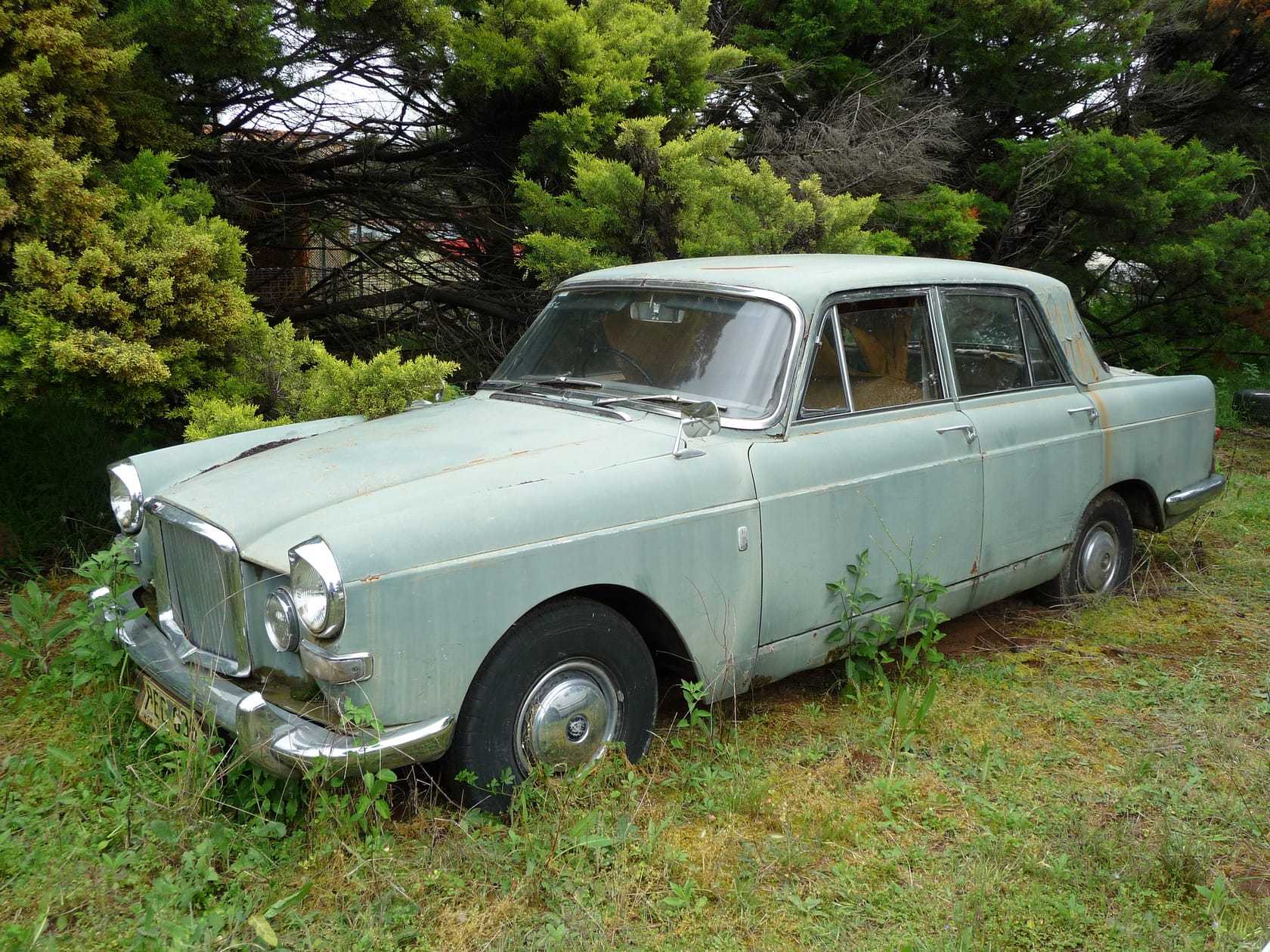
The guides
Rust is the reason most British classics that have disappeared, disappeared. It is also the subject of more confident misinformation than any other part of classic ownership, from the belief that a bit of filler is a repair to the conviction that a well-protected underside will fail a test.
The useful thing is that a lot of it is not a matter of opinion. The MOT inspection manual sets out precisely where corrosion matters, how a tester is allowed to assess it, and what counts as an acceptable repair. Reading it is more useful than any amount of forum debate.
The line the MOT actually draws
The manual works on the idea of a prescribed area. That means the load-bearing parts of the vehicle to which testable items are mounted, plus any load-bearing or supporting structure or panelling within 30cm of the mounting location.
Testable items are things like brakes, steering, suspension components, seat belt anchorages and towbars. So the 30cm radius is not measured from any convenient point, it is measured from where something safety-critical bolts to the car.
Inside a prescribed area, corrosion is a failure if:
- it has caused a hole in the metal,
- the area does not feel firm when pressed with finger and thumb, or
- a finger, thumb, or the tester’s corrosion assessment tool creates a hole.
There is no minimum hole size, no percentage-of-thickness rule and no tolerance. A hole is a hole.
Outside a prescribed area, the test is quite different. Corrosion fails only where braking or steering is adversely affected through structural misalignment, or where the strength or continuity of the overall vehicle structure is significantly reduced.
That distinction is the whole thing. The same rusty patch can be an immediate failure in one place on a car and a non-issue on another, and the difference is what is bolted nearby.
“Cosmetic rust” is not a thing the manual recognises
Owners and sellers talk about cosmetic rust constantly. The word cosmetic does not appear in the corrosion guidance at all.
What the manual has instead is a distinction between prescribed areas and main load-bearing structural members on one side, and body panels on the other. A body panel or component fails where it is damaged or corroded and likely to cause injury if grazed or contacted, where it is insecure, or where it is likely to become detached.
So a rusty wing that is solid and attached is not an MOT problem. The same wing rotted to a sharp, flapping edge is. The test is not whether it looks bad; it is whether it can hurt someone or fall off.
Corrosion defects are graded as Major where the structure is corroded enough that the rigidity of the assembly is significantly reduced, and Dangerous where corrosion is likely to affect steering or braking. Both are failures.
How a tester is allowed to poke at your car
This is the source of a perennial grievance, and the manual is clear. Corrosion is assessed visually, with finger and thumb pressure, and where necessary by carefully scraping or lightly tapping with a corrosion assessment tool. The manual explicitly restricts use of that tool to establishing whether the failure criteria are met, and says it must not be used for heavy scraping or poking.
A tester who puts a screwdriver through your sill is not following the manual. A tester whose thumb goes through your sill has found the failure the manual describes.
What counts as a real repair
This is where a lot of classic buying goes wrong, because the difference between a proper repair and a hidden bodge is worth thousands of pounds and is not always visible.
On a load-bearing member, the manual requires structural patch repairs to be continuously seam welded. Spot welding is acceptable only where the original panel was spot welded and the original panel or section has been removed. The repair must appear to be as strong as the original structure, in suitable material, extending to a sound part of the member.
Explicitly not acceptable on load-bearing members: body filler, adhesive bonding on its own, fibre reinforcement such as glassfibre, gas brazing, and soldering. Riveting appears only as part of a manufacturer-recommended combination with adhesive bonding, not as a method in its own right.
There is a separate warning worth knowing for anyone tempted to repair suspension or steering parts: welded repairs to highly stressed components are not normally acceptable at all.
In plain terms: filler over a rotten sill, a pop-riveted plate, or a glassfibre patch on a floor is not a repair. It is a disguise, and it is one of the things worth looking for hardest when buying, alongside fresh underseal in a suspiciously local area.
The underseal myth
The claim that a car can fail an MOT for having too much underseal is repeated everywhere, and it is not supported by the manual. There is no defect for underbody protection, and no limit on it.
What the manual actually says is the opposite of the myth, and it is worth quoting in substance: where a repair has been covered in paint or underseal and the tester cannot identify the method of repair, they should pass and advise.
Two genuine caveats sit next to that. A tester may refuse to test a vehicle so dirty that examination is unreasonably difficult, which is about caked mud rather than protective coating. And underseal that hides a bodge does not make the bodge safe. Protecting a sound car is sensible; covering a rotten one is how cars kill people.
What actually stops rust
Prevention divides into two jobs that people frequently confuse.
Sealing the outside is what underseal and similar coatings do. They work well on sound, clean, dry metal and badly on anything else. Applied over damp or rusty steel, a hard coating traps moisture against the metal and accelerates exactly what it was meant to prevent, while hiding it. This is why sprayed-on protection has a mixed reputation: the product is rarely the problem, the preparation is.
Getting inside the closed sections is the job that matters more on an old car and gets done less. Sills, box sections, doors and chassis rails rust from the inside out, because that is where water sits and where nothing dries. Cavity waxes are designed to creep into seams and stay soft rather than setting hard, which is what lets them keep working as the car flexes.
The third element is unglamorous and free: let the car dry. Damp is the enemy, and a car put away wet in an unventilated space rusts faster than one left outside. Anyone storing a classic through a British winter should read the storage question as a humidity question rather than a security one, though it is both.
Where to look on a British classic
The pattern barely changes from marque to marque, because water behaves the same way in all of them.
- Sills, inner and outer, and the closed structure between them.
- Floors and footwells, especially under carpets that have been damp for decades.
- Wheel arch lips and the bottoms of wings and doors, where mud packs in behind.
- Box sections and chassis rails, from the inside.
- Around suspension and subframe mountings, and seat belt anchorages, which is where corrosion is both most dangerous and least visible.
- Seams and joints everywhere, because that is where water is held by capillary action and never leaves.
The unhappy overlap is that the areas which matter most for the MOT are the areas hardest to inspect, which is the entire argument for getting a car on a ramp before buying it rather than after.
What this means when you are buying
Rust decides more classic purchases than mechanical condition does, because mechanical parts are usually available and structural metal is usually expensive. A car with a tired engine and a solid shell is a better prospect than the reverse, and it is not close.
That reality sits behind the wider question of what restoration work actually costs when the shell turns out to need it, which is a bigger number than most buyers expect and the subject of its own reckoning.
Frequently asked questions
Does rust automatically fail an MOT?
Do rust converters actually work?
Can a rusty sill be repaired with filler or a riveted plate?
Does underseal or waxoyl fail an MOT?
Where do British classics rust first?
Related across themes
More from Owning & running

Classic car tax and MOT exemption: two different forty-year rules

Recommissioning a classic after years in storage: the order that avoids damage

What a classic car restoration really costs, and how to choose a restorer


