Exporting a classic car from the UK: paperwork, tax refunds and overseas buyers
What has to happen when a British classic leaves the country. The permanent export section of the V5C, what the buyer keeps and what DVLA takes, how the tax refund is triggered, the difference between permanent and temporary export, and the overseas-buyer scams worth knowing about.
Part of: Owning and running a classic car in the UK, the practical guide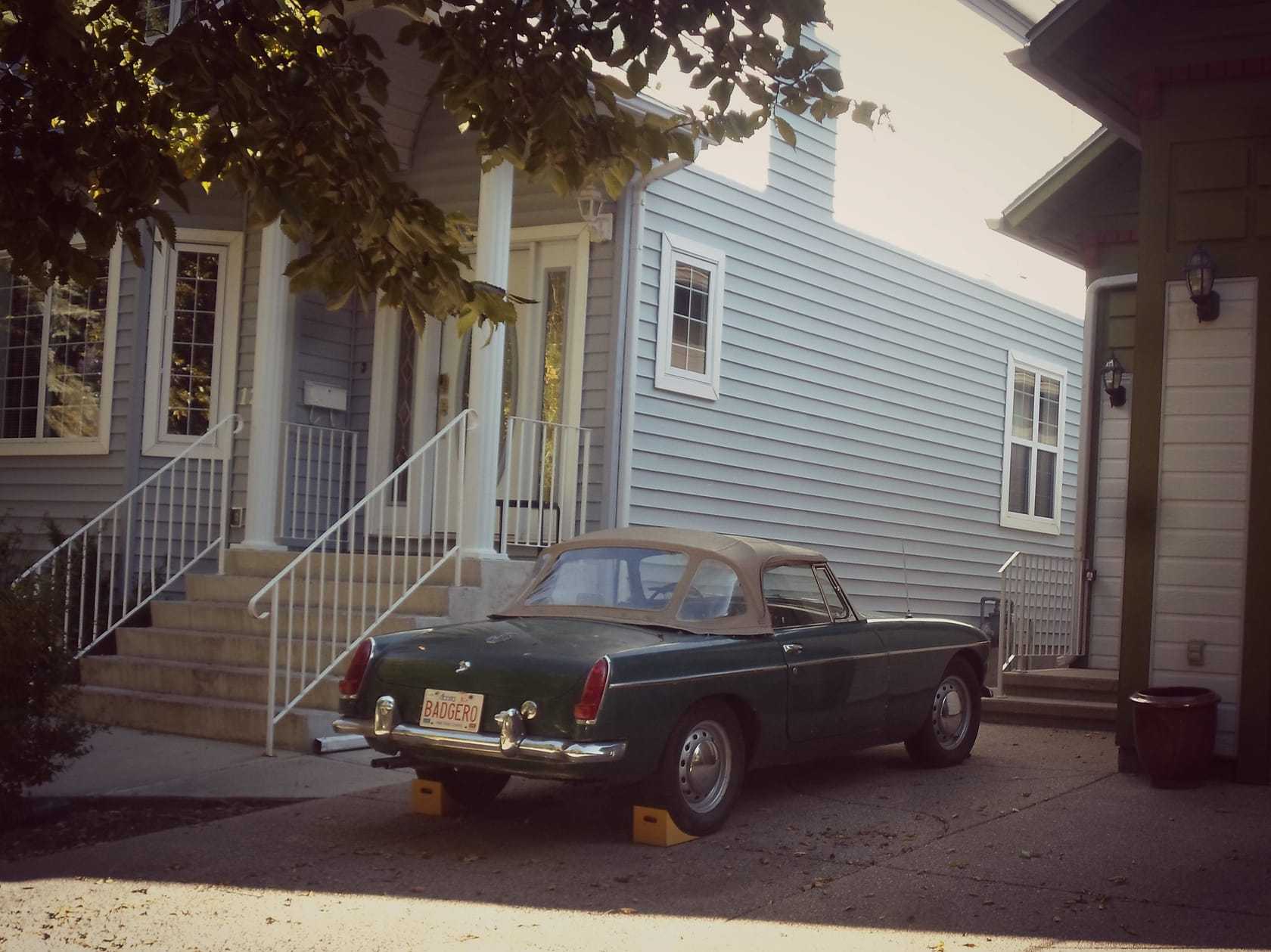
The guides
British classics leave the country constantly, and they have done since long before anyone called it an export market. A Morris Minor that spent forty years in a Lancashire garage can end up in Melbourne because somebody’s father had one; an MGB can find a driveway in New England because chrome bumpers and wire wheels are worth more there than here.
For the seller, the attraction is straightforward. Overseas demand for the right British car is deep, and it prices in dollars and Australian dollars rather than in a soft domestic market. What follows the handshake is where it gets unfamiliar, because exporting a car is not the same paperwork as selling one down the road, and the differences are the sort that cost money quietly rather than loudly.
Permanent export starts at twelve months
The dividing line is twelve months. DVLA must be told if the vehicle is going out of the UK for twelve months or more, and that is what permanent export means. The test is how long you intend the car to be away, not how the calendar falls.
It catches journeys that do not feel like exporting at all. Taking a car to the Channel Islands, the Isle of Man or Ireland for twelve months or more counts, however domestic the trip sounds.
Below twelve months, you are temporarily exporting, and the car has to keep its British life running: taxed in the UK while it is abroad, with a current MOT and UK insurance, and you carry the V5C showing your most recent UK address. A hired or leased vehicle carries a VE103 certificate instead, which is the document hire companies issue precisely because the V5C stays with them.
One trap on the way home. If the vehicle comes back untaxed, it cannot be driven back into the country. It has to be transported, and a Statutory Off Road Notification made straight away.
The V5C: who keeps what
This is the part most sellers get wrong, because the correct handling depends on which kind of export it is, and the two are mirror images.
If you are moving abroad and taking your own car, fill in the permanent export section of the V5C, detach it, send that section to DVLA, and keep the rest of the log book. You need the remainder to register the car in its new country.
If you are selling to a buyer overseas, fill in and send the same section to DVLA, but include a letter giving the buyer’s name and address, and give the rest of the log book to the buyer, because they are the one who has to register it at the far end.
Either way the destination is the same: DVLA, Swansea, SA99 1BD. That postcode is worth copying carefully, because DVLA uses several and the one for replacement log books is different.
Two practical notes. First, current gov.uk guidance calls it simply “the permanent export section”, and does not give it a section number, so ignore the confident section numbers that circulate online and just look for the part of the document that says permanent export. Second, get the V5C before the car leaves, because DVLA cannot send a log book to an address outside the UK. If it is missing, replace it first with a V62 application, which costs £25 and takes around four weeks by post, or five to seven working days through the online or phone service if you are the registered keeper and nothing has changed.
The tax refund, and why the date matters
You are usually owed a refund of unused vehicle tax, and there is no separate form for it. Sending the permanent export section is the application: DVLA receiving it triggers the refund automatically.
The detail that costs people money is that the refund is worked out from the date DVLA receives the section, not from the date the car was loaded onto a ship. Post it late and the difference is simply gone. It is one of the few pieces of export paperwork worth doing before the car physically leaves rather than after.
What arrives is a cheque to the registered keeper covering full months only, and it excludes the 5% surcharge paid on some direct debits and the 10% surcharge on a single six-month payment. A direct debit is cancelled automatically, so there is nothing to unwind at the bank. Refunds usually arrive within four to six weeks.
None of this applies to a car in the historic tax class, which pays no vehicle tax to refund. If your classic is old enough for historic vehicle status, the refund question simply does not arise, though the export notification still does.
The certificate almost nobody needs
The International Certificate for Motor Vehicles has a permanent place in touring advice and is, for nearly everyone, irrelevant. It is free, it is applied for on DVLA form V1002/1, and it applies to trips of twelve months or less to Liechtenstein, Mexico or Somalia. That is the list.
It is not a European touring document, and a classic heading for a French rally or an Italian tour does not need one. If you read otherwise, check the source: this is one of the most confidently repeated errors in motoring guidance. Requirements do change and vary by destination, so confirm what your specific destination asks for, but do not buy the premise that one certificate covers Europe.
Finance, ownership and who actually owns the car
DVLA’s export guidance says nothing at all about vehicles on finance, which means any claim that “DVLA requires the finance company’s permission” is describing a contract, not a regulation. The real position is simpler and stricter. Under a hire purchase or PCP agreement the finance company usually still owns the car. DVLA is explicit that the V5C is not proof of ownership and that the registered keeper is not necessarily the owner, so notifying an export changes nothing about who holds title.
Settle the agreement, or get the lender’s written agreement, before the car goes anywhere. A car exported out from under a finance agreement is a problem that follows the seller, not the ship.
Overseas buyers, and the scams that come with them
Selling internationally means dealing with someone who cannot see the car and cannot easily be pursued, and the fraud that grows in that gap has a recognisable shape. The classic-car version usually arrives as an unsolicited, enthusiastic approach through a club advert or an owners’ forum, from a buyer who barely negotiates, is oddly uninterested in the car’s condition, and is in a hurry.
The patterns worth knowing:
- Overpayment. A payment arrives for more than the asking price, with a request to refund the difference or forward it to “the shipper”. The original payment is later reversed.
- The shipping agent who is not one. The buyer insists on their own transport company, which invoices you for fees. It exists only as a website.
- Payment that can be pulled back. Anything reversible, or any request to use a service designed for sending money to people you know, is a warning rather than a convenience.
- Documents before funds. Requests to send the log book, or a signed bill of sale, ahead of cleared payment.
The defence is unglamorous: cleared funds in your account before the car or its paperwork moves, your own choice of shipper, and a written record of who the buyer is. Genuine overseas buyers of classic cars are used to this and expect it. The ones who object are telling you something.
What the car is worth on the other side
Values abroad move differently from values here, and that is often the entire reason a car is leaving. British sports cars, Land Rovers and the better saloons have deep followings in the United States and Australia, and cars that feel unremarkable in Britain can be genuinely scarce in a market that never received many.
That gap is not permanent and it is not uniform. It rewards knowing what your specific car is worth in the destination market before agreeing a price, rather than accepting an offer that looks strong against British guide prices alone.
How the car physically travels, and what that choice costs in protection rather than money, is covered in shipping a classic car overseas. If the buyer is American, the car’s age decides whether it can go at all, and that rule is stricter and more precise than most sellers expect.
Frequently asked questions
Do I have to tell DVLA if I sell my classic to a buyer abroad?
Do I get my road tax back when I export a car?
Do I need an International Certificate for Motor Vehicles to take my classic abroad?
What counts as permanent export rather than a long trip?
Can I export a classic that is still on finance?
Related across themes


More from Owning & running


Recently added

Bentley S-series: the quiet twin with the beautiful secrets (1955–1965)

Rolls-Royce Silver Spirit and Silver Spur: the last Crewe bargain (1980–1999)

Rolls-Royce Corniche: the coachbuilt survivor that outlived its makers (1971–1995)
