Vauxhall VX4/90: the Victor in a sharp suit (1961–1978)
The VX4/90 was Luton's sporting saloon formula, twin carburettors, front discs and a flash of colour on the family Victor, running through four generations from 1961 to 1978. A guide to the FB, FC, FD and FE cars, what survives, buying checks and values.
Built 1961–1978 19 recorded sales
At a glance
- Years
- 1961–1978
- Body styles
- Four-door saloon
- Drivetrain
- Front engine, rear-wheel drive
- Engines
- 1508/1595cc four (FB); 1594cc (FC); 1975cc slant-four (FD); 2279cc (FE)
- Power
- Around 71-116 bhp by generation
- Top speed
- Around 90-103 mph
- Trim levels
- One sporting specification per Victor generation
- Production
- Tens of thousands across four series; survivors in the low hundreds
- Assembly
- Luton, Bedfordshire
- Designer
- Vauxhall styling under David Jones
- Values
- Projects from around £1,500; usable cars £3,000-£6,000; the best £7,000-£12,000
- The formula
- Twin carburettors, front discs and a contrasting side flash on the family Victor
- The scarcity
- Rot claimed almost all of them; survivors are rarer than most exotics
The models
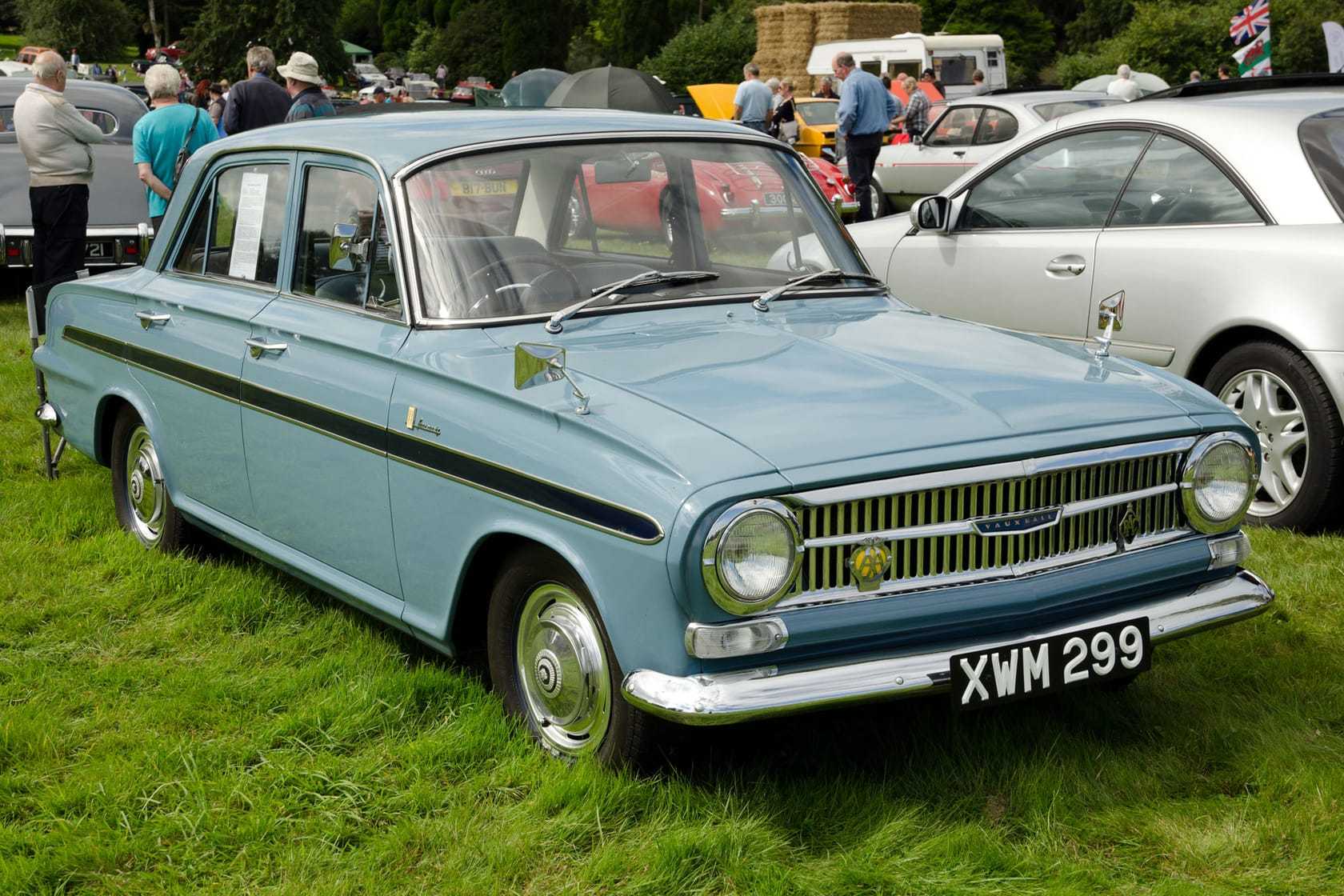
Every British maker of the sixties decided it needed a sharp-suited version of its family saloon, and Luton’s answer to the fashion outlived nearly all of them. The Vauxhall VX4/90 of 1961 took the Victor FB, added twin carburettors, front disc brakes and a contrasting flash down its flanks, and founded a badge that ran through four generations to 1978. Rot has made every generation rare, the market has not noticed yet, and the VX4/90 is now one of the cheapest genuinely scarce sporting saloons in the Vauxhall story or anyone else’s.
The formula: a Victor with intent
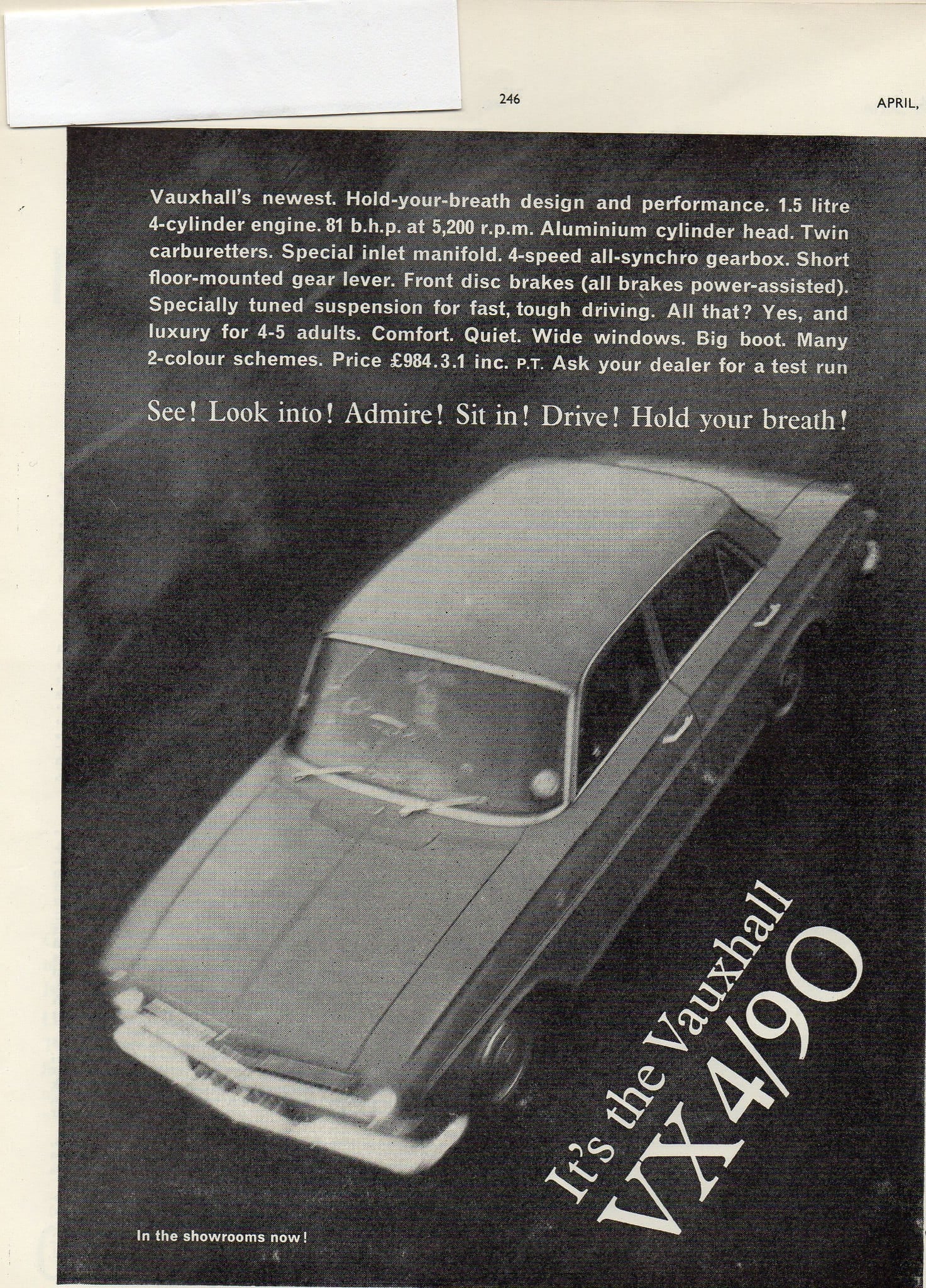
The recipe never once wavered across four generations: take the current Victor, fit twin carburettors and a higher compression head, add front disc brakes (from the very first car, ahead of many rivals), close the gearing, dress the cabin with extra instruments and the body with a two-tone flash, and price it a manageable step above the family car beneath. The 1961 FB VX4/90’s 71 bhp and 90 mph read modestly now, but the package answered exactly what the era’s aspirational driver wanted: the sensible saloon, with intent.

FB to FE: four generations of the badge
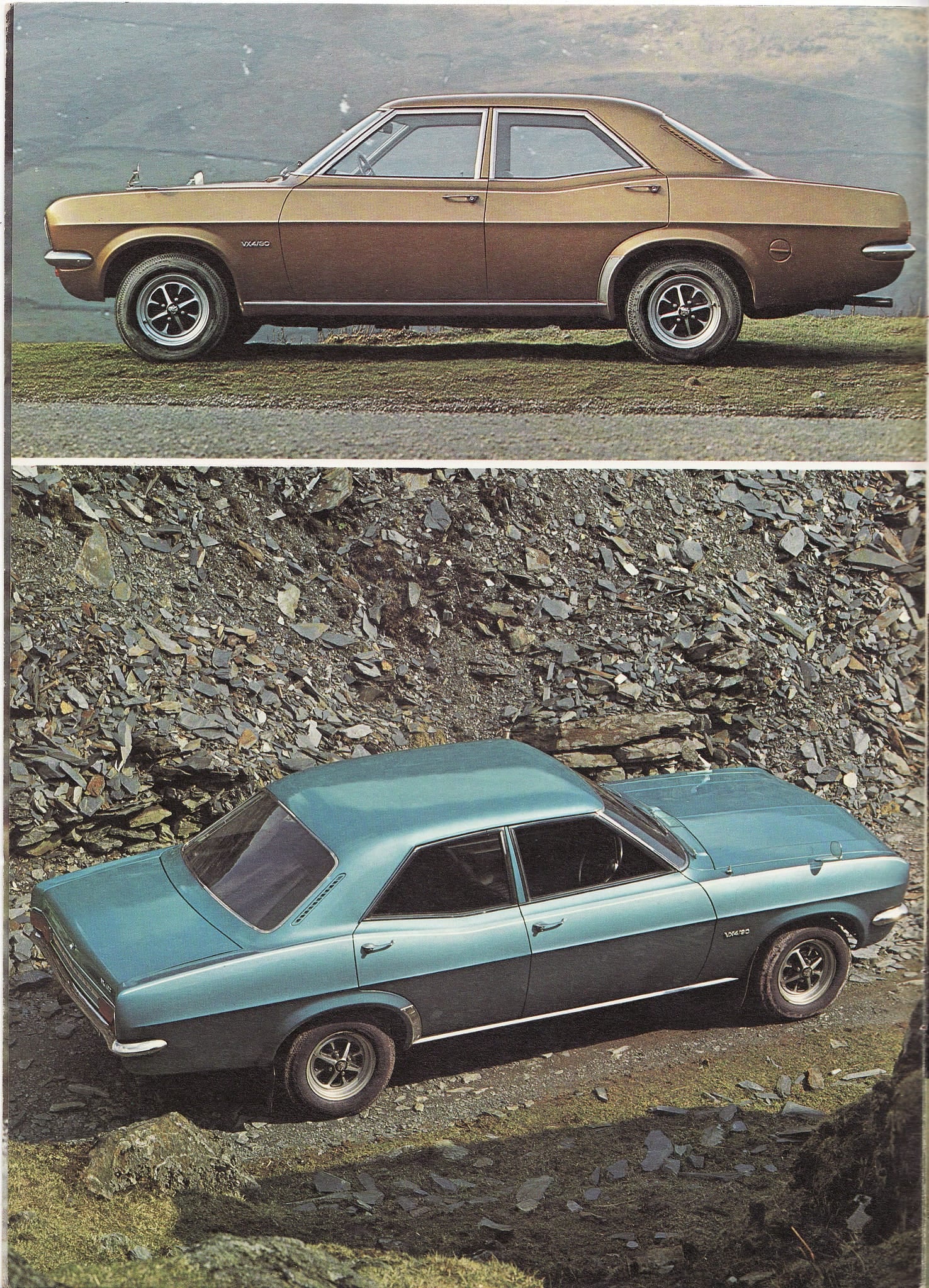
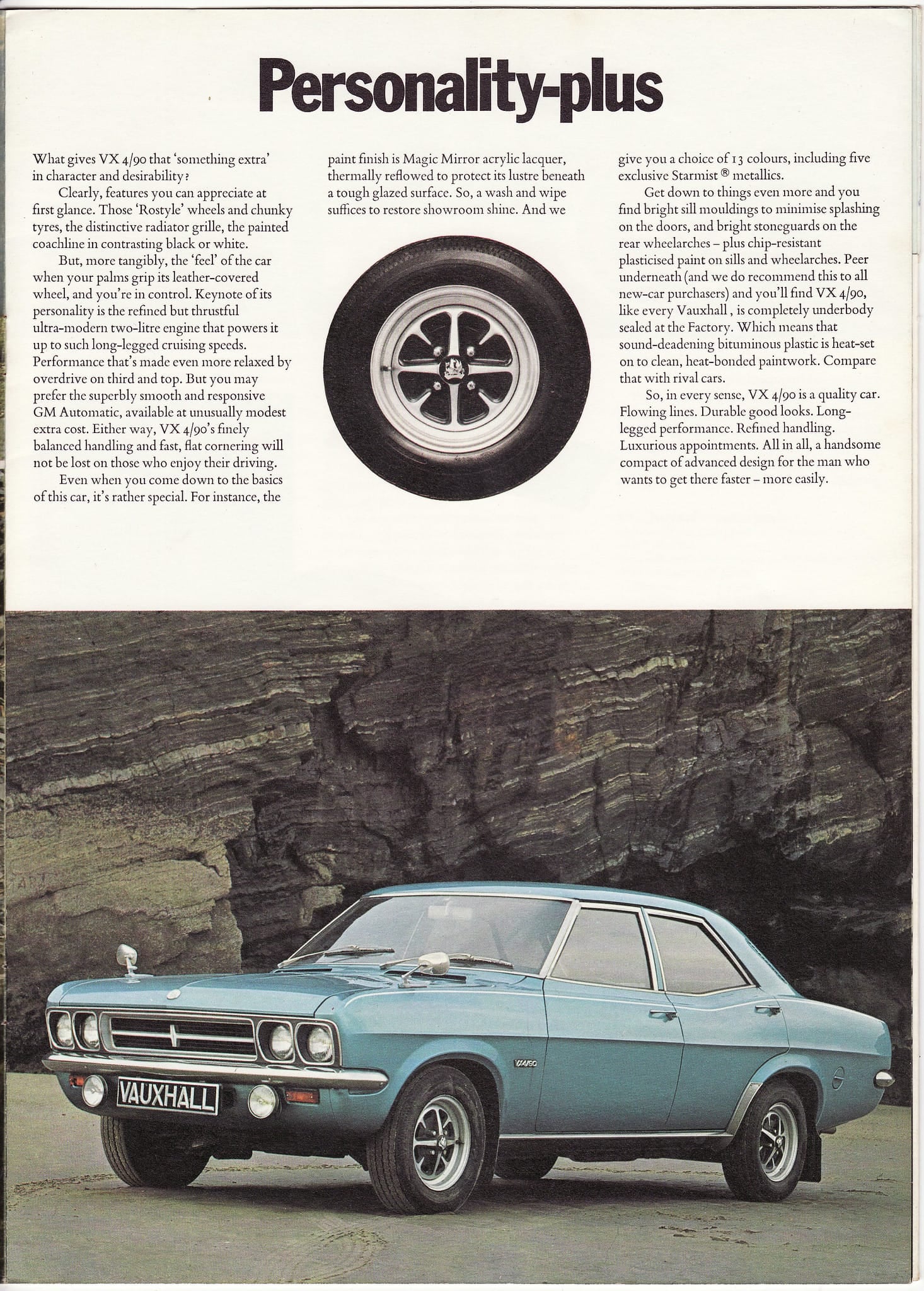
The badge tracked the Victor’s evolution. The FB (1961–64) set the template and remains the collectors’ darling; the FC 101 (1964–67) added curved-glass spaciousness; the FD (1967–72) brought coke-bottle styling and the new overhead-cam slant-four in 1,975cc twin-carb form, the generation enthusiasts rate the driver’s pick; and the FE (1972–78) finished the line with 2,279cc, 116 bhp and motorway legs. Luton never let the badge chase Lotus Cortinas; it stayed the quick Victor, and tens of thousands sold on precisely that promise.


The great rust harvest
Why is a car built in the tens of thousands now rarer than exotica? Because Vauxhalls of this era dissolved: the period’s steel, sealing and underprotection made the Victor family infamous even by sixties standards, and the VX4/90 went to the crusher with the rest. Each generation’s UK survivors now number in the dozens, individually known to the Victor and FD/FE clubs, and any solid car of any series is a preservation event. The scarcity is the story the market has not yet priced, which is the opportunity.

What a VX4/90 is like to drive
Each generation drives like its decade: the FB all light controls, column change and eager twin-carb thrum, happier at 70 than any standard Victor; the FD and FE notably more modern, the slant-four pulling with real vigour and the chassis tidy in the American-influenced idiom. None is a sports car and none pretended to be; the charm is period sporting-saloon manners with rarity thrown in, plus the certainty of being the only one at almost any show you attend, which VX4/90 owners report is worth more than horsepower.

Living with a VX4/90
Ownership is easier than the rarity suggests. Underneath the sporting dress sits ordinary Victor engineering, so service parts, engine components and running-gear spares flow from the wider Vauxhall network at family-saloon prices, and home maintenance is genuinely simple across all four generations. The clubs, the Victor organisations for FB and FC, the dedicated FD/FE club for the later cars, hold the model-specific knowledge and the remade parts, and their registers know most survivors by name. Usability rises through the generations: an FE cruises motorways without complaint, an FD keeps up with modern traffic comfortably, and even the FB manages A-roads with period charm. Insurance and tax fall under the standard classic exemptions, and every generation starts conversations at shows.

Buying a VX4/90 today
Metal first, always: sills, floors, wheelarches, valances, screen surrounds and spring hangers rot on every generation, and with survivors this scarce the search is for solidity, not specification. Mechanical parts flow from the wider Victor and Vauxhall network cheaply; VX-specific trim, badges, instruments and the correct carburettors are the hunts, so complete cars beat cheap projects decisively. Club knowledge is essential and generous. Verify identity against registration records, since Victor-to-VX dress-ups exist, and buy the best shell in the country if you can find it.

Values: rarity at family-saloon money
Around 19 measured sales at a £4,300 median make the VX4/90 market thin, gentle and full of opportunity: projects from £1,500, usable cars £3,000 to £6,000, the best £7,000 to £12,000 with FBs leading sentiment. For a badge rarer on today’s roads than most Italian exotics, among 1960s sporting saloons that is starter-classic money, and the first generation to attract proper collector attention will look inexpensive in hindsight.

More photos
Key dates for the VX4/90
- 1961The FB VX4/90 sets the template at 71 bhp and 90 mph, with front discs from the start, and remains the collectors' darling.
- 1964The FC 101 adds curved-glass spaciousness.
- 1967The FD brings coke-bottle styling and the new overhead-cam slant-four in 1,975cc twin-carburettor form, the generation enthusiasts rate the driver's pick.
- 1972The FE finishes the line with 2,279cc, 116 bhp and motorway legs.
- 1978Production ends after four generations of a badge Luton never let chase Lotus Cortinas.
Before you buy a VX4/90
Metal first, always
- Sills, floors, wheelarches and valances
- Screen surrounds and spring hangers, on every generation
- With survivors this scarce the search is for solidity, not specification
Parts, and what is actually hard to find
- Mechanical parts flow cheaply from the wider Victor and Vauxhall network
- VX-specific trim, badges, instruments and the correct carburettors are the hunts
- Complete cars beat cheap projects decisively
Identity
- Verify against registration records, since Victor-to-VX dress-ups exist
- The Victor and FD/FE clubs know most survivors individually
What the Vauxhall VX4/90 sells for at auction
The Vauxhall VX4/90 comes to auction only occasionally: 19 recorded sales since 2005, typically making between £3,066 and £8,450 . With so few sales, treat any single result as a data point rather than a market price.
- £9,016VX 4/90
- £13,608VX 4/90
- £19,600VX 4/90
- £1,400VX 4/90
- £3,800VX 4/90
Thin evidence. Only 19 recorded sales: read the figures as a sketch of the market, not a price. Based on 19 sold results from public classic car auctions (2005 to 10 August 2026). Sold prices, not asking prices, and not a valuation: condition, history and specification vary from car to car.
Frequently asked questions
What does VX4/90 mean on a Vauxhall?
What is the difference between the VX4/90 and the Victor?
How many Vauxhall VX4/90s are left?
Which VX4/90 generation is best?
How much is a Vauxhall VX4/90 worth?
What is the most expensive Vauxhall VX4/90 ever sold at auction?
How often does a Vauxhall VX4/90 come up for sale?
Related across themes
More from Vauxhall

Vauxhall Carlton: Luton's last big saloon, the Car of the Year and the GSi 3000 (1978–1994)

Vauxhall Astra GTE: Ellesmere Port's hot hatchback, from the Mk1 to the 16v red-top (1983–1991)

Vauxhall Chevette: the shovel-nose hatchback that beat Ford to it (1975–1984)

Vauxhall Viva: three generations of Britain's other small car (1963–1979)
Recently added

Bentley S-series: the quiet twin with the beautiful secrets (1955–1965)

Rolls-Royce Silver Spirit and Silver Spur: the last Crewe bargain (1980–1999)

Rolls-Royce Corniche: the coachbuilt survivor that outlived its makers (1971–1995)
