Old tractor brands: the British makers explained, and the world names beside them
A guide to the old tractor brands you meet at every British rally and in every farmyard memory, who made what, when, and what became of them, from Fordson, Ferguson and Massey Ferguson to David Brown, Nuffield, Leyland and Field Marshall, plus the conversion specialists and the world names alongside them.
Part of: Classic and vintage tractors, Britain's great farm machines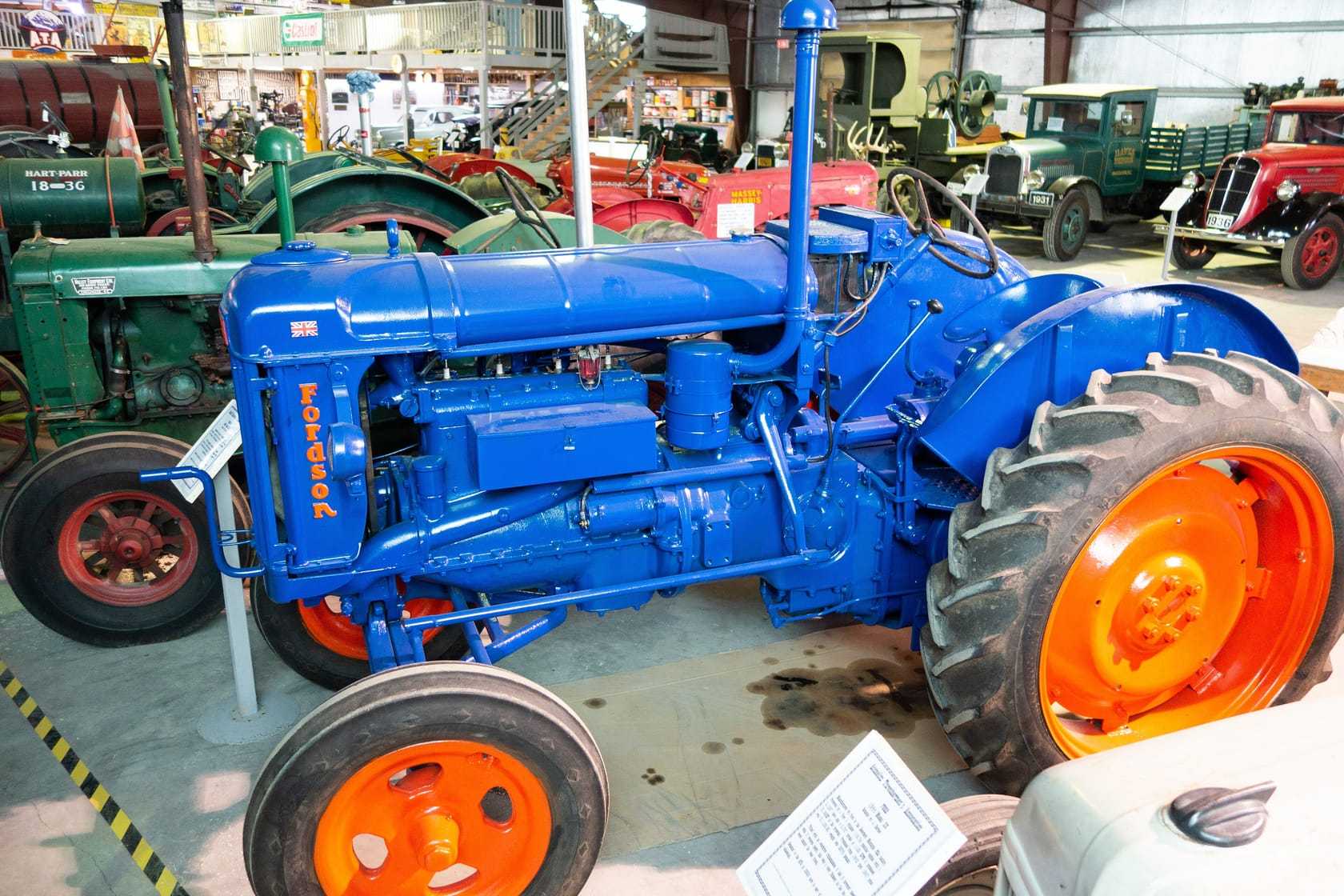
The tractors
Count the badges at any vintage working day and you will find a dozen old tractor brands in the first row, most of them British, most of them long gone as companies, and all of them still living in the memories of the people leaning on the fence. This is the field guide: who made what, when, and what became of them, with the deeper model-by-model detail in our classic tractor guides.
Fordson: the tractor for everyman
Henry Ford did for the tractor what he did for the car. From 1917 the Fordson put mass production behind farm power, and between the wars it was, at times, most of the British tractor market by itself, built for years at Dagenham. The post-war E27N and then the 1950s Fordson Major and little Dexta kept the marque at the centre of British farming until Ford retired the Fordson name in 1964 and badged its tractors as Fords. The blue-and-orange survivors remain the backbone of the rally field.

Ferguson and Massey Ferguson: the system that won
Harry Ferguson’s genius was not the tractor but the hitch: the Ferguson System’s three-point linkage and hydraulic draft control, which every modern tractor still uses. His grey TE20 of 1946, the Little Grey Fergie, put the idea on half of Britain’s farms. Ferguson merged with Canada’s Massey-Harris in 1953, and the red Massey Ferguson 135 of the 1960s became perhaps the definitive British-built classic tractor. Massey Ferguson alone among these marques survives as a volume maker today.

David Brown: the gear-maker’s tractor
Yorkshire gear-makers David Brown entered tractors alongside Harry Ferguson in the 1930s, then went their own way with a line of distinctively engineered machines, the Cropmaster, the Implematic and Selectamatic ranges, in hunting pink and later white-and-chocolate. The same David Brown company famously owned Aston Martin, putting the DB in DB5. Case bought the tractor business in 1972 and retired the name in 1988. The full story is in our David Brown guide.

Nuffield and Leyland: the motor industry’s tractor
William Morris’s empire entered the field in 1948 with the Nuffield Universal, a proper full-size tractor in poppy orange that earned a strong following. Through the British Leyland years it became the Leyland tractor in two-tone blue, built at Bathgate in Scotland, before the business was sold on in the early 1980s and the marque faded. Both badges are now firm rally favourites, and the late Leylands remain the movement’s best value.

Marshall and Field Marshall: the single-cylinder legend
Marshall of Gainsborough built the tractor you hear before you see it: the Field Marshall’s huge single-cylinder diesel fires roughly twice per fencepost at road speed, and could be started with a blank shotgun cartridge. Loved by threshing contractors in period and by crowds now, genuine examples carry strong prices. Later four-cylinder Marshalls and the 1980s revival never matched the legend.

The converters: County, Roadless and Doe
Three names turned ordinary Fords into extraordinary machines. County and Roadless built four-wheel-drive and crawler conversions for heavy ground and forestry, and Doe of Essex answered a big-acreage farmer’s problem by joining two Fordson Majors nose to tail into the 100-horsepower Triple-D. Built in small numbers and worked hard, the genuine survivors are the most valuable machines in the movement, as our classic tractor values guide sets out.

The world names you will meet beside them
British fields were never exclusively British. International Harvester built tractors at Doncaster, and its B250 and B414 are honorary British classics; grey-and-red Fergusons met green John Deeres and red-and-cream Cases at every county boundary; and continental names, Fiat, Lanz with its hot-bulb Bulldog, and later the cheap and cheerful Zetor, all worked here. All are welcome on the rally field, though the parts support that makes tractor ownership so easy, covered in owning a classic tractor, is strongest for the home-grown volume brands.
Choosing among them today
For a buyer the brand question usually resolves into the practical one, which machine suits your budget and your shed, and our guide to the best classic tractors to buy answers it directly. As a rule of thumb: Ferguson and Massey Ferguson for support and simplicity, Fordson for history at friendly prices, David Brown, Nuffield and Leyland for character without a price premium, and Marshall and the conversions for the day your collection outgrows common sense.

Frequently asked questions
What are the popular old British tractor brands?
What is the oldest tractor brand?
What happened to the old British tractor brands?
Which old tractor brands are still made today?
What old tractor brands were built as conversions?
Related across themes


More from Tractors


Recently added

Bentley S-series: the quiet twin with the beautiful secrets (1955–1965)

Rolls-Royce Silver Spirit and Silver Spur: the last Crewe bargain (1980–1999)

Rolls-Royce Corniche: the coachbuilt survivor that outlived its makers (1971–1995)
