Jaguar C-Type and D-Type: five Le Mans wins and the replica industry they built (1951–1957)
The Jaguar C-Type and D-Type won Le Mans five times in seven years, pioneered disc brakes and aviation monocoques, and became some of the most valuable British cars ever sold. A guide to both racers, the XKSS, the continuation cars and the replica industry that keeps the shapes on the road.
Built 1951–1957 27 recorded sales

At a glance
- Years
- 1951–1953 (C-Type); 1954–1957 (D-Type); 1957 (XKSS)
- Body styles
- Two-seat sports racers; XKSS road-equipped
- Drivetrain
- Front engine, rear-wheel drive
- Engines
- 3.4-litre XK straight-six (3.8 in some works D-Types)
- Power
- Around 200 bhp (C-Type) to 250-plus bhp (works D-Type)
- Top speed
- Over 170 mph (D-Type, Mulsanne gearing)
- Trim levels
- Works and customer cars; long-nose works D-Types; XKSS
- Production
- 53 C-Types; 87 D-Types (with 16 XKSS conversions among them)
- Assembly
- Coventry (Browns Lane)
- Designer
- Malcolm Sayer (aerodynamics); William Heynes (engineering)
- Values
- Originals in the millions; quality tool-room replicas £60,000-£250,000
- The record
- Le Mans wins in 1951, 1953 (C-Type) and 1955, 1956, 1957 (D-Type)
- The firsts
- Disc brakes proven at Le Mans in 1953; an aviation-style monocoque in 1954
The models
Before the E-Type made Jaguar glamorous, two racing cars made it mighty. The C-Type won Le Mans in 1951 and 1953 and proved the disc brake on the way; the D-Type took three straight wins in 1955–57 wearing an aircraft engineer’s monocoque and the most famous tail fin in motorsport. Between originals worth millions and the replica industry their scarcity created, the Jaguar C-Type and D-Type remain the beating heart of the marque’s legend.
C-Type: the XK goes racing
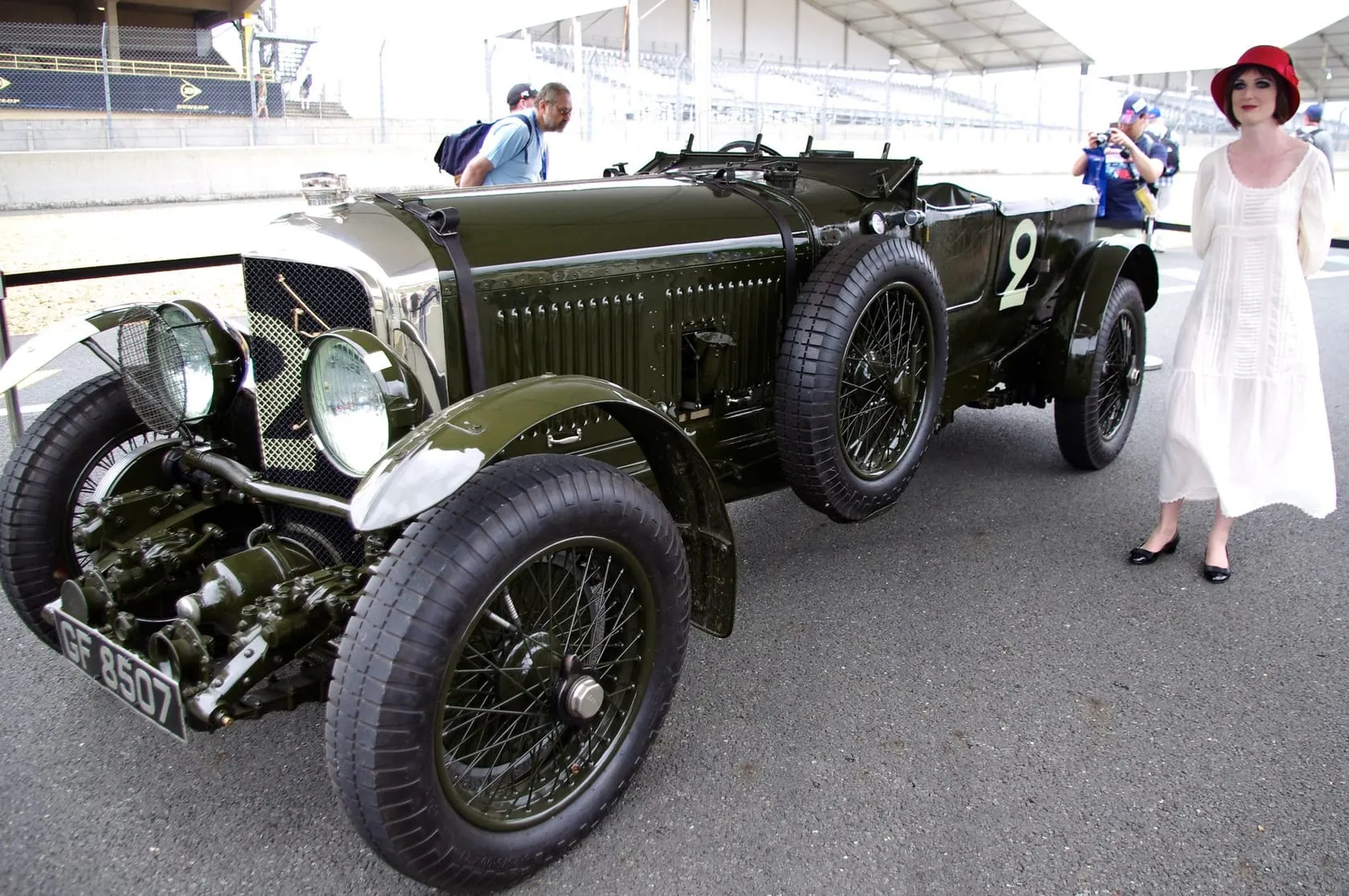
The 1948 XK engine deserved a competition frame, and in 1951 William Heynes and aerodynamicist Malcolm Sayer delivered the XK120C, the C-Type: a light tubular frame, 200 tuned horsepower, and flowing aluminium drawn by mathematics rather than fashion. It won Le Mans first time out with Walker and Whitehead, and in 1953, wearing the Dunlop disc brakes that changed braking forever, won again at record speed. Fifty-three were built, works and customer, seeding privateer grids everywhere; the XK120 road car basked in every victory.

D-Type: the aircraft on wheels
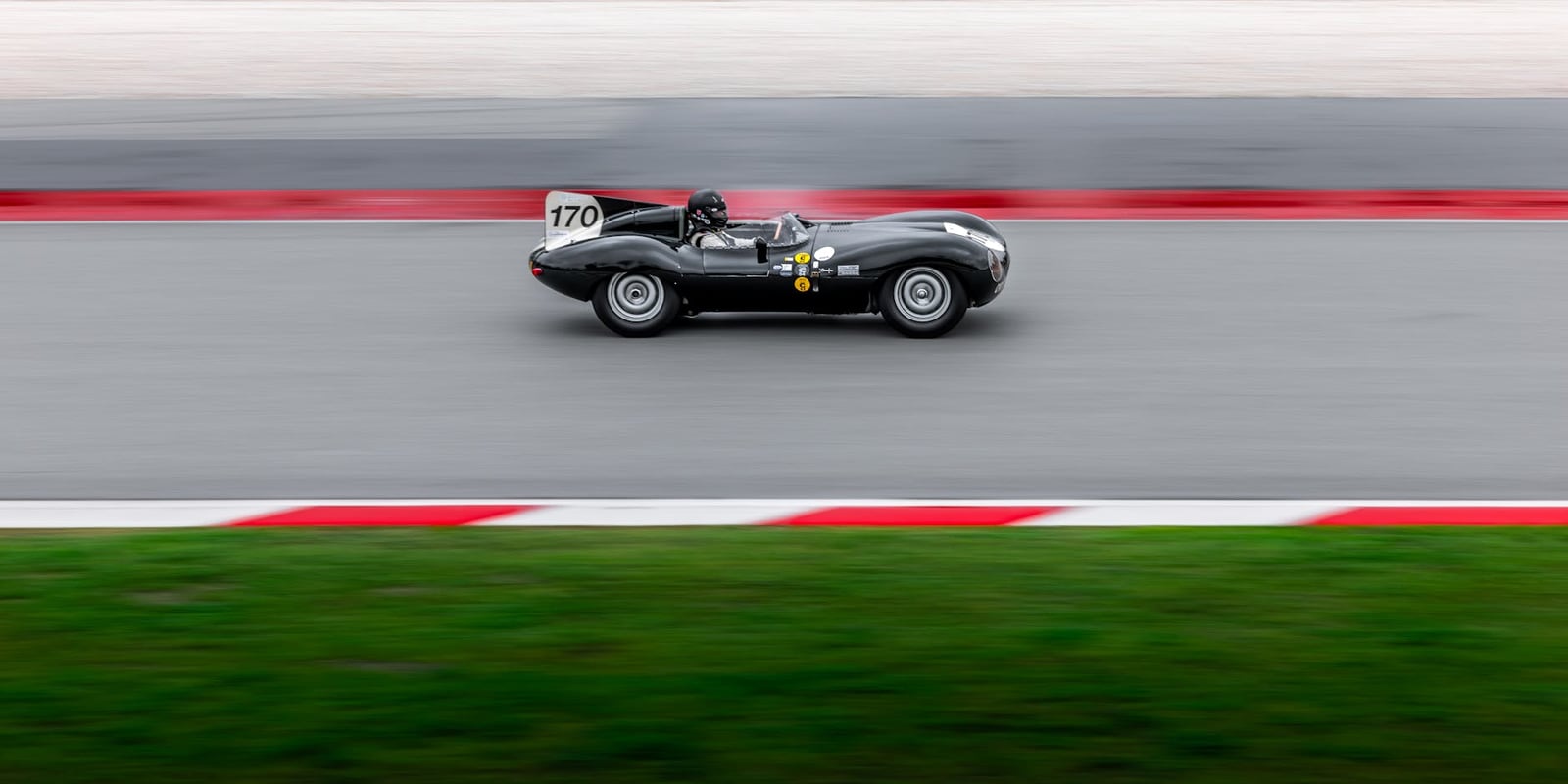
For 1954 Sayer and Heynes started from aviation first principles: a central magnesium-alloy monocoque tub, the engine carried on a front subframe, an elliptical nose that let the 3.4 six touch 170-plus on the Mulsanne, and the tail fin that became iconography. The D-Type won Le Mans in 1955, again in 1956 with Ecurie Ecosse, and once more in 1957 when Ds filled five of the top six places, the marque’s mightiest hour. Eighty-seven were built before Jaguar withdrew from racing, the long-nose works cars the apex predators among them; the Ecurie Ecosse blue remains the livery of Scottish motorsport pride.

The drivers and the great races
The cars made heroes and the heroes made the cars. Peter Walker and Peter Whitehead took the C-Type’s debut Le Mans in 1951; Tony Rolt and Duncan Hamilton won the disc-braked 1953 race at the first 100 mph-plus average in the event’s history. The D-Type years belonged first to Hawthorn and Bueb in 1955, then to the little Edinburgh privateer team Ecurie Ecosse, whose dark blue D-Types beat the world’s factory teams outright in 1956 and led the 1957 rout. That a customer car run from a Merchiston mews could win Le Mans twice says everything about how far ahead of the field Coventry’s engineering stood, and the surviving Ecosse cars are among the most valuable British machines in existence.

XKSS, the fire and the continuations
Withdrawal left unsold D-Types, so 1957 brought the XKSS: a windscreen, a passenger door and road trim on the racing tub, sixteen made before the Browns Lane fire consumed the remaining chassis and tooling in February 1957. Steve McQueen’s XKSS sealed the model’s Hollywood myth. Six decades on, Jaguar Classic built the nine “missing” XKSS continuations and later new C-Types to original drawings, factory-blessed ghosts at seven-figure prices, and the auction world welcomed them as the originals’ closest kin.


The replica industry
Scarcity built an industry: with originals in the millions, the C- and D-Type shapes live on through tool-room recreations, and the auction record tells the story plainly, replica sales outnumbering originals many times over. Quality spans kit-level lookalikes to aluminium-bodied, XK-engined recreations from long-established specialists whose cars run historic events worldwide, trading £60,000 to £250,000 on accuracy and builder name. For most enthusiasts the replica IS the accessible car, which is why this page’s statistics, 166 measured sales at a £70,000 median, describe that living market rather than museum transactions.

What they are like to drive
Those who drive an original Jaguar D-Type or C-Type, or a faithful recreation of either, describe the same experience: the XK six’s bellow through side exhausts, steering alive from the first yard, brakes (disc from 1953) that still feel modern in commitment corners, and at D-Type speeds an aerodynamic steadiness decades ahead of rivals. They are demanding, physical machines built to race flat out for twenty-four hours, and the historic-racing calendar remains their true home, from the Goodwood Revival to the Le Mans Classic, where the sight of a D-Type at full noise still stops every conversation in the paddock.

Buying into the legend
Originals are collector-bank territory where provenance experts and marque historians do the real work; if that is the market, the registers and specialist houses are the only sensible route. For replicas, the rules are builder reputation, engineering specification (XK power and period-style construction lead), documented build quality, and honest description at resale. The E-Type carries the bloodline for road-car money; but for the full myth, fin and all, these two racers remain where Jaguar’s greatness was actually won.

More photos


C-Type / D-Type: the short history
- 1951The C-Type (XK120C) wins Le Mans on its debut with Walker and Whitehead: a light tubular frame, 200 bhp and Sayer's aluminium body.
- 1953Rolt and Hamilton win Le Mans on Dunlop discs at the race's first 100 mph-plus average, proving the disc brake in public.
- 1954The D-Type arrives from aviation first principles: a magnesium-alloy monocoque tub, the engine on a front subframe, and the tail fin.
- 1955Hawthorn and Bueb take the D-Type's first Le Mans win.
- 1956Ecurie Ecosse, a customer team run from an Edinburgh mews, beats the world's factory entries outright.
- Feb 1957The Browns Lane fire consumes the remaining chassis and tooling after just sixteen road-equipped XKSS cars are built.
- 1957D-Types fill five of the top six places at Le Mans, the marque's mightiest hour, before Jaguar withdraws from racing.
Buying checklist: the C-Type / D-Type in front of you
Buying an original
- Provenance experts and marque historians do the real work; the registers and specialist houses are the only sensible route
- Long-nose works D-Types are the apex cars, and surviving Ecurie Ecosse cars among the most valuable British machines in existence
- Jaguar Classic's XKSS and C-Type continuations are factory-blessed and treated by the auction world as the originals' closest kin
- Sixteen XKSS were built before the fire; the nine continuations exist because of it
Buying a replica, which is the real market
- Builder reputation first: the long-established specialists' cars run historic events worldwide
- Engineering specification second: XK power and period-style construction lead the field
- Documented build quality, in photographs and invoices, is what holds the value
- The £60,000 to £250,000 spread is almost entirely accuracy and builder name, so buy the paperwork
What the Jaguar C-Type & D-Type sells for at auction
| Variant | Sold | Typical range | Median |
|---|---|---|---|
| D-Type | 13 | £1,027,000 - £3,063,060 | £2,486,326 |
| C-Type | 6 | £1,743,623 - £2,873,049 | £2,568,496 |
- £4,896,281D-Type
- £2,751,695C-Type
- £3,414,525D-Type Works
- £10,594,491XKSS
- £1,263,720XKSS Continuation
Thin evidence. Only 27 recorded sales: read the figures as a sketch of the market, not a price. Based on 27 sold results from public classic car auctions (2001 to 10 August 2026). Sold prices, not asking prices, and not a valuation: condition, history and specification vary from car to car.