Land Rover Discovery 1: the family Land Rover comes of age (1989–1998)
The Land Rover Discovery of 1989 put Range Rover engineering under a family-priced body and invented the everyday Land Rover, and the original Discovery 1 is now a classic in its own right. A guide to the 200Tdi and 300Tdi eras, the V8s, the Camel Trophy years, what rusts, and what to check before buying one.
Built 1989–1998
At a glance
- Years
- 1989–1998
- Body styles
- Three-door, then five-door station wagon
- Drivetrain
- Permanent four-wheel drive, lockable centre differential
- Engines
- 200Tdi and 300Tdi 2.5 turbodiesels; 3.5/3.9 Rover V8; 2.0 Mpi
- Power
- Around 111 bhp (Tdi) to 182 bhp (3.9 V8)
- Top speed
- Around 90-105 mph
- Trim levels
- Base, S, GS, XS, ES; special editions incl. Camel Trophy support
- Production
- Around 392,000 Series I Discoverys
- Assembly
- Solihull, Warwickshire
- Designer
- Land Rover under George Thomson; Conran-influenced interior
- Values
- Usable from around £4,000; good cars £7,000-£12,000; early three-doors and V8s beyond
- The trick
- Range Rover chassis and engines at family-estate money
- The interior
- Sonar Blue Conran-designed cabin, roof stowage and all, now a period treasure
The models
Land Rover spent the 1980s watching families buy Japanese 4x4s, and answered in 1989 with the most important new model in its history. The Discovery put Range Rover engineering under a cheaper, cleverer body, invented the everyday Land Rover, and sold nearly 400,000 before its 1998 replacement. The original Land Rover Discovery 1 has now crossed fully into classic territory, and it wears the status well.
The Range Rover for families
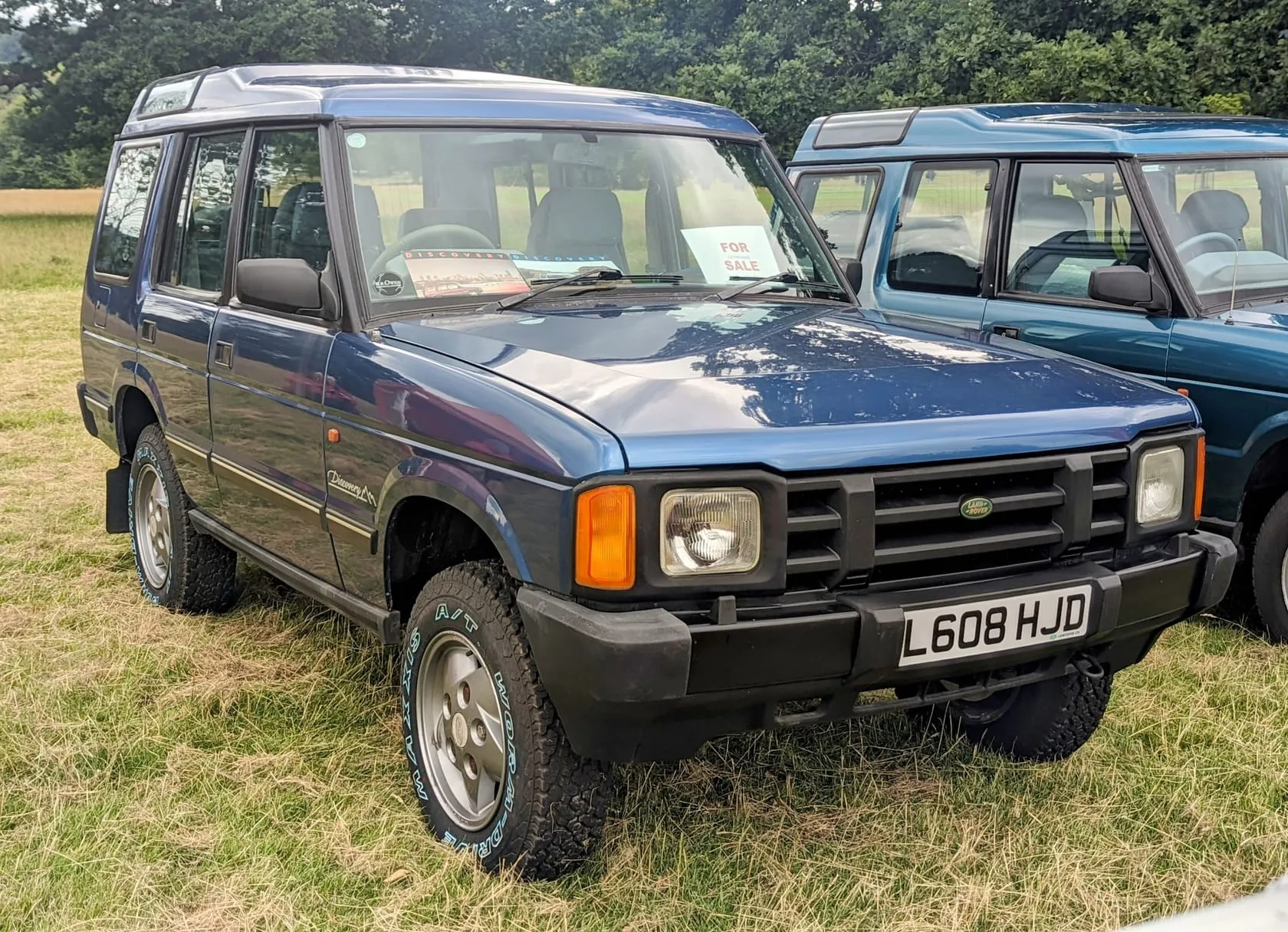
The brief was audacious economy: take the Range Rover’s chassis, suspension and permanent four-wheel drive, and clothe them affordably. The stepped roof with its alpine windows gave headroom and light; the Conran-influenced interior arrived in bold Sonar Blue with map pockets in the roof and a sunglasses bin ahead of its time; and the initial three-door body kept the price at family-estate level. Launched at Frankfurt in 1989, it found the gap between the working Defender and the plush Range Rover, and promptly out-sold both.

200Tdi to 300Tdi: the engines that made it
The Discovery’s masterstroke was its diesel. The new 200Tdi, a 2.5-litre direct-injection turbodiesel, delivered torque, economy and anvil durability in one package, and became the default choice overnight; the smoother 300Tdi replaced it with the 1994 facelift, which also brought the five-door’s dominance, airbags and tidier lights. Rover’s 3.5 and later 3.9 V8s served the petrol minority with pace and thirst. Tdi manuals are the collector default now, and both diesel generations carry the engineering affection the club world reserves for its immortals.

Camel Trophy and the expedition image
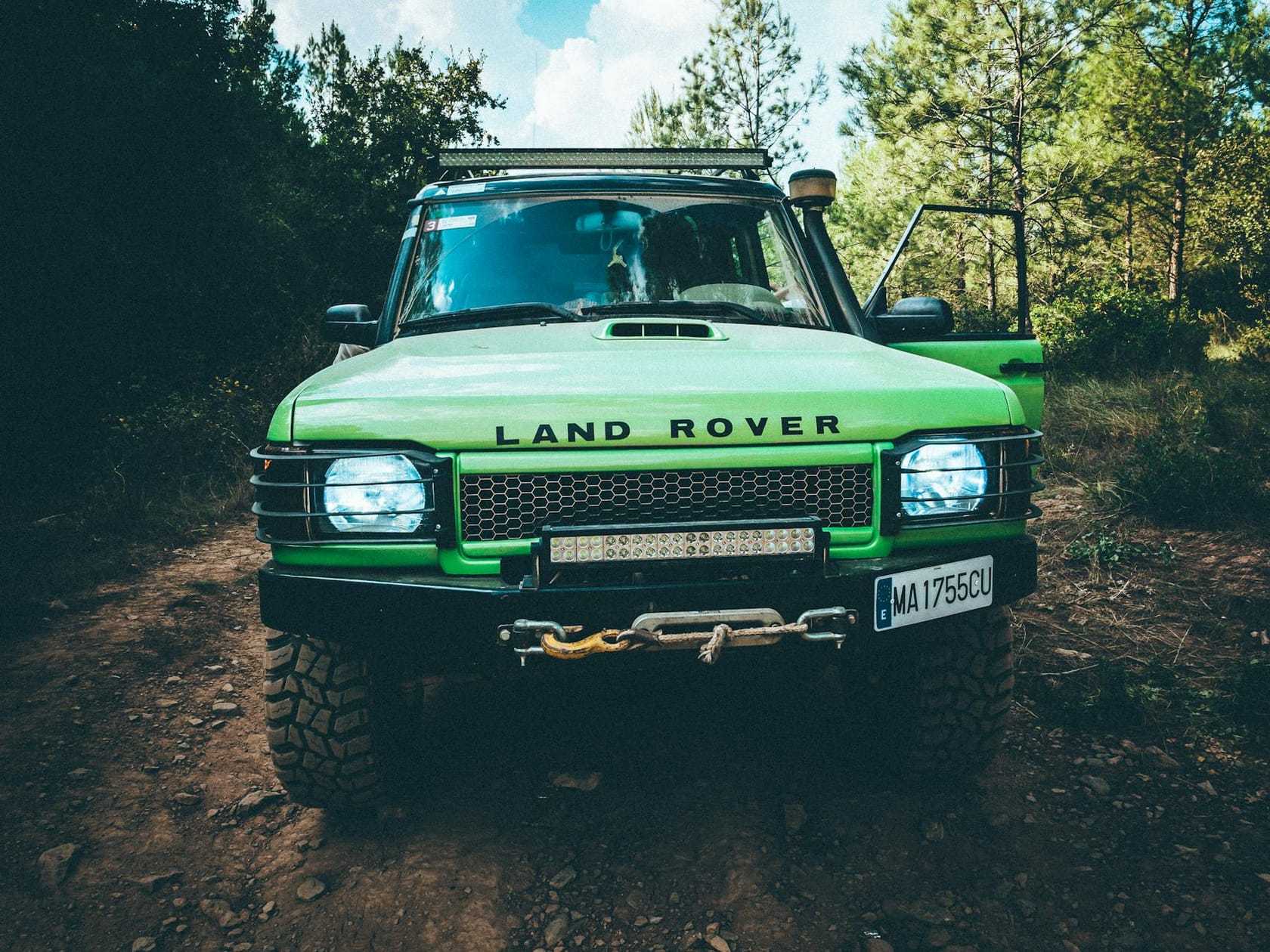
Sand-yellow Discoverys carried the Camel Trophy through its greatest years, winched across Siberia, Borneo and Guyana on television screens worldwide, and no marketing budget could have bought the effect. The expedition image stuck to the model permanently: roof racks, raised intakes and overland builds remain the Discovery 1’s natural dress, genuine Camel vehicles are museum pieces, and faithful replicas are a celebrated club genre. It gave the family Land Rover something rarer than ability: mythology.

Editions, seats and the world market
Land Rover worked the range hard across nine years. Launch cars were three-door only; the five-door arrived in 1990 and took over; and the option of two inward-facing boot seats made the Discovery the seven-seat family default years before the term MPV settled. Trim climbed through S, GS and XS to the leathered ES, with special editions from the Freestyle to anniversary runs keeping showrooms warm. Japan, remarkably, bought the Discovery badged as a Honda Crossroad during the Rover-Honda alliance, the only Honda ever sold with a Rover V8. Collectors now grade all of it: early three-doors first, launch colours and unworn interiors above everything.

What a Discovery 1 is like to live with
On the road the D1 is honest 1990s Land Rover: commanding view, soft long-travel ride, steering that prefers plans to whims, and Tdi progress that is relaxed rather than rapid. Off road it remains startlingly capable in standard form, which is the point of the breed. Seven seats, a flat floor and that airy glasshouse keep it genuinely usable as family transport, and mechanical parts are cheap, shared and everywhere. Fuel figures in the high twenties for a Tdi still shame many modern SUVs, and the commanding, glassy cabin remains one of the nicest places in the classic world to sit out a rainy school run, which is exactly the duty most of these cars performed for thirty years.

Buying a Discovery 1 today
Structure is the whole examination: boot floor, inner arches, sills, footwells, body mounts and the rear crossmember all rot, often behind respectable paint, so inspect every prospect from below, unhurried, with a lamp, a screwdriver and a lifted boot carpet. Tdi engines want coolant history and timing-belt evidence; V8s want temperature honesty; interiors want intact headlining and dry footwells. Unmodified early cars, three-doors above all, are the ones collectors chase, while sympathetic overland builds trade on spec. The club scene grades survivors expertly, and the best cars sell inside it.

The classic the family already owned
The Discovery 1 remains modest money for Range Rover engineering with room for seven, launch-spec and low-mileage cars lead it, and Camel provenance lives in its own world; the trajectory has been one-way as the 1990s generation buys its childhood back. The full record, 150 recorded sales, what the Tdis, the three-doors and the preserved cars actually make, and what the £101,000 American record sale does and does not mean, is on the page covering Land Rover Discovery 1 values. The Land Rover Discovery 1 invented the family Land Rover; the family is now returning the favour, and the smart money buys the best unwelded example it can find before the tax-exemption years arrive and settle the argument for good.

More photos

How the Discovery 1 changed
- 1989Launched at Frankfurt as a three-door on the Range Rover's chassis, with the stepped alpine roof and the Conran-influenced Sonar Blue interior.
- 1990The five-door arrives and takes over; inward-facing boot seats make it a seven-seater before the term MPV settles.
- Early 1990sSand-yellow Discoverys carry the Camel Trophy across Siberia, Borneo and Guyana; Japan buys the car badged as a Honda Crossroad.
- 1994The facelift brings the smoother 300Tdi, airbags and tidier lights.
- 1998The Series II replaces it after around 392,000 cars.
Discovery 1: what to check before you buy
From below, with a lamp
- Boot floor, sills and inner arches, with the boot carpet lifted
- Rot hides behind respectable paint, so the screwdriver matters more than the gloss
- The chassis shares the Range Rover's rot points and the same inspection
- Unwelded originality is what the collectors chase
Engine
- Tdi engines want coolant history and timing-belt evidence
- V8s want temperature honesty above all
- The 2.0 Mpi four is the rarity nobody sought, then or now
- Tdi manuals are the collector default
Interior and version
- Intact headlining and dry footwells, since the period cabin is part of the value
- Early three-doors in launch colours with unworn interiors lead the market
- Genuine Camel Trophy vehicles are museum pieces; faithful replicas are a celebrated club genre
- Sympathetic overland builds trade on specification rather than originality
Frequently asked questions
Is a Land Rover Discovery 1 a classic now?
What is the difference between the Discovery 200Tdi and 300Tdi?
What goes wrong with a Discovery 1?
Was the Discovery used on the Camel Trophy?
Related across themes

More from Land Rover


Recently added

Bentley S-series: the quiet twin with the beautiful secrets (1955–1965)

Rolls-Royce Silver Spirit and Silver Spur: the last Crewe bargain (1980–1999)

Rolls-Royce Corniche: the coachbuilt survivor that outlived its makers (1971–1995)
