Land Rover Discovery 1 values: the newest record on this site, and the cheapest coil-sprung Land Rover
A young record still finding its level. Land Rover Discovery 1 values across 150 recorded auction sales, what the Tdi manuals, the V8s and the three-doors make, how the D1 sits against the Defender and Range Rover Classic it borrowed from, and what the £101,000 record sale does and does not mean.
Built 1989–1998
What the Discovery 1 sells for at auction
In 2025 the median Discovery 1 sold for £7,318 across 29 sales, much where it was in 2024. In real terms, typical Discovery 1 prices were down about 26% over the five years to 2025, once inflation is accounted for.
Show the year-by-year mediansHide the year-by-year medians
| Year | Sold | Median | In 2025 money |
|---|---|---|---|
| 2026 (so far) | 16 | £5,112 | |
| 2025 | 29 | £7,318 | £7,318 |
| 2024 | 20 | £7,314 | £7,595 |
| 2023 | 21 | £9,898 | £10,621 |
| 2022 | 24 | £8,822 | £10,104 |
| 2021 | 13 | £8,600 | £10,634 |
| 2020 | 7 | £7,785 | £9,865 |
| 2019 | 6 | £9,744 | £12,473 |
| 2018 | 6 | £11,847 | £15,423 |
| 2017 | 3 | £7,126 | £9,492 |
- £1,315Discovery 1
- £1,150Discovery I
- £9,361Discovery I
- £3,488Discovery I
- £11,190Discovery I
Reasonable evidence. 150 recorded sales: enough for the range to mean something, though a few unusual cars can still move a single year's median. Based on 150 sold results from public classic car auctions (2004 to 10 August 2026). Sold prices, not asking prices, and not a valuation: condition, history and specification vary from car to car. Inflation-adjusted figures use the ONS CPIH index, in 2025 money.
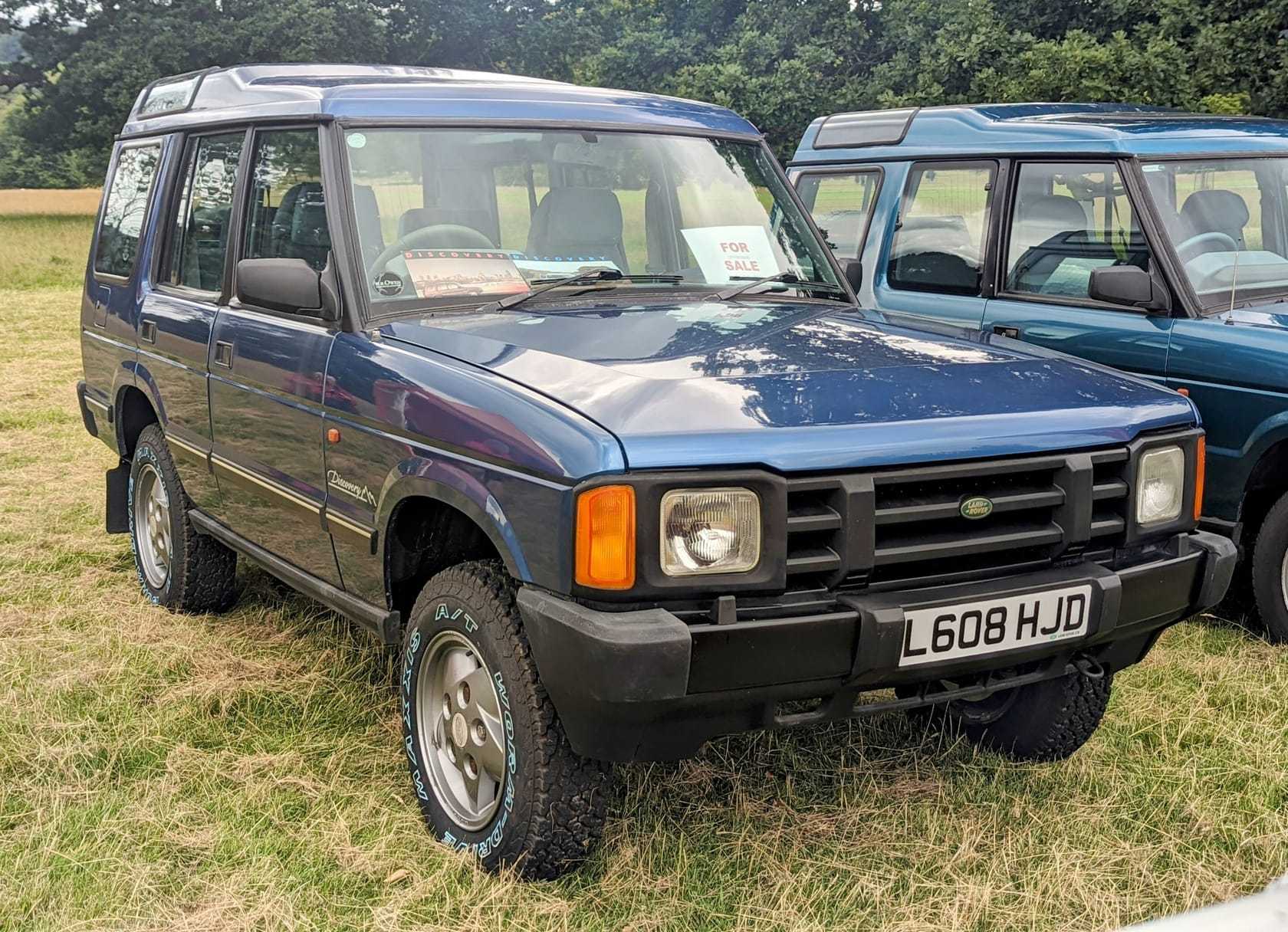
The Discovery 1 is the newest classic on this site and the youngest market, and Land Rover Discovery 1 values are still settling into shape: 150 recorded sales, nearly all since 2017, about 21 a year lately, at a median of £8,000 with the middle half between £4,500 and £12,400. Four in five of the vehicles offered find a buyer. The spread runs from a £500 project to £101,000 for one exceptional preserved car in America, and between those poles sits the whole story of a car that spent twenty years as Britain’s cheap 4x4 and has only just stopped being one.
The Discovery 1 model guide covers the 1989 launch, the Tdi engines, the Camel Trophy years and what to check. This page is about the money, and about how a market behaves in the years it is being born.
Tdi over V8, five doors over three
The sale rooms rarely narrow a Discovery beyond its name, so the order comes from the descriptions rather than a variant table, and it is consistent. The diesel manuals lead demand, the 200Tdi of 1989 to 1994 and the 300Tdi that followed, because they are the engines the Land Rover world trusts and the cheapest to run; the V8s trade on condition and a buyer’s tolerance of their thirst, and the rare MPi four-cylinder on curiosity. The five-door, added in 1990, is the body most survivors wear; the launch three-door has become the scarce and collected one, especially in early specification with the Conran-designed Sonar Blue interior, the twin sunroofs and the launch details. Genuine Camel Trophy and expedition vehicles sit apart on provenance, and the best low-mileage cars of any kind now reach £15,000 to £25,000 against £7,000 to £12,000 for good ordinary examples.

What moves the price of a Discovery 1
Rust first, and more than the marque’s reputation admits. The D1’s body rots at the boot floor, the rear crossmember, the sills, the footwells, the door bottoms and around the alpine lights, and because the car was cheap for two decades most were patched rather than repaired; an unwelded body is now the single biggest price factor, ahead of anything mechanical. The engines hold few terrors, the Tdis needing timing-case and head history and the V8s their cooling, and parts are as cheap as Land Rover parts get.
Then originality, which the Discovery market has learned to pay for the hard way: most survivors were lifted, snorkelled and winched for off-roading, and the standard car on its original wheels with its interior intact is the rarity. The early three-door details, the launch colours and the unmodified cabins carry the premiums; a history file and a long ownership chain lift a D1 more than any mechanical work; and mileage, unusually for a Land Rover, matters, because the record’s top is made entirely of low-mileage preserved cars. Modified and expedition vehicles sell on their equipment to a different buyer, outside the standard ranges.

A record still finding its level
The chart on this page needs its youth read into it. The record barely exists before 2017; the yearly median rose to £11,800 in 2018 on a handful of good cars, sat between £7,800 and £9,900 through the early 2020s as the online auctions brought volume, and has eased to £7,300 in 2024 and 2025 with the 2026 figure so far around £5,100. In real terms the ordinary D1 has drifted down about a third since 2023, following the Defender and the whole Land Rover market off the pandemic peak; underneath the median, the best cars keep strengthening, because honest examples get scarcer every winter. A young record with lumpy yearly counts will do both things at once, and the D1’s will for a few years yet.
The comparison that matters is inside the family. At £8,000 the Discovery sits against £33,200 for the Defender and £24,300 for the Range Rover Classic whose chassis and engines it shares: the cheapest coil-sprung classic Land Rover by a wide margin, which is exactly what it was in the showroom in 1989, and the argument that keeps recruiting its buyers.

Where Discovery 1s change hands
The record splits by condition. The British regional sale rooms and general auctions sell the working end, and the summer of 2026 shows it: cars at £1,150, £1,315 and £3,500 through midlands and border sales. The American online platforms sell the preserved end, with cars at £9,400 and £11,200 in the same weeks, and the £101,000 record set there in 2021; American buyers treat the D1 as the affordable piece of the Land Rover story, and the strongest results follow the lowest mileages. The best British cars trade through the clubs and the Land Rover specialists before a sale room sees them. Whether a recorded price includes the buyer’s premium varies by sale, which is one more reason to read the usual range rather than any single result.

Insuring, restoring, selling
For an agreed-value policy a good Tdi belongs around its median, a launch-spec three-door or a low-mileage car on its own figure, and a modified vehicle on its equipment. On restoration the arithmetic is blunt at today’s prices: welding costs more than the difference between a rotten car and a sound one, so buy the body and treat everything else as detail, and leave full restorations to the cars with launch specification or provenance. If you are selling, the photographs that sell a D1 are of the boot floor and the sills, the history file does the rest, and the honest expectation for an ordinary car is its median, with the strong money reserved for the unmodified and the low-mileage.
Related
The Discovery 1 borrowed its bones from the Range Rover Classic, which sells for three times as much, and outsold the Defender, which sells for four; its successor Discovery 2 is still a used car, and its spiritual heir on this site is the Freelander 1, the next Solihull family car in the queue to become a classic. For the decade, see British classic cars of the 1990s. For how all the figures on this site are compiled, see what classic cars sell for.
Frequently asked questions
How much is a Land Rover Discovery 1 worth?
Which Discovery 1 is worth the most?
Why is the Discovery 1 record so small?
Are Land Rover Discovery 1 prices rising or falling?
Is a Discovery 1 worth more than a Defender or Range Rover Classic?
What should I look for when valuing a Discovery 1?
How often does a Discovery 1 come up for sale?
Related across themes

More Land Rover values

Range Rover Classic values: the early two-doors lead, the late luxury cars trail

Land Rover Series I values: the 80-inch premium, the factory Reborn cars, and a market off its 2021 peak

Land Rover Series II and IIA values: the 88 and 109 level, the IIA premium, and a market that has halved

Land Rover Series III values: 88 level with 109, the late rise and the slide since 2022
Recently added

Triumph Spitfire vs MG Midget: the cheapest way into a British sports car, compared

TVR Tuscan: two eras of Blackpool at full volume (1967–1971, 1999–2006)

MGB vs Triumph TR6: the two British roadsters everybody cross-shops, compared on the numbers
