Land Rover Lightweight: the military family, from Airportable to 101 (1968–1984)
The Land Rover Lightweight was built to be slung under a helicopter, stripped and narrowed until a Series Land Rover could fly. A guide to the Airportable half-ton, the 101 Forward Control and the wider military family, ex-MOD buying checks and what to know before owning one.
Built 1968–1984

At a glance
- Years
- 1968–1984 (Lightweight); 1972–1978 (101FC)
- Body styles
- Soft-top and hardtop utility; GS, radio and ambulance bodies (101)
- Drivetrain
- Four-wheel drive; leaf-sprung
- Engines
- 2.25-litre petrol/diesel four (Lightweight); 3.5-litre V8 (101FC)
- Power
- Around 70 bhp (Lightweight); 128 bhp (101FC)
- Top speed
- Around 65 mph
- Trim levels
- Series IIA (1968–72) and Series III (1972–84) Lightweights
- Production
- About 37,000 Lightweights; about 2,700 101s
- Assembly
- Solihull, Warwickshire
- Designer
- Land Rover military projects office
- Values
- Ex-MOD projects from around £4,000; good Lightweights £8,000-£14,000; 101s and rarities beyond
- The brief
- Strip a Land Rover until a Westland Wessex helicopter could lift it
- The family
- Lightweight, 101 Forward Control, and the green Solihull line to the Defender Wolf
The models
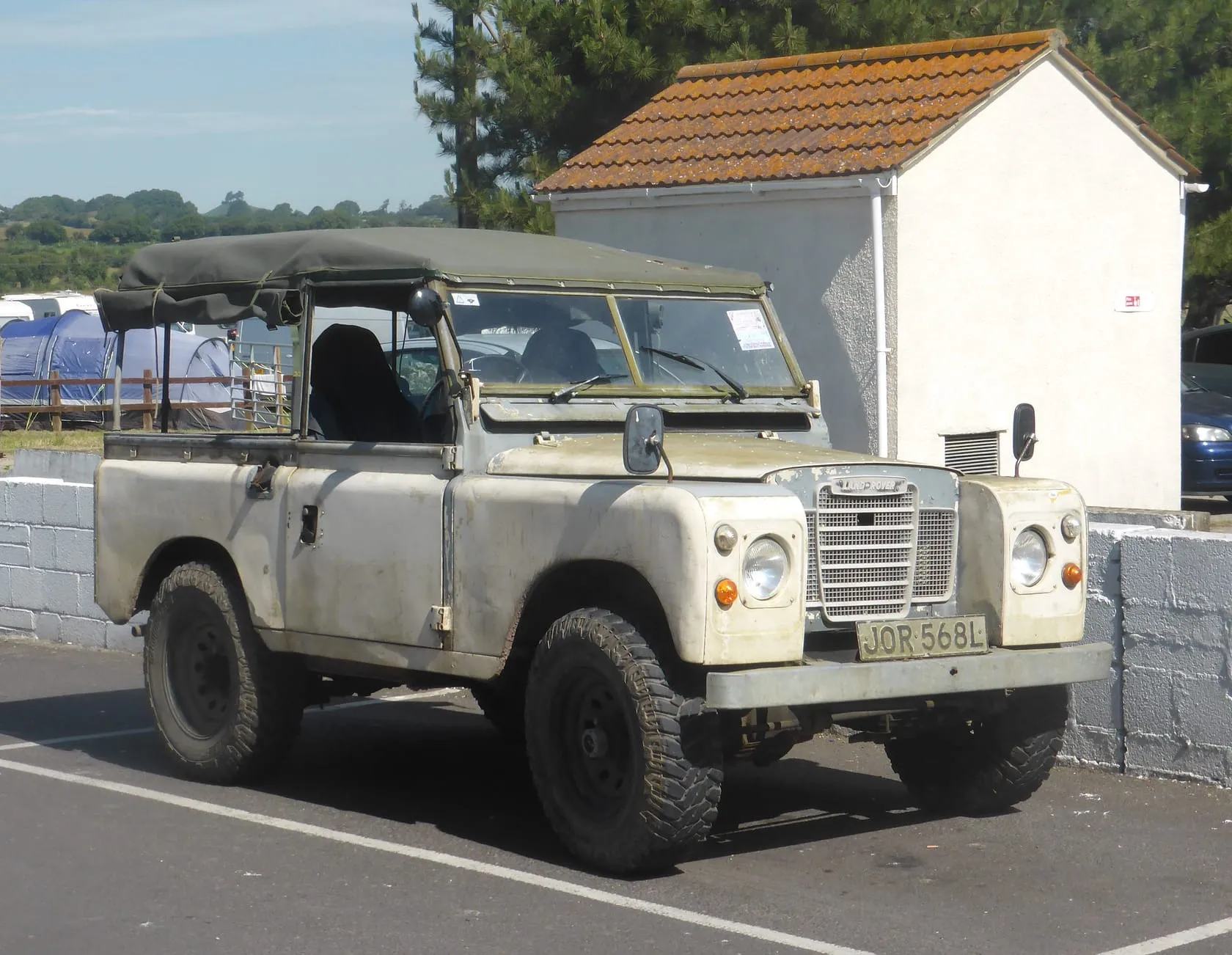
Most Land Rovers were built to cross country; the Land Rover Lightweight was built to fly over it. In 1968 the Army asked Solihull for a Land Rover that a Westland Wessex helicopter could sling beneath it, and the answer, the Air Portable half-ton, became the backbone of British military motoring for a generation, followed by the V8-engined 101 Forward Control gun tractor. Today the military family is one of the most characterful and affordable corners of the whole Solihull story, fed by decades of ex-MOD disposals.
Stripping for flight
The Lightweight’s engineering brief was subtraction. Taking the 88-inch Series IIA as its base, Solihull narrowed the body so two would fit abreast in an Argosy transport aircraft, then made everything not essential to driving removable: doors, windscreen, hood, bumpers, even body panels came off quickly to reach the helicopter sling weight. The irony the clubs cherish is that fully dressed, the Lightweight weighs more than the standard truck it was stripped from; the point was what it weighed at the hook. About 37,000 were built to 1984, Series IIA until 1972 and Series III thereafter, serving every British service and a dozen export forces.

The 101 Forward Control: the gun tractor
Where the Lightweight was subtraction, the 101 Forward Control was concentration: a one-tonne cab-over truck on a 101-inch wheelbase, the 3.5-litre Rover V8 under the crew’s feet and the driver above the front axle, designed to tow the 105mm light gun with its crew and ammunition aboard. Some towed powered trailers driven from the truck’s own transmission, a solution nothing else in British service attempted. About 2,700 were built from 1972 to 1978 in general service, radio and ambulance bodies, and the survivors’ following today is among the most devoted in the Land Rover world.

The wider green family
Military Solihull ran far beyond these two: half of all early Series production wore green, from SAS Pink Panthers to airfield crash tenders, and the line carried on through 24-volt FFR (fitted for radio) trucks to the Defender-based Wolf that served into the present century. The Lightweight and 101 matter because they were designed as military vehicles rather than adapted from civilian ones, which shows in every drilled bracket and blackout lamp, and explains why the military-vehicle scene treats them as the pure examples of the breed.

From the ranks to the road: buying ex-MOD
Almost every surviving Lightweight and 101 passed through the MOD disposal auctions, and provenance is the buying skill: match the chassis number to the plates, quote the military registration against the released MERLIN service records, and prefer documented vehicles over fresh paint. Mechanically these are ordinary leaf-sprung Land Rovers, chassis and bulkhead rot decide value, engines and gearboxes are cheap and everywhere, and 24-volt FFR electrics reward familiarity. Beware civilian trucks dressed as military with a green respray; the register clubs can usually tell in minutes.

Which one to choose
The family sorts itself by temperament. A Series III Lightweight is the practical entry: the most numerous, the easiest to drive, and the cheapest to buy and keep, with the all-synchromesh box making town work civilised. The IIA Lightweight is the purist’s pick, earlier, rarer and closer to the original airportable brief. FFR radio trucks bring 24-volt electrics and period equipment that delight some owners and deter others. The 101 is the enthusiast’s summit, thirstier and louder, and nothing else here touches it for presence or towing theatre. All share the same rule: buy on chassis and bulkhead, not on paint, and let the service record settle ties.

What they are like to live with
Honest, loud and endearing. A Lightweight drives like any other leaf-sprung Series truck, 65 mph downhill with the wind behind it, steering and brakes that ask constant attention, and indestructible mechanical simplicity throughout; the narrowed body makes it usefully wieldy on green lanes. The 101 is a different animal, the V8 bellowing beneath the cab and the driving position all authority. Both are welcome everywhere, from military-vehicle rallies to village shows, and both carry service history in every scar, which is precisely their charm against a restored civilian 1960s estate car.

Values: service history at surplus prices
The military family remains the affordable door into leaf-sprung Land Rover ownership: rough ex-MOD Lightweights from around £4,000, good roadworthy trucks £8,000 to £14,000, with exceptional restorations, documented service histories and rare bodies above that, and 101s trading higher still on their scarcity. Prices have climbed as Series values dragged everything upward, but the green trucks still undercut equivalent civilian restorations, and no other Land Rover comes with a service record you can actually look up.

More photos


The Lightweight in dates
- 1968The Army asks Solihull for a Land Rover a Westland Wessex can sling: the Air Portable half-ton, narrowed so two fit abreast in an Argosy, with everything non-essential removable.
- 1972Lightweight production moves from Series IIA to Series III; the 101 Forward Control arrives, a cab-over one-tonner with the 3.5 V8 under the crew's feet.
- 1978101 production ends at around 2,700 in general service, radio and ambulance bodies, some towing powered trailers driven from the truck's own transmission.
- 1984Lightweight production ends at about 37,000, having served every British service and a dozen export forces.
- 1990s onwardsMOD disposal auctions put almost every survivor into civilian hands, which is why provenance is the buying skill.
Before you buy a Lightweight
Provenance, the buying skill
- Match the chassis number to the plates before anything else
- Quote the military registration against the released MERLIN service records
- Prefer documented vehicles over fresh paint; the register clubs spot a dressed civilian truck in minutes
- Fully dressed, a Lightweight weighs more than the truck it was stripped from, so weight is no guide to authenticity
Structure and mechanicals
- Chassis and bulkhead rot decide value; everything else is cheap
- Engines and gearboxes are ordinary Series parts and available everywhere
- 24-volt FFR electrics are a specialism, delightful to some owners and off-putting to others
- Leaf springs, 65 mph and steering that asks constant attention are the design, not faults
Which one to choose
- Series III Lightweight: most numerous, easiest to drive, cheapest to keep, all-synchromesh box
- Series IIA Lightweight: earlier, rarer and closer to the original airportable brief
- FFR radio trucks bring period equipment as well as 24-volt electrics
- The 101 is the summit, and the rarest at around 2,700 built