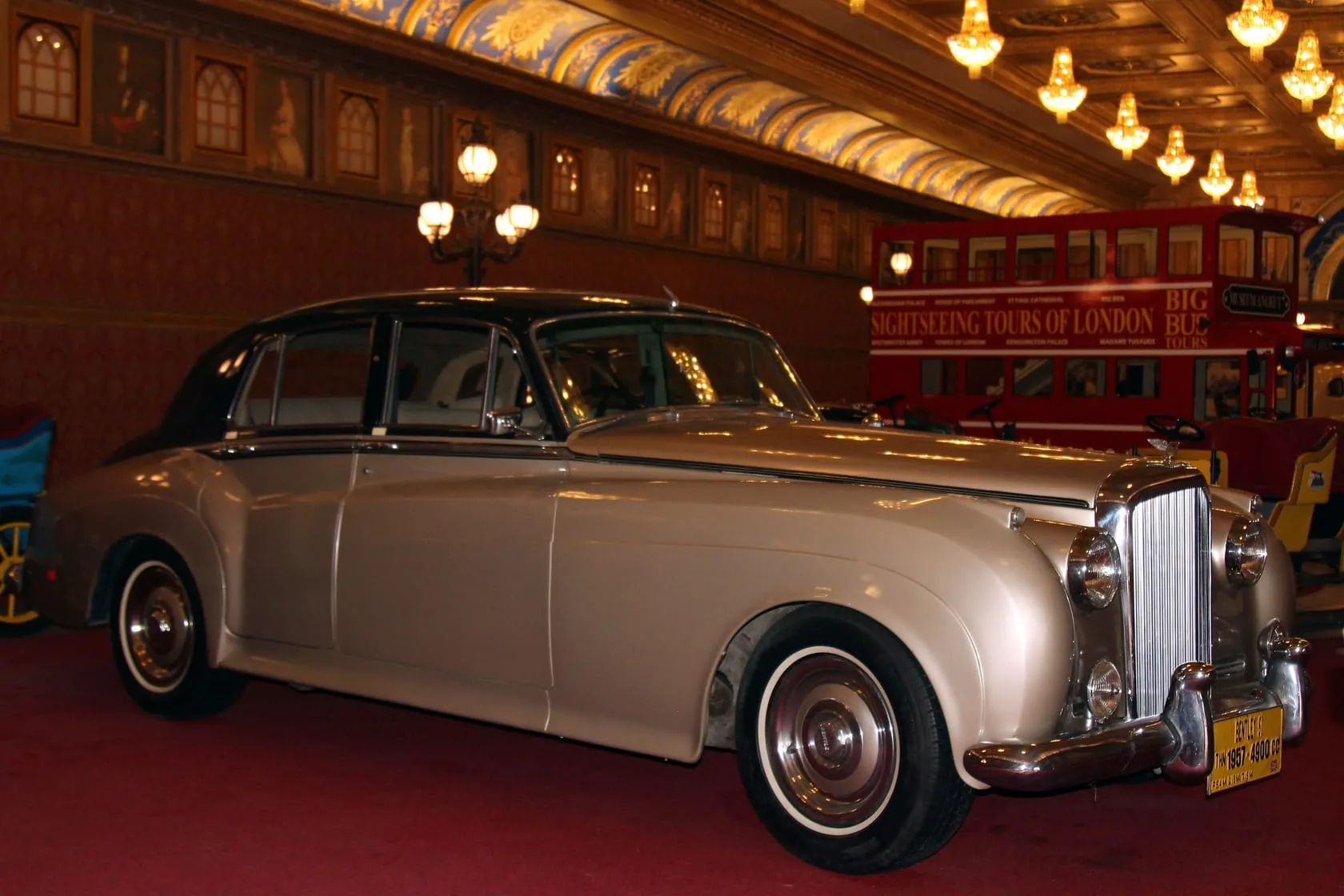
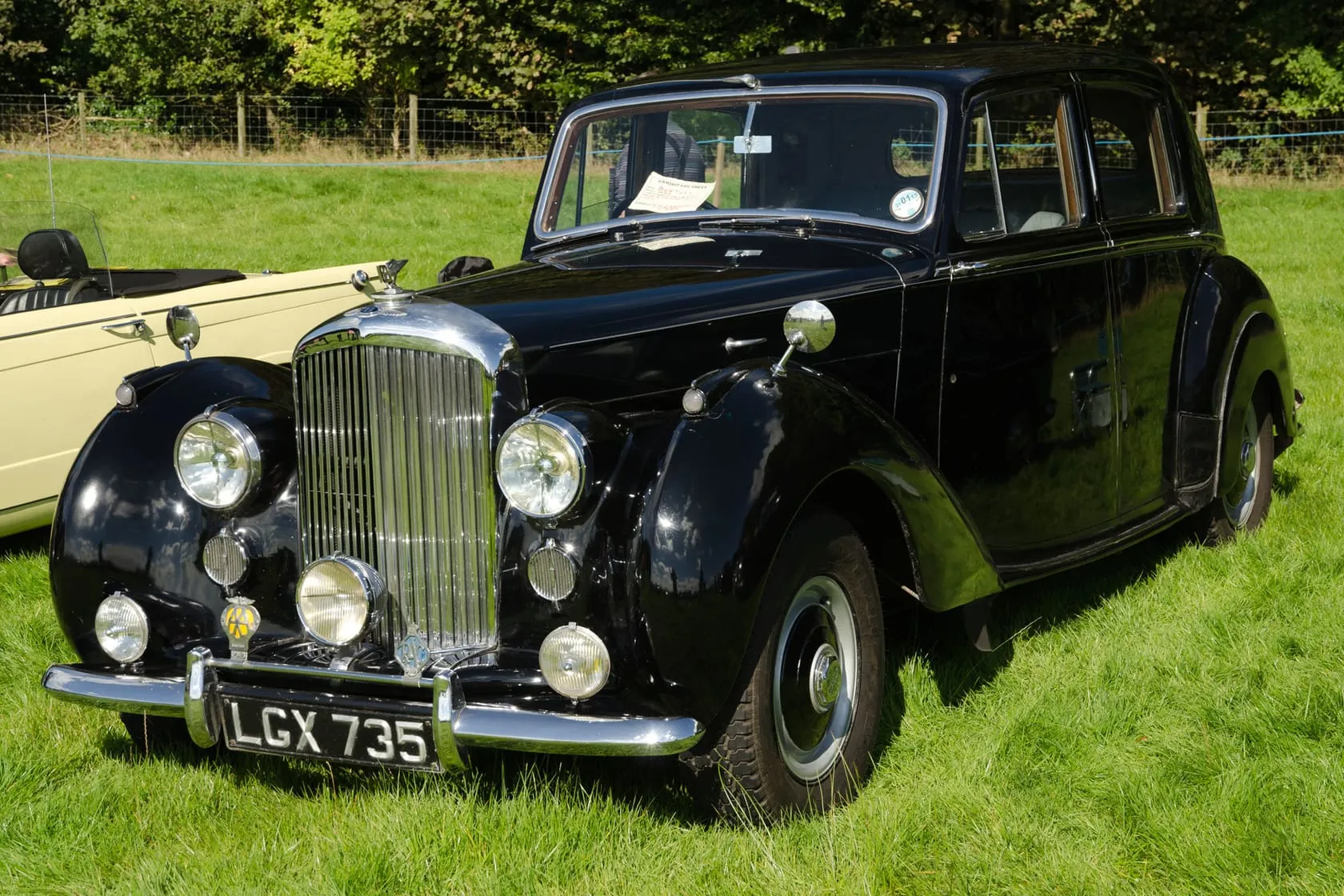
Bentley Mk VI values: a hand-built Bentley for £20,000, and the £826,000 one beside it
One record holding the cheapest hand-built Bentley and the most valuable British car on this site, from 567 recorded auction sales. What a standard steel saloon is worth against an R Type Continental, and the forty-two-fold gap between them.
Built 1946–1955
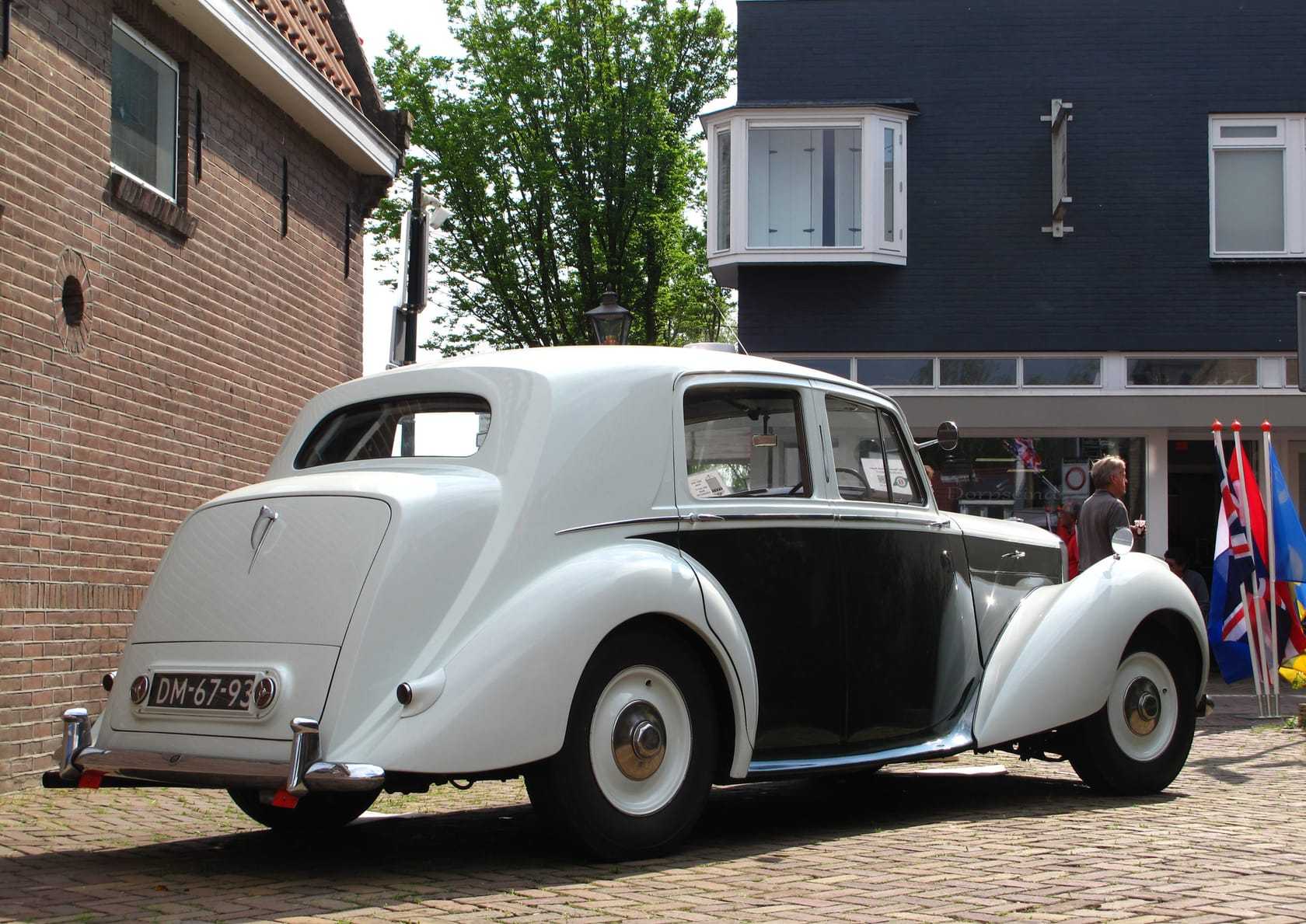
What the Bentley Mk VI sells for at auction
In 2025 the median Bentley Mk VI sold for £18,958 across 36 sales, 12% down on 2024. In real terms, typical Bentley Mk VI prices were down about 34% over the five years to 2025, once inflation is accounted for.
| Variant | Sold | Typical range | Median |
|---|---|---|---|
| Mk VI | 280 | £13,944 - £38,552 | £19,844 |
| R Type | 169 | £15,120 - £32,119 | £22,000 |
| R Type Continental | 30 | £428,741 - £690,738 | £550,300 |
| R Type Continental H.J. Mulliner | 13 | £724,979 - £1,032,590 | £826,250 |
| Mk VI Park Ward | 12 | £49,787 - £102,718 | £81,576 |
| Mk VI James Young | 9 | £10,651 - £37,740 | £23,625 |
| Mk VI H.J. Mulliner | 8 | £16,172 - £35,969 | £26,948 |
| R Type Park Ward | 7 | £59,498 - £108,743 | £75,300 |
Show the year-by-year mediansHide the year-by-year medians
| Year | Sold | Median | In 2025 money |
|---|---|---|---|
| 2026 (so far) | 28 | £17,214 | |
| 2025 | 36 | £18,958 | £18,958 |
| 2024 | 40 | £21,422 | £22,244 |
| 2023 | 39 | £23,000 | £24,681 |
| 2022 | 46 | £20,890 | £23,924 |
| 2021 | 60 | £24,112 | £29,816 |
| 2020 | 19 | £22,500 | £28,512 |
| 2019 | 31 | £32,000 | £40,965 |
| 2018 | 18 | £27,780 | £36,166 |
| 2017 | 31 | £48,300 | £64,338 |
| 2016 | 23 | £37,048 | £50,620 |
| 2015 | 19 | £43,700 | £60,306 |
| 2014 | 23 | £32,625 | £45,203 |
| 2013 | 21 | £33,600 | £47,218 |
| 2012 | 23 | £39,100 | £56,206 |
| 2011 | 21 | £67,317 | £99,249 |
| 2010 | 20 | £33,350 | £51,080 |
| 2009 | 11 | £17,664 | £27,732 |
| 2008 | 10 | £20,125 | £32,219 |
| 2007 | 12 | £30,450 | £50,445 |
| 2006 | 10 | £15,525 | £26,320 |
| 2005 | 10 | £10,673 | £18,550 |
| 2004 | 10 | £13,218 | £23,447 |
- £28,826R Type
- £9,116Mk VI
- £16,875Mk VI
- £35,650R Type
- £31,625Mk VI
Strong evidence. 567 recorded sales and a dozen or more a year: the median and the range are well founded. Based on 567 sold results from public classic car auctions (1997 to 10 August 2026). Sold prices, not asking prices, and not a valuation: condition, history and specification vary from car to car. Inflation-adjusted figures use the ONS CPIH index, in 2025 money.
This record holds the cheapest hand-built Bentley and the most valuable British car on the site, and they share a chassis. Bentley Mk VI values sit at a median of £24,990 across 567 recorded sales, with the middle half between £15,486 and £54,600, but that headline hides a spread from £2,401 to £2,219,923. Roughly seven in ten cars offered find a buyer, and about 44 change hands a year.
The Bentley Mk VI and R Type guide covers the first complete car from Crewe, the standard steel body and what to check. This page is about the money.
A 42-fold spread inside one record
The two ends of this data are not comparable cars in any commercial sense. At one end the standard steel saloons: a Mk VI at £19,844 across 280 recorded sales and an R Type at £22,000 across 169. Those two rows are 449 of the 567 sales, so the typical car in this record is a £20,000 Bentley.
At the other end the R Type Continental at £550,300 across 30 sales, and £826,250 across 13 for H J Mulliner-bodied cars. That is forty-two times the standard Mk VI, on a chassis they broadly share, and it is the highest figure anywhere in this database. The top recorded sale, £2,219,923, is the largest single number on this site.
The lesson is the one this batch keeps repeating and this page states most starkly: on cars like these the badge is a category, not a price. Establish which row a car belongs to before any figure means anything.

The coachbuilt cars are a different market entirely
Between the two extremes sit the coachbuilders. A Park Ward-bodied Mk VI is £81,576 across 12 recorded sales, four times a standard steel car. An R Type with Park Ward coachwork is £75,300 across 7. Below them, H J Mulliner and James Young bodies on Mk VI chassis sit at £26,948 and £23,625, barely above standard, which shows that the coachbuilder alone is not the premium: it is the coachbuilder and the body style together. A formal saloon body by a famous name earns little; a fastback or a drophead earns a great deal.
Thirty-nine of the 567 sales sit outside the eight rows entirely, in the tail of individual commissions.

Down 58% in seven years
The yearly median reads £32,000 in 2019, £22,500 in 2020, £24,112 in 2021, £20,890 in 2022, £23,000 in 2023, £21,422 in 2024, £18,958 in 2025 and about £17,214 so far in 2026. In today’s money that is £40,965 falling to £17,214, a loss of about 58% of the real value in seven years.
That decline is real rather than a mix effect, because it is happening in the rows that carry the volume: the standard steel saloons are simply worth less than they were. It also puts the Mk VI in the same story as the Silver Shadow, the Silver Spirit and the Bentley T-series, all of which are falling together. The market for large, thirsty, hand-built post-war luxury saloons is contracting, and the Continental’s separate trajectory is the exception that proves it.
Where Mk VIs and R Types change hands
The standard saloons move through British sale rooms and online platforms, and the summer of 2026 shows the band: a Mk VI at £9,116 at the bottom, £16,875 in the middle, and R Types at £28,826 and £35,650 above them. The Continentals appear a handful of times a year at the international catalogued sales. Roughly three in ten offered cars do not sell, which at the saloon end reflects how much the quality spread varies and at the Continental end reflects how specific each car is. Whether a recorded price includes the buyer’s premium varies by sale, which is one more reason to read the usual range rather than any single result.
Insuring, restoring, selling
Insure by row, and on a coachbuilt or Continental car individually with the chassis records attached, because nothing in the headline figure describes those. On restoration, the standard steel body is the one part of this market where the sums are knowable: panels are a known quantity and the trade understands them, though the cost still exceeds what a finished saloon makes. Coachbuilt bodywork has no such floor. If you are selling a standard car, documentation and a dry shell are the whole argument; if you are selling a Continental, the chassis records are the sale.
Related
The Mk VI’s Rolls-Royce sibling is the Silver Wraith, and its successor is the S-series, which carries the same split between cheap saloons and expensive Continentals. For the period, see British classic cars of the 1940s and 1950s. For how all the figures on this site are compiled, see what classic cars sell for.