Dating a car from its number plate: suffix, prefix, current and dateless, and the rule you cannot break
The guides
British number plates have carried the year on them, in one code or another, since February 1963. For a classic that is both a convenience and a constraint: anyone who knows the code can date the car from the kerb, and a registration can never legally make a car look newer than it is.
Here are the four formats, the year each letter and number means, the letters that were skipped and why, and the rule that governs every transfer.
The current format: two numbers, two changeovers a year
From 1 September 2001 a registration has three parts: a two-letter memory tag for the region of first registration, a two-number age identifier, and three random letters. DVLA describes the age identifier simply as the numbers that tell you when the mark was issued.
The code changes twice a year. From March to August the identifier is the last two digits of the year. From September to February it is that number plus fifty. So a car registered in spring 2026 carries 26, and one registered from September 2026 carries 76. The sequence started with 51 in September 2001, and DVLA’s table runs the pattern forward until the available combinations are exhausted.
For the 2000s cars now coming into classic territory, this is the format you will be reading.
The prefix format: a letter at the front, 1983 to 2001
From August 1983 to August 2001 the year was a single letter at the front of the mark, followed by up to three numbers and three letters, in the pattern A123 BCD.
DVLA confirms the era boundaries and the letters excluded. The widely published year table, which is uncontested and matches the registration records, runs as follows, each letter covering August to the following July:
| Letter | Period |
|---|---|
| A | Aug 1983 to Jul 1984 |
| B | Aug 1984 to Jul 1985 |
| C | Aug 1985 to Jul 1986 |
| D | Aug 1986 to Jul 1987 |
| E | Aug 1987 to Jul 1988 |
| F | Aug 1988 to Jul 1989 |
| G | Aug 1989 to Jul 1990 |
| H | Aug 1990 to Jul 1991 |
| J | Aug 1991 to Jul 1992 |
| K | Aug 1992 to Jul 1993 |
| L | Aug 1993 to Jul 1994 |
| M | Aug 1994 to Jul 1995 |
| N | Aug 1995 to Jul 1996 |
| P | Aug 1996 to Jul 1997 |
| R | Aug 1997 to Jul 1998 |
| S | Aug 1998 to Feb 1999 |
| T | Mar 1999 to Aug 1999 |
| V | Sep 1999 to Feb 2000 |
| W | Mar 2000 to Aug 2000 |
| X | Sep 2000 to Feb 2001 |
| Y | Mar 2001 to Aug 2001 |
Notice the pace doubling from 1999. The last five prefix letters cover six months each rather than twelve, as a transitional step towards the twice-yearly changeover that the current format made permanent.
The suffix format: a letter at the end, 1963 to 1983
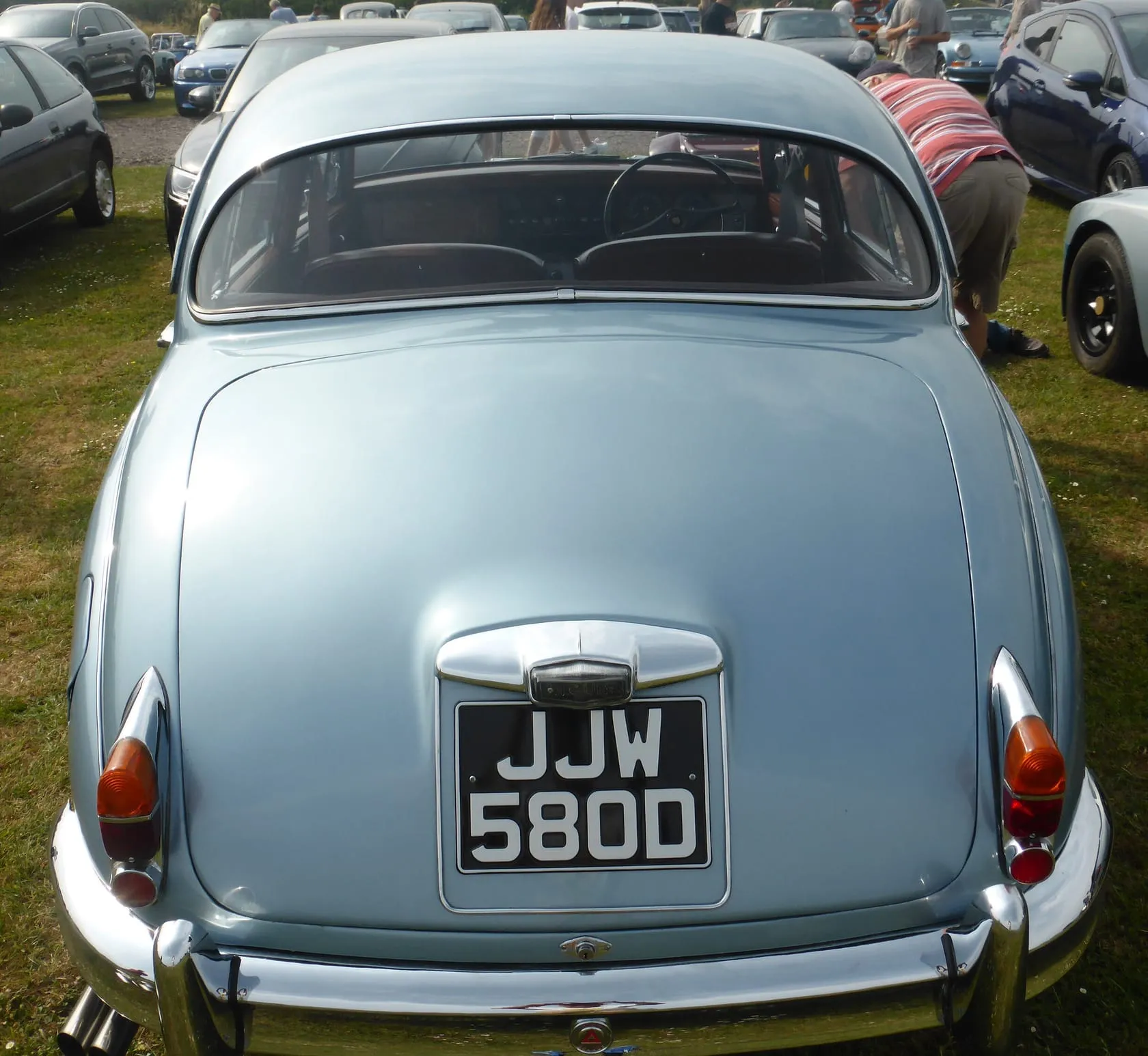
From February 1963 to July 1983 the year letter came at the end, in the pattern ABC 123A. Again DVLA confirms the boundaries and the exclusions; the per-letter years are the universally published ones.
| Letter | Period |
|---|---|
| A | Feb 1963 to Dec 1963 |
| B | 1964 |
| C | 1965 |
| D | 1966 |
| E | Jan 1967 to Jul 1967 |
| F | Aug 1967 to Jul 1968 |
| G | Aug 1968 to Jul 1969 |
| H | Aug 1969 to Jul 1970 |
| J | Aug 1970 to Jul 1971 |
| K | Aug 1971 to Jul 1972 |
| L | Aug 1972 to Jul 1973 |
| M | Aug 1973 to Jul 1974 |
| N | Aug 1974 to Jul 1975 |
| P | Aug 1975 to Jul 1976 |
| R | Aug 1976 to Jul 1977 |
| S | Aug 1977 to Jul 1978 |
| T | Aug 1978 to Jul 1979 |
| V | Aug 1979 to Jul 1980 |
| W | Aug 1980 to Jul 1981 |
| X | Aug 1981 to Jul 1982 |
| Y | Aug 1982 to Jul 1983 |
The oddity is E, which covers only seven months. Until 1967 the letter changed on 1 January; from August 1967 the changeover moved to 1 August, where it stayed for the rest of the suffix era and the whole of the prefix era. The switch is generally attributed to the motor trade’s wish to move the new-registration sales rush away from the post-Christmas slump, and it is why a 1967 car can be an E or an F.
One practical note for dating a classic. Not every area’s authority adopted the suffix on the same day in 1963, and a handful continued issuing dateless marks into 1964 or later, so a dateless plate on a 1963 or 1964 car is not a sign that something is wrong.
Why I, O, Q, U and Z are missing
The gaps in both sequences are deliberate. I, Q and Z were never used anywhere in a suffix or prefix mark, and O and U were never used as the year letter, because at a distance each could be mistaken for a number or for another letter. I looks like 1, O like 0, Z like 2, Q like O, and U like V.
Q is the exception that proves the rule: it was reserved for a specific purpose, covered below.
Dateless marks: before 1963, and no age at all
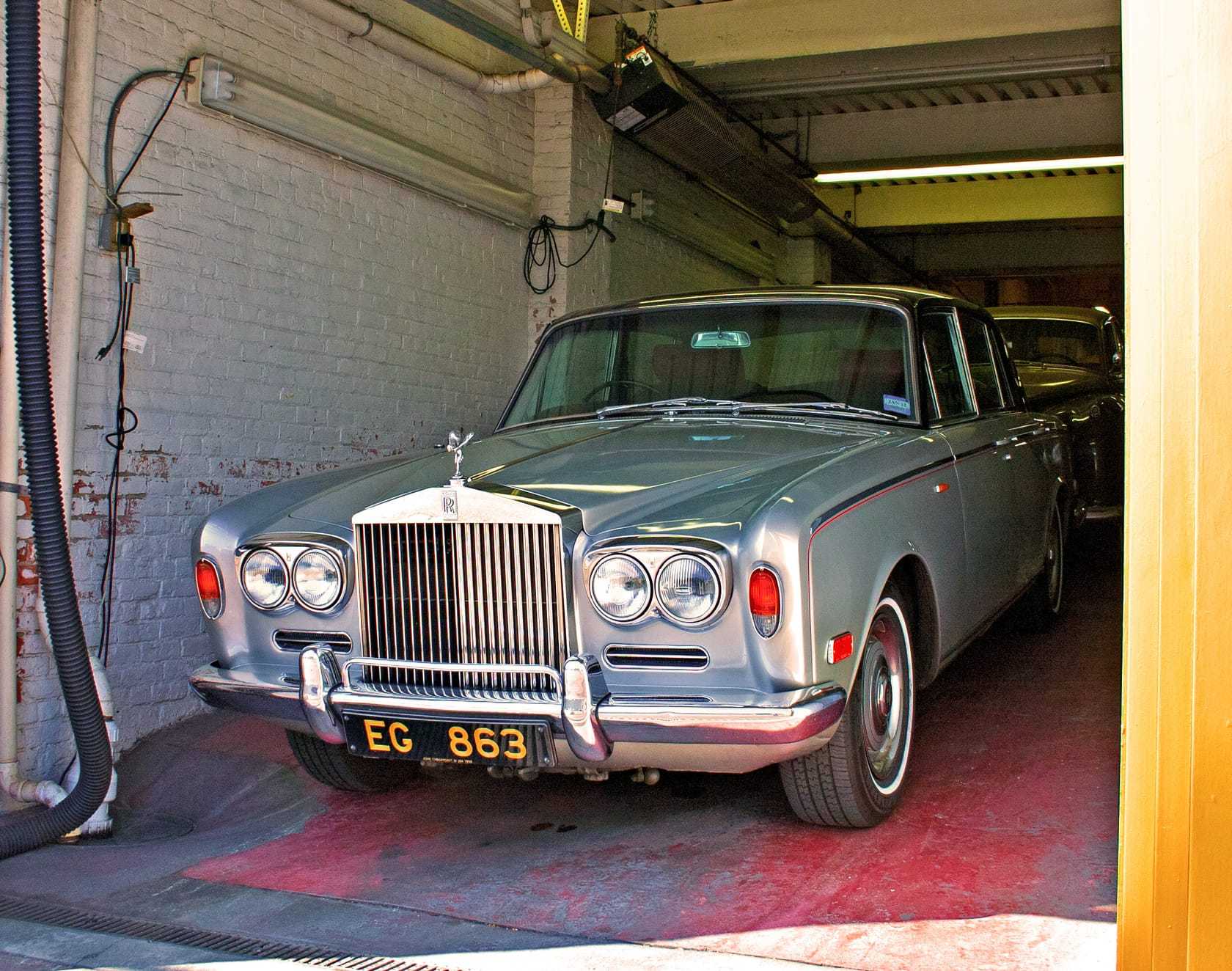
Registrations issued before February 1963 carry no age identifier. They take the form of up to three letters with up to four numbers, or the reverse, as in ABC 1, 1 ABC or 1234 AB, and nothing in them tells you when the car was registered.
That has a consequence DVLA spells out: because a dateless mark cannot make a car appear any particular age, it may be displayed on a vehicle of any age. This is why dateless marks are the ones bought and transferred most freely, and why a cherished mark on a new car is almost always a dateless one.
The rule that governs every transfer
DVLA states it in one sentence: you cannot use a registration number to make your vehicle appear younger than it actually is. It applies even to a personalised number you have paid for.
The rule runs in one direction only. A suffix mark from 1970 can be displayed on any car registered in 1970 or later. A prefix mark from 1990 can go on any car registered from that prefix year onward. A dateless mark can go on anything. What cannot happen is a 2020 mark on a 1990 car, or a prefix mark on a car older than the prefix year, because each would imply the car is newer than it is.
For a classic this matters most when a mark is transferred off the car. The car then needs a replacement, and what it gets is an age-related mark: one appropriate to the vehicle’s age, in the style of the period, which DVLA issues where the original number has been transferred or lost or where the documentary link between chassis and registration cannot be evidenced. Proof of the year of manufacture is required, and the chassis number can often establish it; where it cannot, a dating certificate from the manufacturer or a recognised owners’ club is needed. That process, and the route to reclaiming an original number, is covered in how to find your old car.
The Q plate
A Q registration is issued to a vehicle whose age or identity is in doubt. Kit cars built from assorted parts, vehicles with no dating evidence, some imports and reconstructed cars whose origins cannot be proven all receive one, and the rules that decide which vehicles do are set out in our guide to registering a kit car.
Two consequences are permanent. Once a Q is issued, any original registration the vehicle held becomes invalid and must never be displayed again. And a Q-plated vehicle is never eligible for the historic MOT exemption, whatever its age. It is not a mark of a bad car. It is a statement about what is and is not known, and it cannot be undone.
Reading the plate on a classic you are buying
All of which makes the registration one of the quickest checks on a car. A suffix or prefix letter should match the stated year; a mismatch in the direction of a newer mark is impossible, and in the direction of an older one needs explaining. A dateless mark tells you nothing about age and should prompt a look at the V5C’s date of first registration instead. A Q tells you the identity was once in doubt and invites the question of why.
What the plate can legally look like, including the black-and-silver plates a pre-1980 car may wear, is a separate matter covered in our guide to classic car number plates. The code above tells you what the mark means. That guide tells you how it may be displayed.