LED headlamps and electronic ignition on a classic: what is legal, what is not, and why 1986 matters
The guides
Two upgrades account for most of the electrical work done to British classics, and they sit at opposite ends of the legal spectrum. Electronic ignition is invisible to every official process. LED headlights, or headlamps as the regulations call them, are governed by one date, and the date is more precise than the forums suggest.
Here is what the MOT inspection manual and the lighting regulations actually say, what changed in 2021, and why the rest of the electrical upgrade list is your own business.
LED bulbs in halogen headlamps: the 1986 line
The MOT inspection manual for cars is explicit. In its section on headlamp compliance it states that existing halogen headlamp units on vehicles first used on or after 1 April 1986 must not be converted to be used with high intensity discharge or LED bulbs. A converted unit on such a car fails the test under the light-source defect.
For vehicles first used before 1 April 1986, the manual takes the opposite position: they must not be failed for the conversion.
That split has a specific origin. DVSA published Special Notice 01-21 on 19 March 2021, effective from 22 March 2021, which replaced the earlier and vaguer wording that halogen units “should not” be converted with the date-based rule above. Before that notice the position was ambiguous for everyone; after it, a pre-1986 car is clearly in the permitted category and a post-1986 car is clearly not.
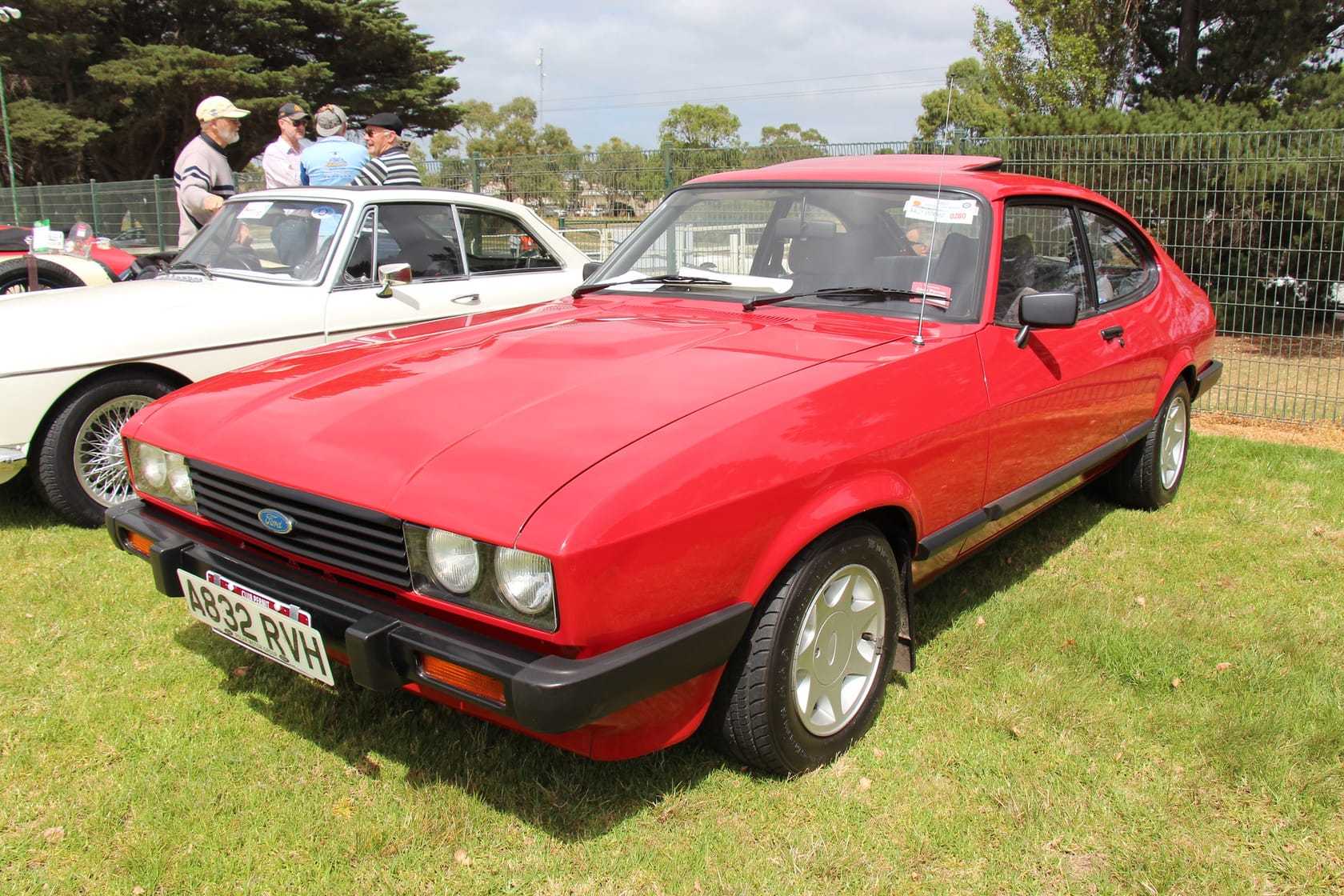
So a 1975 MGB, a 1979 Capri or a 1984 Metro can run LED bulbs in its original housings without an MOT problem. A 1987 Sierra cannot.
Two things the date does not change. The lamp must still work properly: correctly aimed, the right colour, not dazzling oncoming traffic, and producing a sensible beam pattern, all of which are tested in the ordinary way. And a poor-quality LED bulb in a reflector designed for a filament can throw light everywhere except where it is needed, which is a safety problem the MOT may catch as an aim or beam failure regardless of the car’s age. The exemption covers the conversion, not a bad one.
Why 1986, precisely
The date is not arbitrary. It is the point at which the lighting regulations began requiring headlamps to carry an approval mark.
The Road Vehicles Lighting Regulations 1989 set out the requirements for dipped-beam headlamps, and for motor vehicles first used before 1 April 1986 the marking requirement is stated as “no requirement”. Such a car needs two headlamps showing white or yellow light, of at least 30 watts on a four-wheeler, and that is all. Vehicles first used from that date need lamps bearing an approval mark or British Standard mark.
A headlamp that was never required to be type approved cannot lose an approval it never held. That is the logic behind the MOT position, and it is the reason the same retrofit bulb is a compliance failure in a 1990 car and not in a 1980 one.
Which lights an old car must have at all
The regulations work by first-use date, and the thresholds are worth knowing, because a classic is not required to carry lights it was never required to have.
- Dipped and main beam headlamps: required on vehicles first used from 1 January 1931.
- Direction indicators: required from 1 January 1936. Earlier cars may use semaphore arms or none.
- Side repeater indicators: required only on vehicles first used from 1 April 1986. An earlier car needs front and rear indicators but no repeaters on the wings.
- Daytime running lights: no requirement on any older vehicle. They are inspected only on cars first used from March 2018 that were fitted with them from the factory. There is no retrofit obligation.
- Rear fog lamps and reflectors have their own first-use thresholds in the same schedule.
The principle throughout is the same: a pre-threshold car need not have the item, but whatever lights it does have must work, be the right colour and be correctly positioned. Fitting extra lights is permitted provided they comply; removing required ones is not.
Electronic ignition: no rule, anywhere
Replacing contact-breaker points with an electronic ignition module is the single most common upgrade made to a British classic, and it is worth stating plainly that no regulation, DVLA guidance or MOT inspection item restricts it.
Two questions tend to follow. Does it affect the historic MOT exemption? No. The substantial-change test that governs exemption is concerned with the main components: the chassis or monocoque, the axles and running gear, and the engine. An ignition module is an ancillary bolted to the engine, not a change to the engine’s technical characteristics. Our guide to tax and MOT exemption sets out that test in full.
Does it affect the V5C? No. Nothing recorded on the registration document, which covers engine number, engine size, body type and the like, changes when the ignition does.
The practical case for the upgrade is reliability and consistency: no points to wear, no dwell to drift, and a cleaner spark at idle. The case against is originality, which matters on a concours car and to almost nobody else. A sensible compromise that many owners adopt is to fit the module and keep the original distributor internals in a labelled box, so the car can be returned to standard in an afternoon.
One note of caution that has nothing to do with the law: some modules are polarity-specific, which brings us to the last item.
Negative earth, alternators, and the rest
Positive-to-negative earth conversion has no official position at all. There is no regulation, no DVLA guidance and no MOT item on earth polarity, and it alters nothing on the V5C. It is a purely technical decision, usually made because modern accessories, an alternator and most electronic ignition modules assume negative earth. The confident advice on forums about what is and is not allowed rests on nothing; the only constraints are electrical.
The same is true of the other common upgrades in this family. An alternator replacing a dynamo, relays added to headlamp circuits to take the load off old switches, a modern fuse box, and USB power for a phone are all invisible to the law, provided the result is safe and the lights still do what the regulations require.
What remains is the question of how visible the changes are, which is a matter of taste rather than rule. The period look survives a surprising amount of hidden modernisation, and the car that looks entirely original while starting first time on a cold morning is the one most owners are actually aiming for.
The short version
On a car first used before 1 April 1986, LED headlamp bulbs are permitted, on the authority of the MOT manual itself, provided the lamps still work properly. On a later car they are a failure. Electronic ignition, negative earth, an alternator and the rest are nobody’s business but yours. And whatever a classic was built without, it need not have, though everything it has must work.
The broader set of changes that make an old car easier to live with day to day, and the one area where the law does take an interest, are covered in our guide to daily driving a classic.