The Derby Bentleys: the silent sports car (1933–1940)
The Derby Bentleys reinvented the winged B under Rolls-Royce ownership as the silent sports car, 2,422 coachbuilt 3½ and 4¼ Litres that drove like nothing else of their age and produced the miraculous Embiricos streamliner. A guide to the era, and what to check before buying one.
Built 1933–1940 264 recorded sales
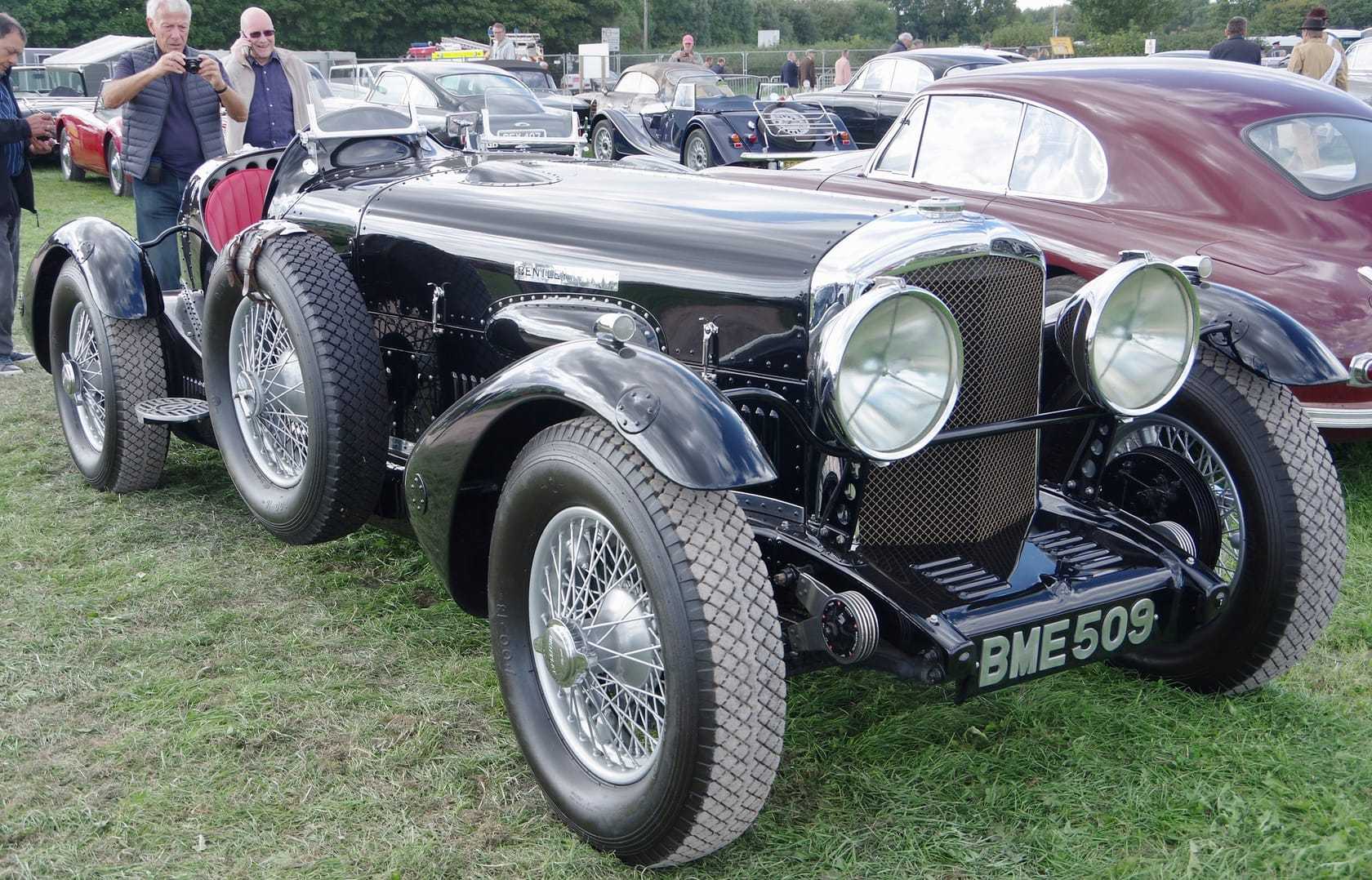
At a glance
- Years
- 1933–1940
- Body styles
- Coachbuilt: Park Ward sports saloons predominating, plus dropheads and specials
- Drivetrain
- Front engine, rear-wheel drive; separate chassis
- Engines
- 3669cc, then 4257cc OHV six (tuned Rolls-Royce 20/25 and 25/30 units)
- Power
- Around 110-126 bhp
- Top speed
- Around 90-100 mph (more for the Embiricos)
- Trim levels
- Chassis only; Park Ward, Vanden Plas, James Young and the great houses
- Production
- 2,422: 1,177 3½ Litres and 1,245 4¼ Litres
- Assembly
- Derby, alongside Rolls-Royce
- Designer
- Rolls-Royce engineering; the marketing coined the silent sports car
- Values
- Saloons from around £45,000; good cars £60,000-£110,000; dropheads and specials beyond
- The reinvention
- W.O. thunder replaced by Rolls refinement: the silent sports car was born at Derby
- The miracle
- The 1938 Embiricos streamliner averaged over 100 mph for an hour at Brooklands
The models
When Rolls-Royce bought its fallen rival in 1931, enthusiasts feared the winged B would die of refinement. Instead Derby produced a reinvention: the 3½ Litre of 1933, marketed as the silent sports car, wrapped a tuned Rolls engine in a lower, lighter chassis and drove, by period consensus, better than anything of its age. The Derby Bentley era built 2,422 coachbuilt cars, produced the miraculous Embiricos streamliner, and remains the connoisseur’s quiet corner of the pre-war Bentley world.
The silent sports car
The recipe inverted Cricklewood: instead of W.O.’s thunder, Derby took the Rolls-Royce 20/25’s overhead-valve six, raised its compression, fitted twin SUs and a sportier camshaft, and installed it in a bespoke low chassis with higher gearing. The result made around 110 bhp move a coachbuilt car past 90 mph in near silence, with steering and balance the road testers of 1933 struggled to compare to anything. The silent sports car tagline was marketing that happened to be true, and the enlarged 4¼ Litre of 1936 kept the promise as coachwork gained weight.

The coachbuilt uniform and its exceptions
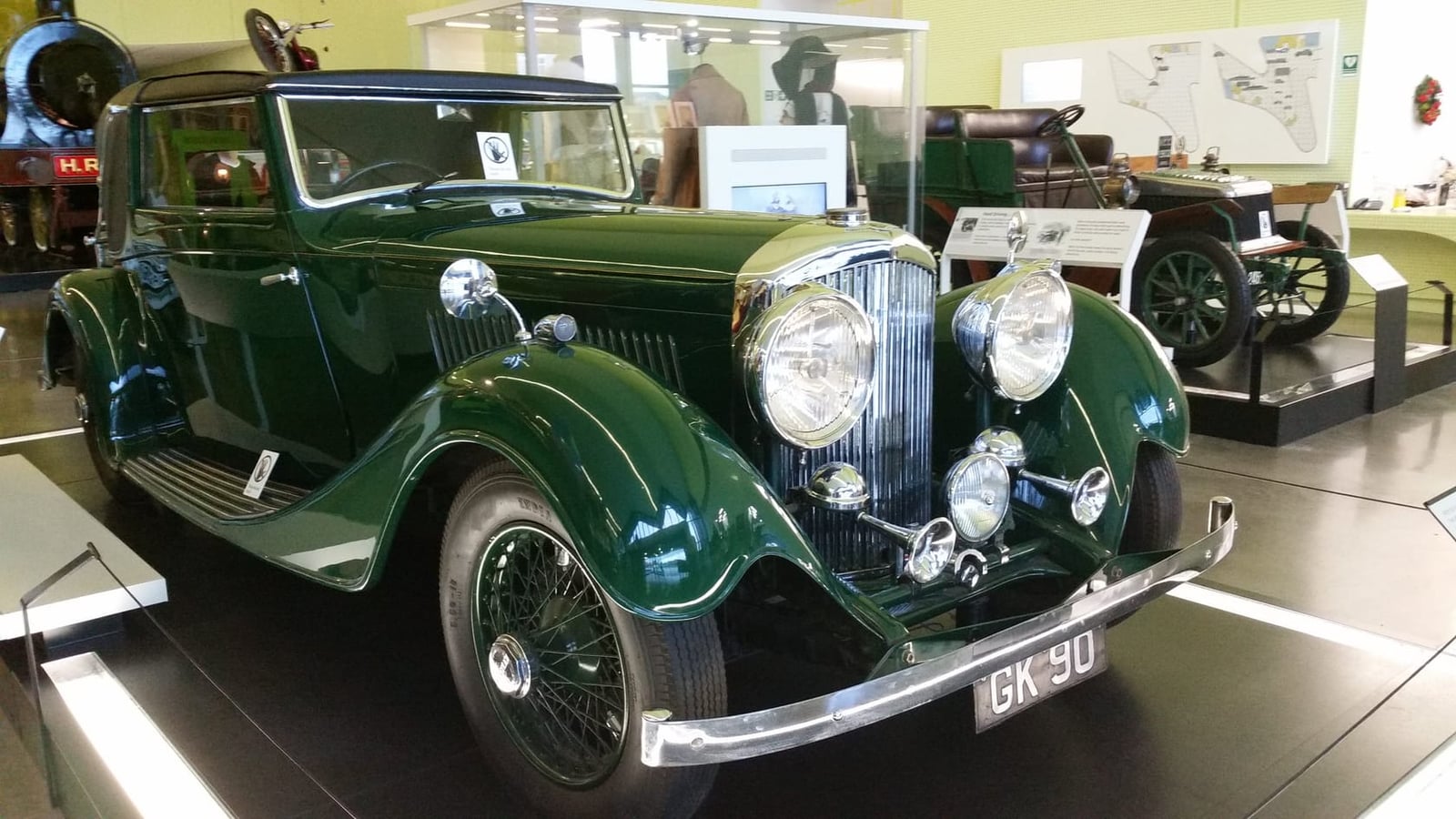
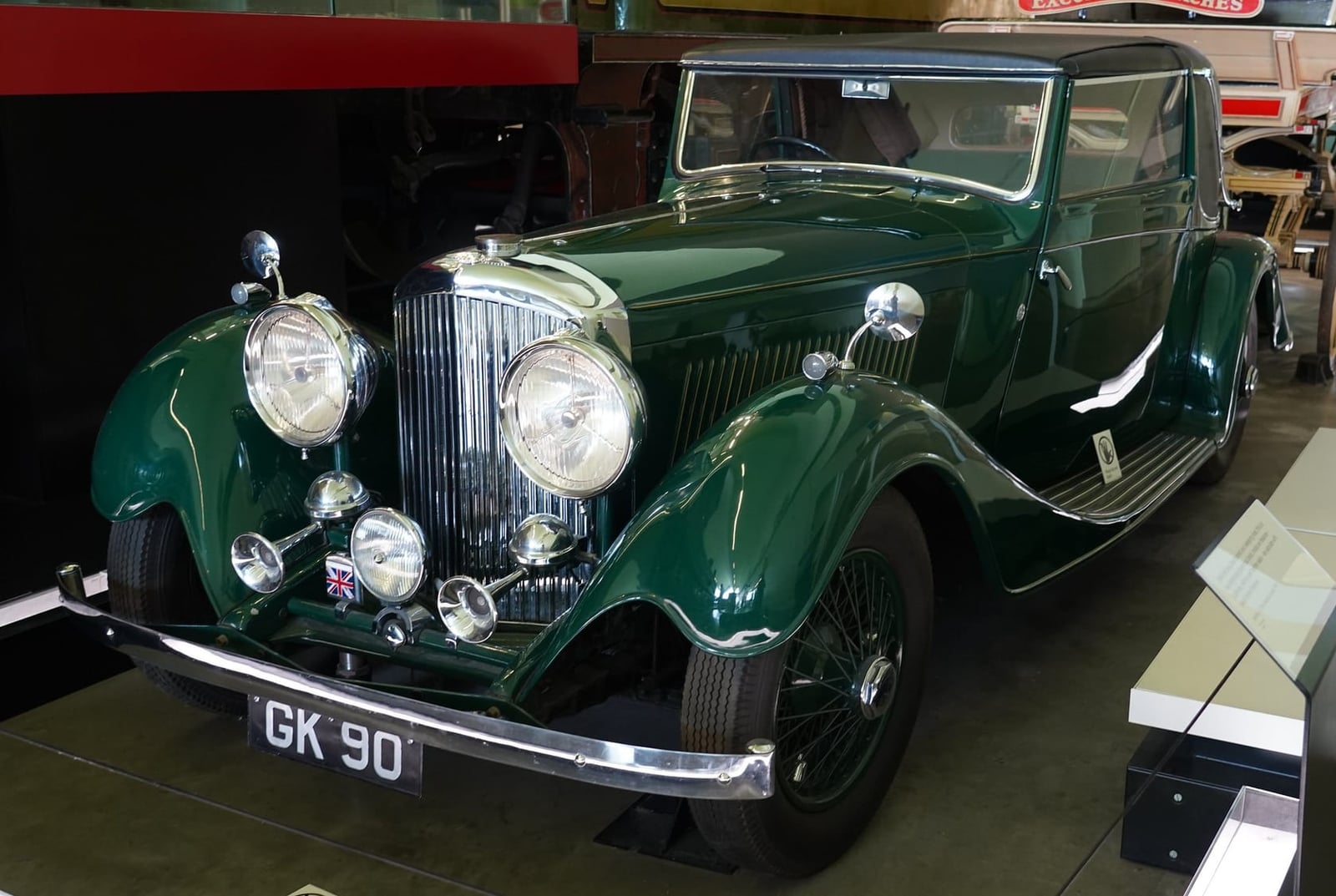
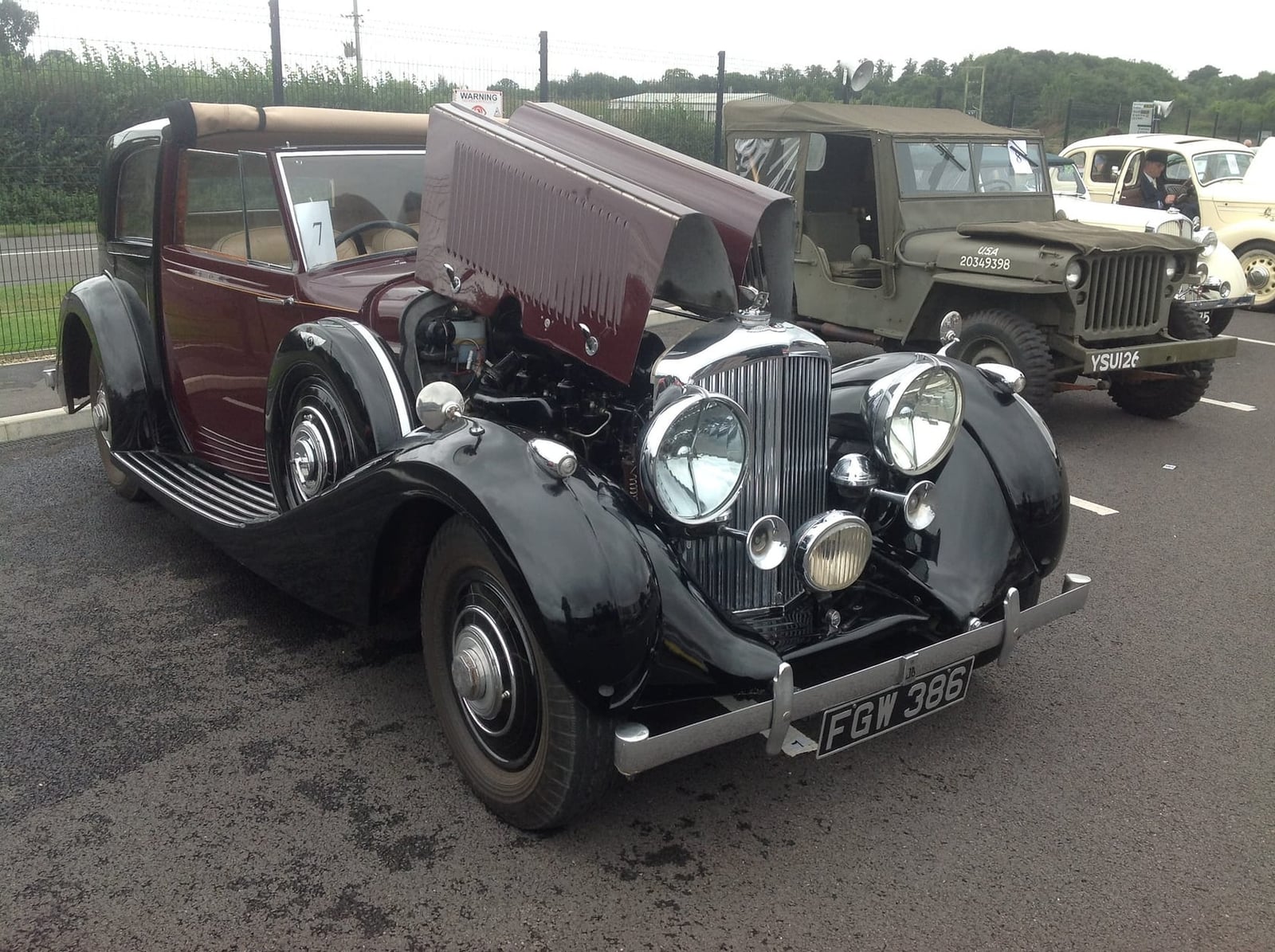
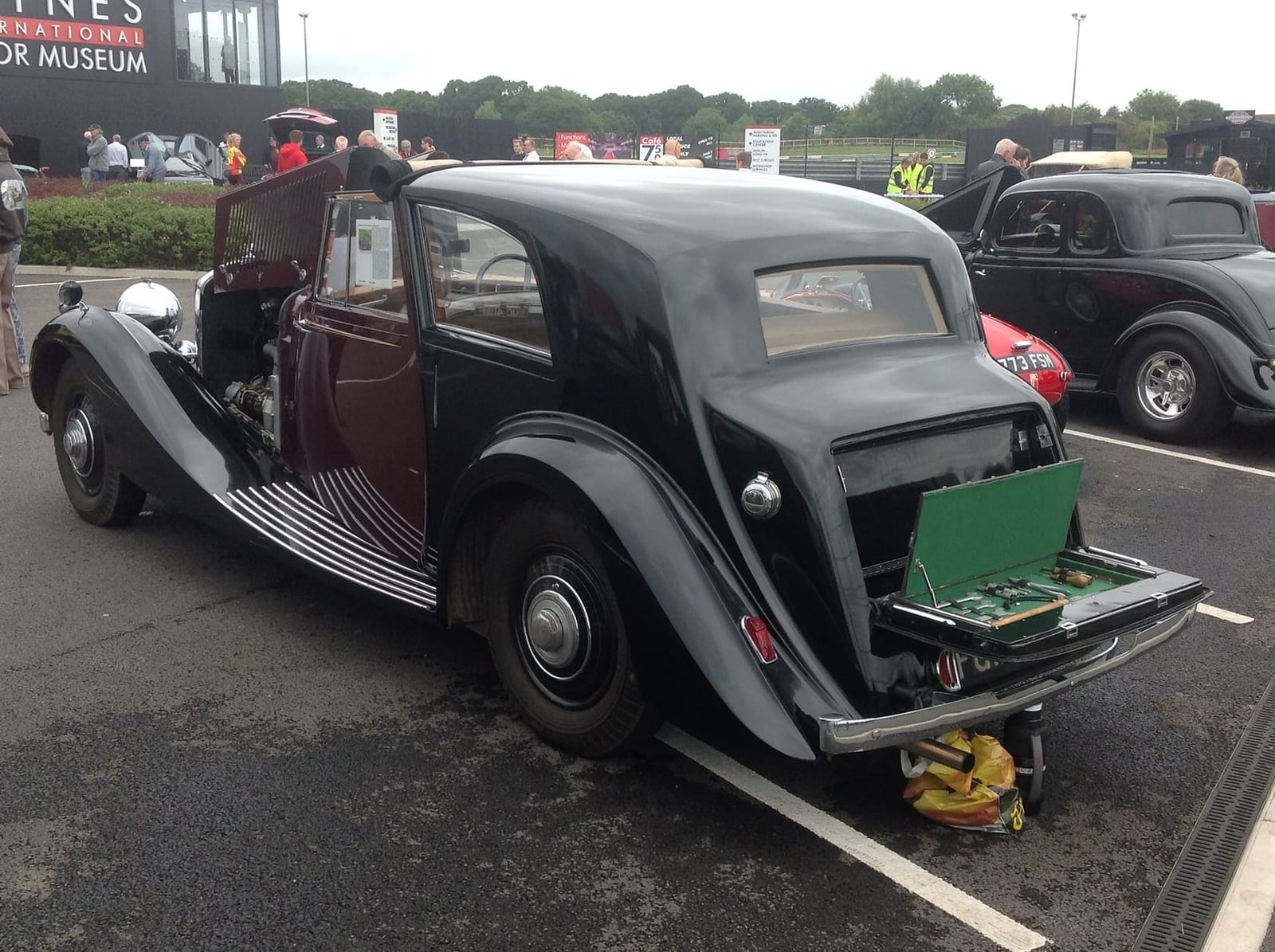
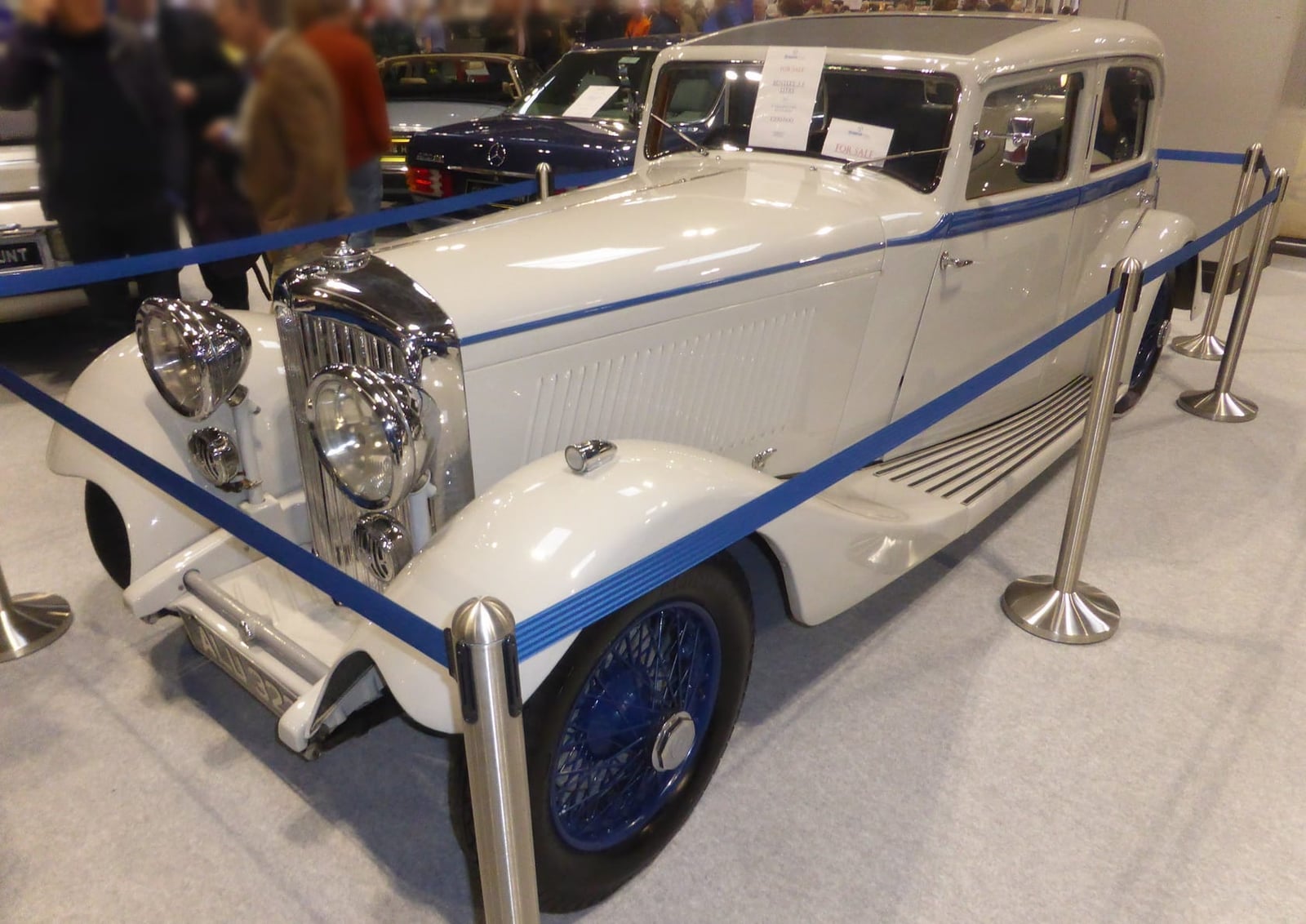
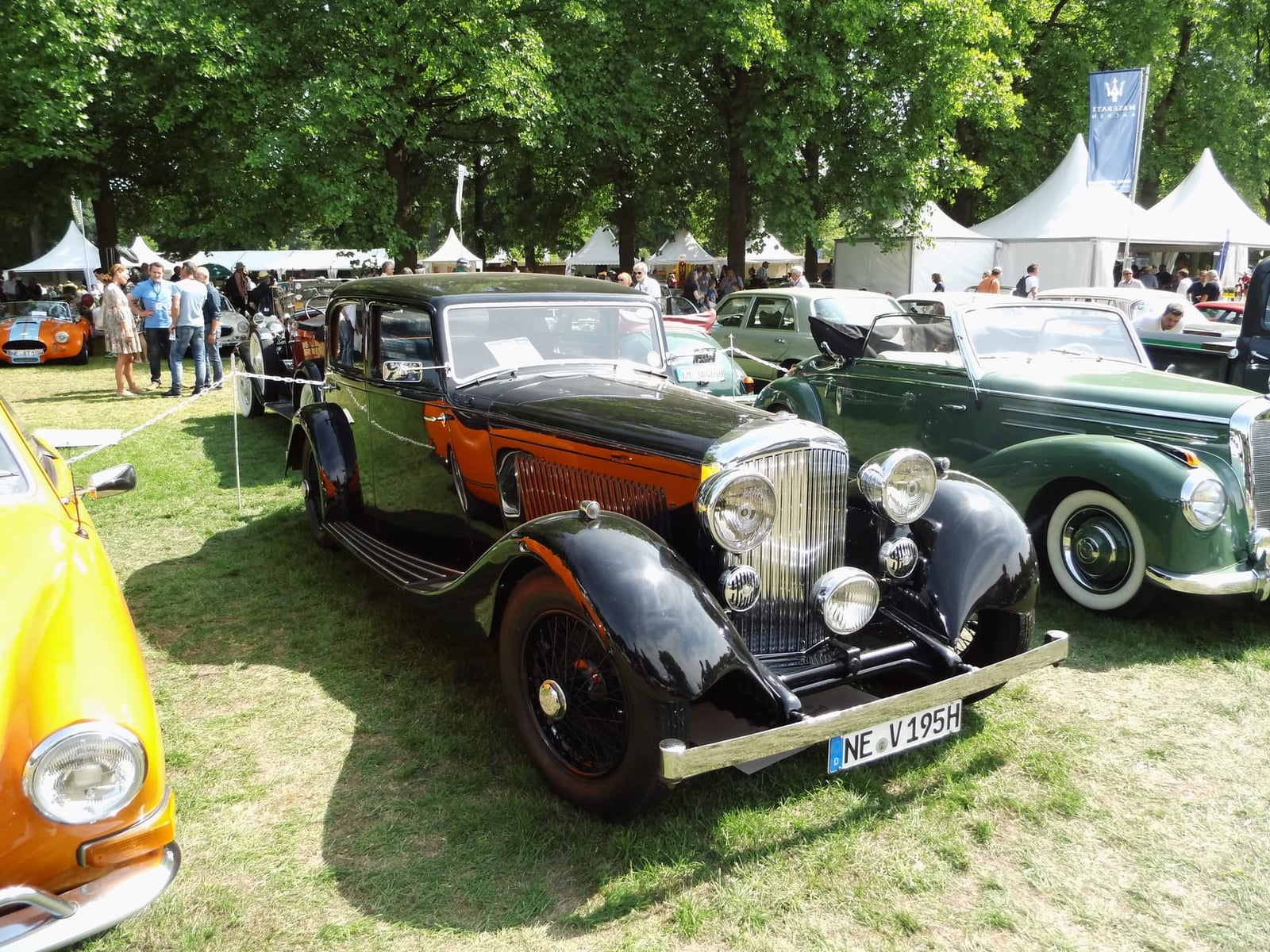
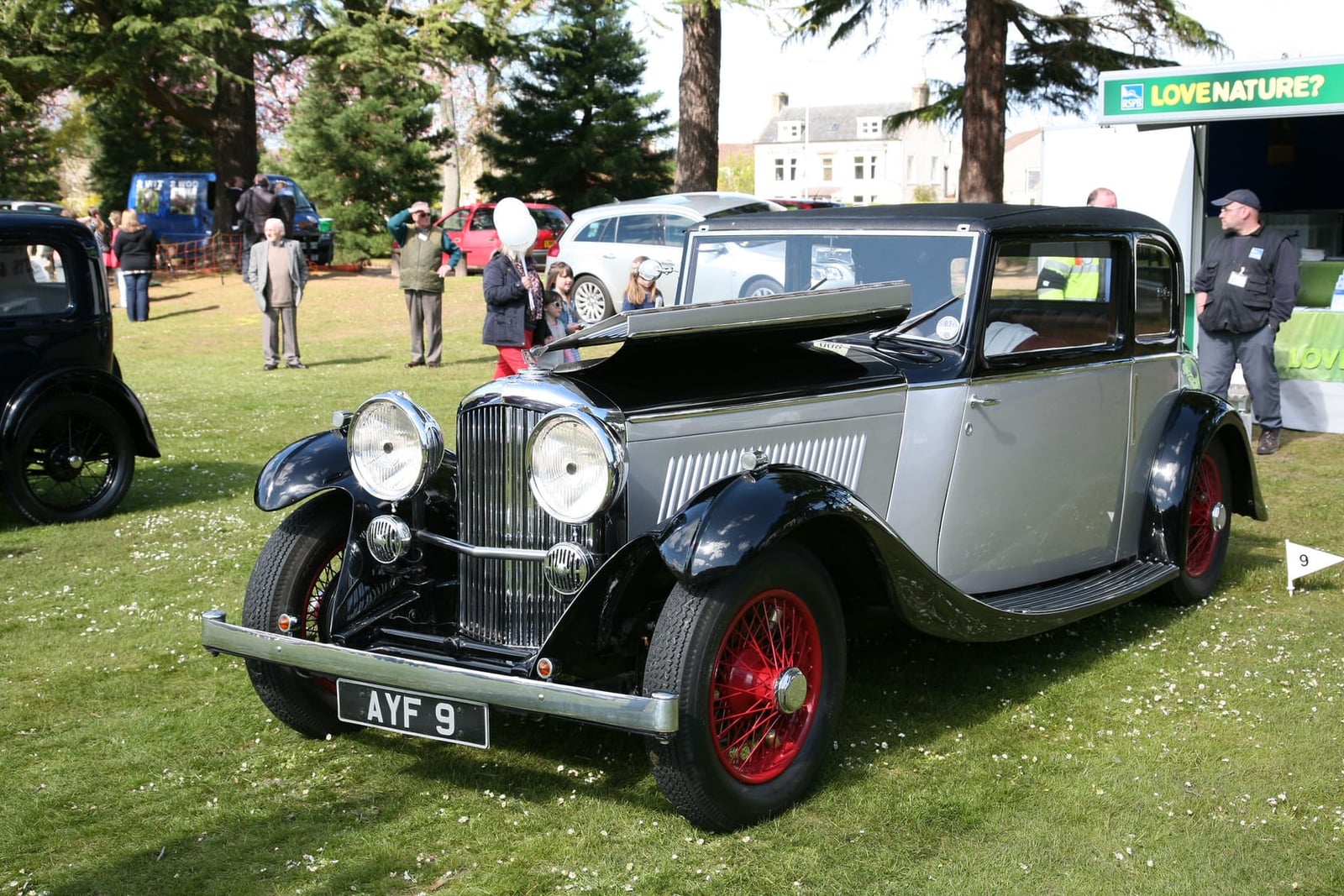
Park Ward’s sports saloon became the Derby uniform, clothing most of the 2,422 chassis in the crisp, slightly raked style the era’s photographs remember, helped by the house’s pioneering all-steel framing on later cars, while Vanden Plas tourers, James Young broughams, Gurney Nutting sedancas and continental houses like Vanvooren supplied the exceptions that now lead the market. Production split almost evenly: 1,177 of the 3½ Litre through 1936, then 1,245 of the enlarged 4¼ as coachwork weight demanded more engine. The final M-series cars of 1939–40 added overdrive and deeper refinement as war closed the line. Every body was an order; the variety is the collecting joy, and the coachwork’s condition is the market’s first question.
The Embiricos miracle
One commission previewed the future: in 1938 Greek racing driver André Embiricos had Pourtout of Paris rebody a 4¼ to Georges Paulin’s aerodynamic design, producing a streamlined coupe that averaged more than 100 mph for an hour at Brooklands, then ran Le Mans three times after the war, a decade-early rehearsal of the R Type Continental’s whole idea from the Mk VI era to come. The car survives, celebrated as among the most significant one-off Bentleys ever built, and its shadow flatters every Derby car at auction.

What a Derby Bentley is like to drive
The Derby cars drive like their tagline: the six delivers smooth, elastic urge with a discreet sporting edge, the gearbox rewards unhurried precision, and the chassis steers with an accuracy and balance that period drivers called the best of the age, a verdict modern owners routinely echo after the first fast B-road. Ninety arrives without drama, an easy seventy holds all day on modern roads, and the vintage cars’ physical theatre is exchanged for a fluency that makes these the pre-war Bentleys people actually use. The touring calendar proves it every season.

Buying a Derby Bentley today
The disciplines are pre-war standard: coachwork structure first, ash frames want expert eyes and restoration outruns values on all but the finest cars, then chassis and engine numbers checked against the factory records, which document the era thoroughly car by car, and mechanical history established with the marque specialists, who know most survivors by registration. Overdrive M-series cars carry usability premiums; dropheads and tourers lead values; standard sports saloons offer the era’s engineering at its gentlest money. The Silent Sports Car Club and the Bentley Drivers Club hold the knowledge and the community, both generous with each.
Running a Derby today
The Derby cars make unusually usable pre-war machines: parts supply through the specialist network is strong, the tuned Rolls engineering tolerates regular road use gladly, and the M-series overdrive cars in particular cruise at modern A-road pace without strain, which is why the model fills the entry lists of pre-war tours. The ash- framed coachwork is the maintenance centre of gravity, wanting dry storage and periodic expert attention more than any mechanical component does, and a car with a recent structural bill of health is worth every premium it asks. Budget for imperial thirst, unhurried servicing and the clubs’ subscriptions, and the ownership experience costs less per year than the radiator implies; the companionship of the Bentley Drivers Club events, which mix Cricklewood thunder with Derby silence happily, comes free.
Where the Derby cars sit in the market
Against the vintage cars’ millions the Derby era offers the finest driving of the pre-war marque at a fraction of the money, which is why the knowing quietly call it the best buy in the whole winged-B story. The 4.25 Litre commands about a quarter more than the 3.5, and Vanden Plas coachwork roughly doubles either. The full record, 264 recorded sales and the steepest real-terms fall of any pre-war car on this site, is on the page covering what a Derby Bentley sells for.
More photos
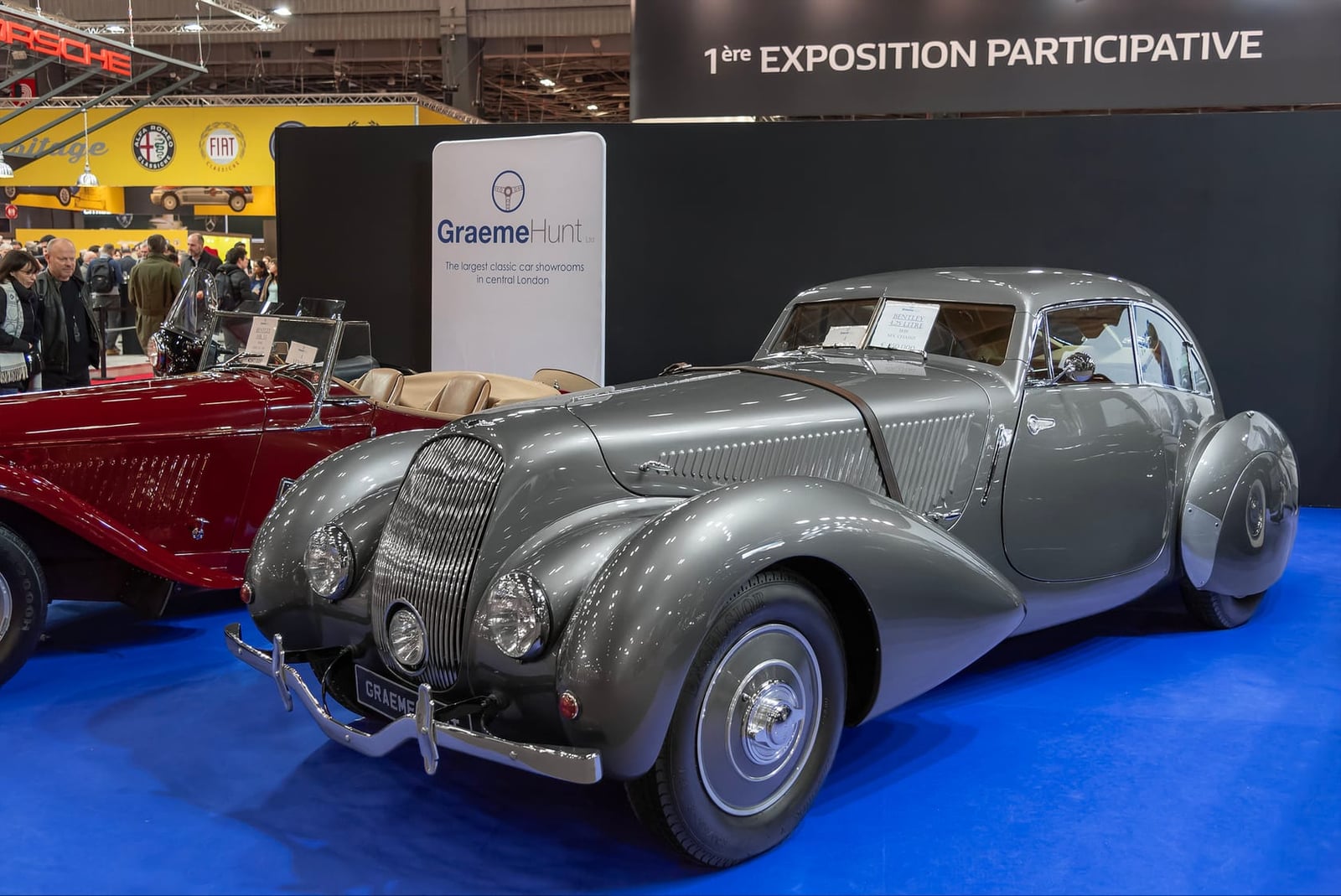
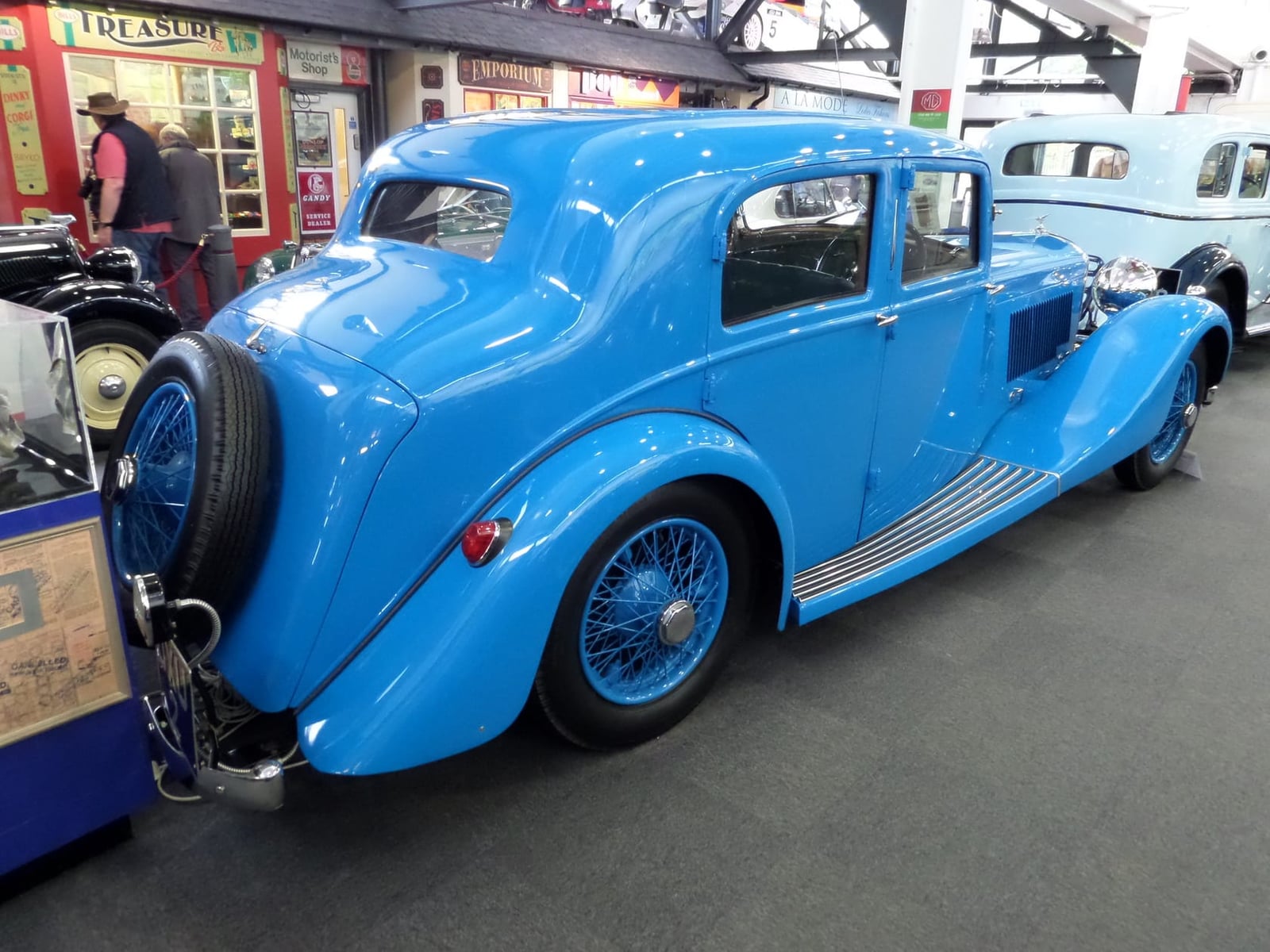
Derby (3½ / 4¼): the short history
- 1933The 3½ Litre arrives as the silent sports car: the Rolls-Royce 20/25 six with raised compression, twin SUs and a sportier camshaft in a lower, higher-geared chassis.
- 1936The enlarged 4¼ Litre keeps the promise as coachwork gains weight.
- 1938André Embiricos has Pourtout rebody a 4¼ to Georges Paulin's aerodynamic design; the streamliner averages over 100 mph for an hour at Brooklands.
- 1939The final M-series cars add overdrive and deeper refinement.
- 1940War closes the line at 2,422 cars: 1,177 of the 3½ Litre and 1,245 of the 4¼.
The Derby (3½ / 4¼) viewing checklist
Coachwork first
- Ash frames want expert eyes, and structural condition is the market's first question
- Restoration outruns values on all but the finest cars
- A car with a recent structural bill of health is worth every premium it asks
- Park Ward's later all-steel framing behaves differently from earlier ash construction
Records and identity
- Chassis and engine numbers checked against the factory records, which document the era thoroughly
- The marque specialists know most survivors by registration
- Every body was an order, so no two cars are directly comparable
- Vanden Plas coachwork roughly doubles the price of either engine size
Specification
- 3,669cc and 4,257cc cars split production almost evenly; the larger commands about a quarter more
- Overdrive M-series cars carry a usability premium worth paying
- Dropheads and tourers lead values; standard sports saloons are the gentlest money
- The Silent Sports Car Club and the Bentley Drivers Club hold the knowledge and the community
What the Derby Bentley sells for at auction
In 2025 the median Derby Bentley sold for £40,719 across 16 sales, 31% down on 2024. In real terms, typical Derby Bentley prices were down about 77% over the five years to 2025, once inflation is accounted for.
| Variant | Sold | Typical range | Median |
|---|---|---|---|
| 4.25 Litre | 92 | £42,140 - £135,750 | £73,938 |
| 3.5 Litre | 86 | £41,025 - £100,426 | £58,933 |
| 4.25 Litre Park Ward | 18 | £34,469 - £86,070 | £61,022 |
| 4.25 Litre Vanden Plas | 13 | £95,625 - £138,000 | £122,010 |
| 3.5 Litre Park Ward | 12 | £43,738 - £79,402 | £56,973 |
| 3.5 Litre Vanden Plas | 7 | £65,312 - £198,125 | £112,615 |
Show the year-by-year mediansHide the year-by-year medians
| Year | Sold | Median | In 2025 money |
|---|---|---|---|
| 2026 (so far) | 7 | £57,500 | |
| 2025 | 16 | £40,719 | £40,719 |
| 2024 | 21 | £59,218 | £61,490 |
| 2023 | 9 | £97,875 | £105,029 |
| 2022 | 12 | £121,750 | £139,432 |
| 2021 | 13 | £81,000 | £100,161 |
| 2020 | 5 | £141,131 | £178,844 |
| 2019 | 10 | £122,455 | £156,761 |
| 2018 | 10 | £143,986 | £187,454 |
| 2017 | 17 | £131,600 | £175,297 |
| 2016 | 14 | £85,480 | £116,794 |
| 2015 | 18 | £94,312 | £130,151 |
| 2014 | 7 | £85,500 | £118,464 |
| 2013 | 15 | £74,300 | £104,413 |
| 2012 | 23 | £57,500 | £82,656 |
| 2011 | 12 | £83,820 | £123,582 |
| 2010 | 10 | £76,588 | £117,305 |
| 2009 | 10 | £84,227 | £132,234 |
| 2008 | 4 | £44,300 | £70,921 |
| 2007 | 3 | £39,375 | £65,231 |
| 2006 | 10 | £36,844 | £62,463 |
| 2005 | 10 | £31,922 | £55,482 |
| 2004 | 5 | £48,250 | £85,585 |
- £73,1254.25 Litre
- £64,6084.25 Litre
- £50,6253.5 Litre Park Ward
- £57,5004.25 Litre
- £73,9143.5 Litre Park Ward
Strong evidence. 264 recorded sales and a dozen or more a year: the median and the range are well founded. Based on 264 sold results from public classic car auctions (1998 to 10 August 2026). Sold prices, not asking prices, and not a valuation: condition, history and specification vary from car to car. Inflation-adjusted figures use the ONS CPIH index, in 2025 money.
Frequently asked questions
What is a Derby Bentley?
How is a Derby Bentley different from a Rolls-Royce 20/25?
What was the Embiricos Bentley?
Which coachbuilders bodied the Derby Bentleys?
How much does a Derby Bentley sell for?
What is the most expensive Derby Bentley ever sold at auction?
How often does a Derby Bentley come up for sale?
Related across themes
More from Bentley

Bentley Mk VI and R Type: the first complete Bentley, and the fastest four-seater on earth (1946–1955)

Bentley S-series: the quiet twin with the beautiful secrets (1955–1965)

Bentley Turbo R: the blown Bentley that saved the badge (1985–1999)

The vintage Bentleys: 3 Litre to Blower, the cars of the Bentley Boys (1921–1931)
Recently added

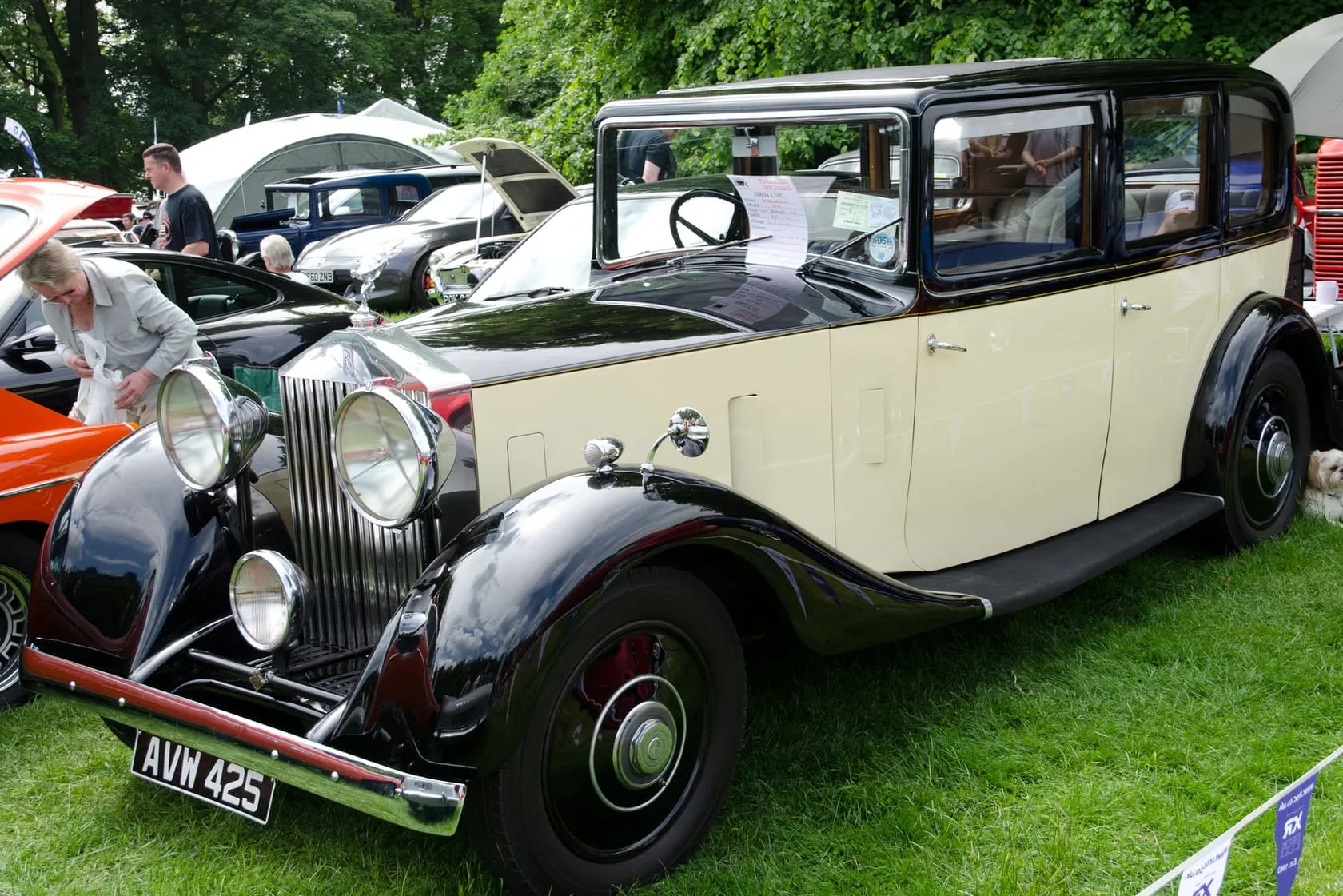
Rolls-Royce 20/25 and the small-horsepower cars: grandeur for the merely wealthy (1922–1939)

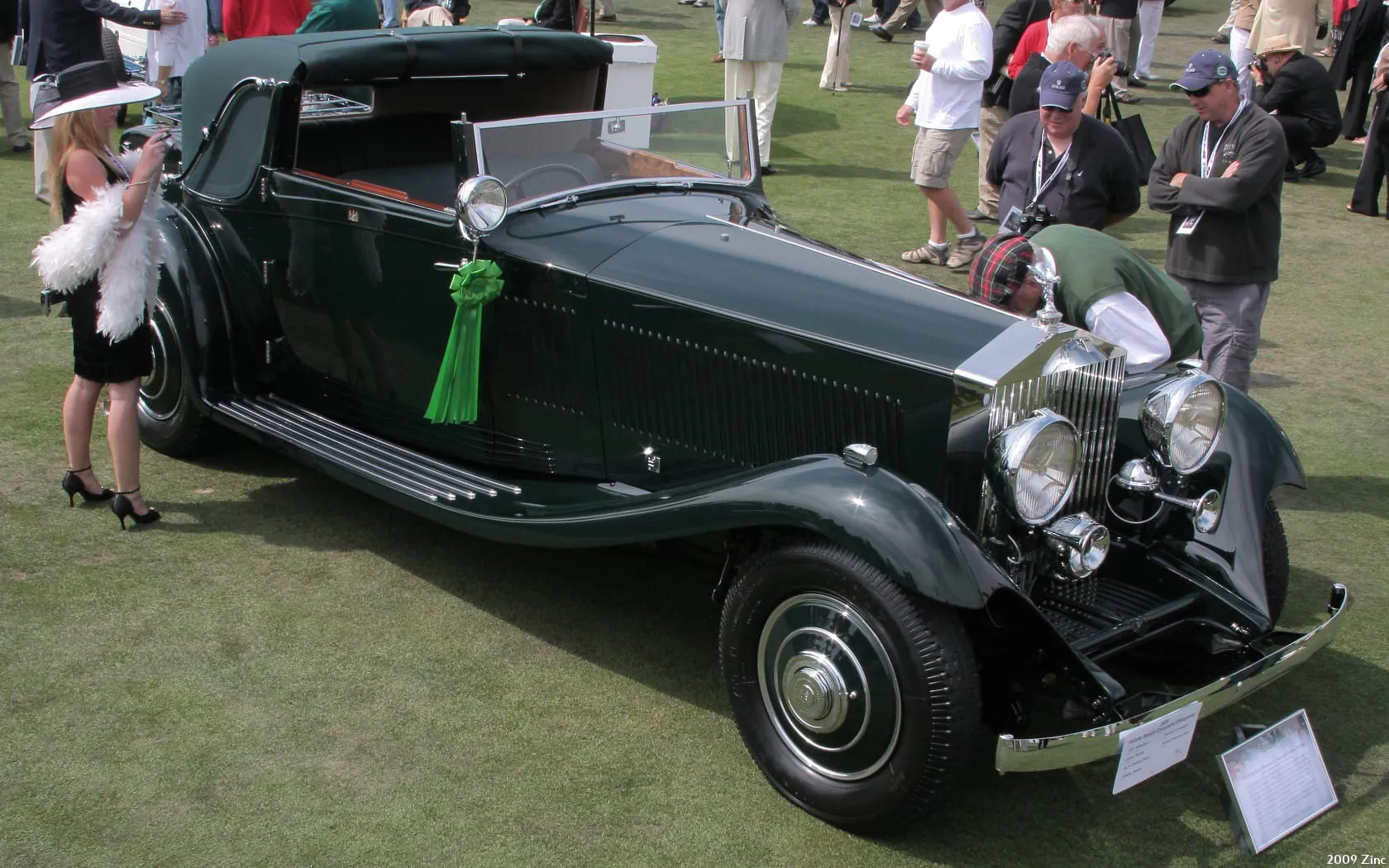
Rolls-Royce Phantom I, II and III: the coachbuilt age at full majesty (1925–1939)

Rolls-Royce Silver Ghost: the car that invented the best car in the world (1906–1925)
