Peel P50: the smallest production car ever made
The Peel P50 is the smallest production car ever made, a single-seat three-wheeler built on the Isle of Man in the early 1960s with a 49cc engine and no reverse gear. Its history, what it is like to use, the modern revival, and why genuine originals are now five-figure collectors' cars.
Built 1962–1965 5 recorded sales

At a glance
- Years
- 1962–1965
- Body styles
- Single-seat, three-wheel coupe
- Drivetrain
- Single driven rear wheel
- Engines
- 49cc DKW single-cylinder two-stroke
- Power
- A little over 4 hp
- Top speed
- About 38 mph
- Production
- Around 47 originals built
- Assembly
- Peel, Isle of Man
- UK survivors
- Fewer than 30 originals survive
- Values
- Genuine 1960s originals are five-figure cars; modern reproductions a few thousand to mid-teens
- Weight
- About 59 kg, less than the driver
- Notable
- Smallest production car ever made; no reverse gear (turn it by hand)
The cars
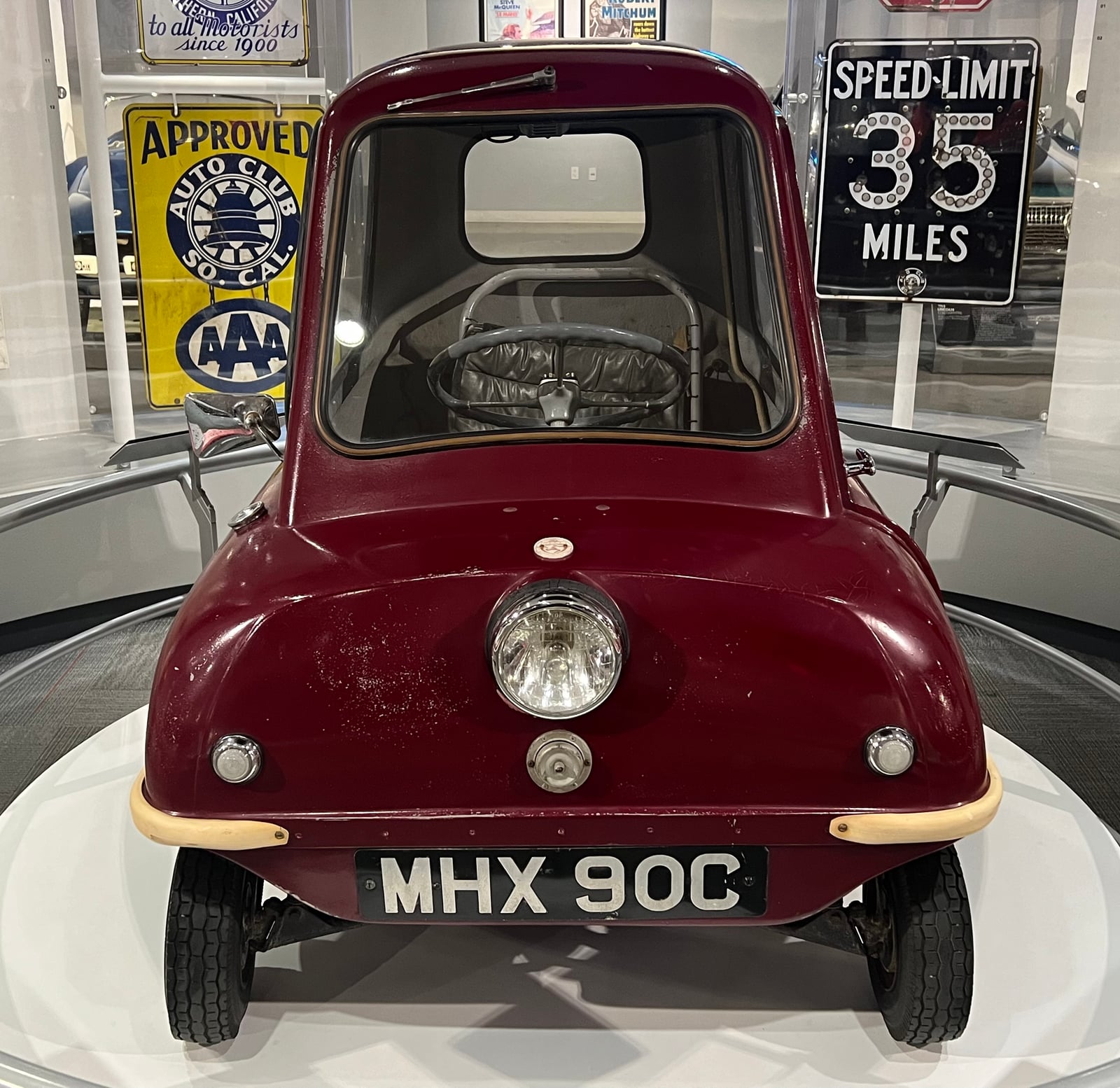
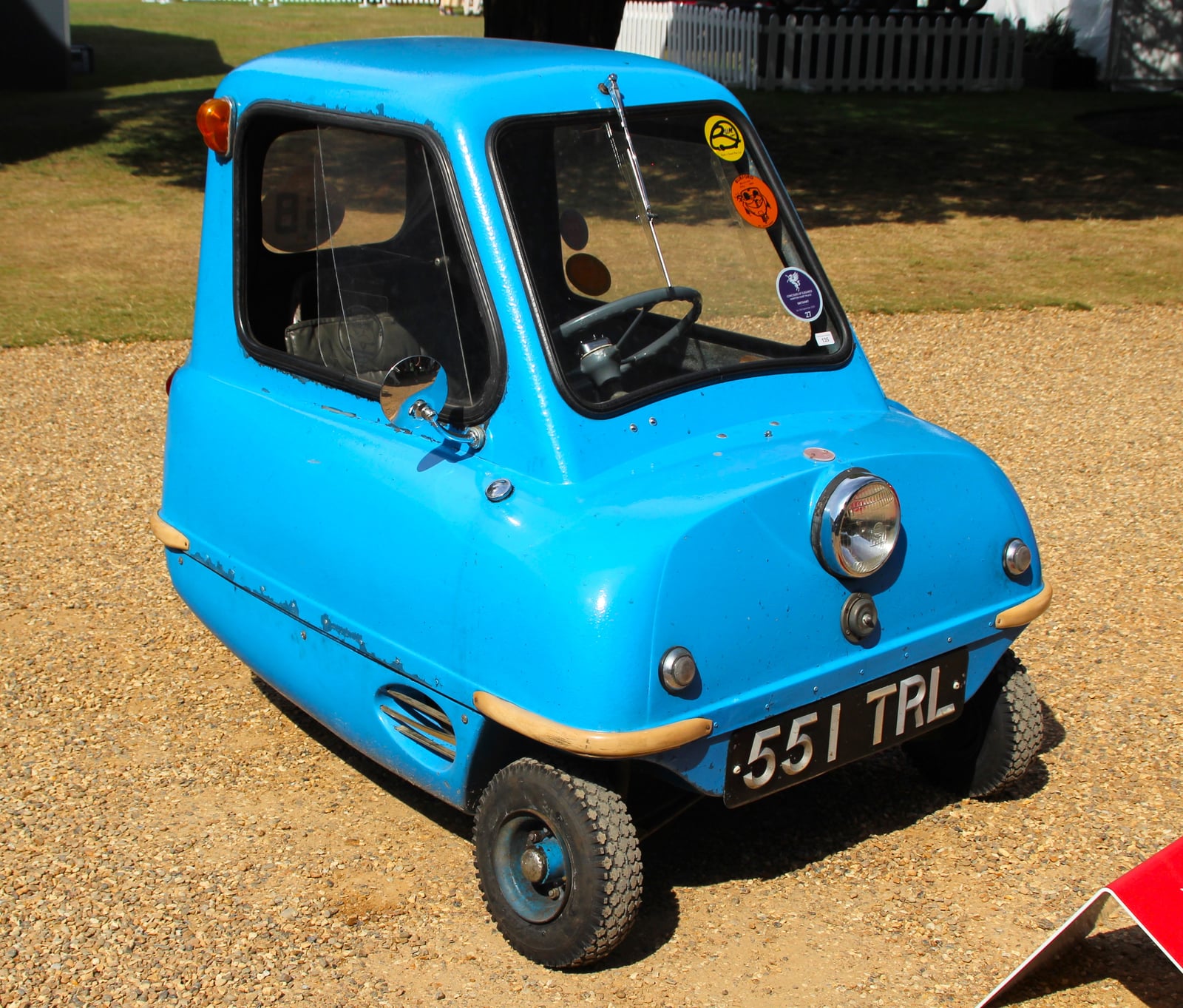
Almost everything about the Peel P50 sounds like a joke until you realise the company meant all of it seriously. It is the smallest production car ever made: a single-seat, three-wheeled car a little over four feet long, with a 49cc engine, a single door, a single windscreen wiper, and no reverse gear. It was built to carry one person and a shopping bag, and it holds a Guinness World Record that no car has beaten in sixty years.
It is also, now, one of the most valuable small classics in Britain, a car that was sold for pocket money when new and that a genuine original example will not change hands for under five figures today.
A car from the Isle of Man
The P50 was built by the Peel Engineering Company in Peel, on the Isle of Man, a firm that made fibreglass boats and motorcycle fairings and saw the microcar boom of the late 1950s as a way into vehicles. The P50 was shown in 1962 and built between then and 1965. Production was tiny: around 47 cars were made in total, and fewer than 30 are thought to survive.
The thinking behind it was the same austerity logic that produced every British microcar. A 49cc engine cost almost nothing to run and to tax, a single seat was all a commuter needed, and three wheels kept the car in the cheaper licensing category. Peel simply pushed that logic further than anyone else, stripping the idea down until almost nothing was left. The result was a car 137cm long and 99cm wide that weighed about 59kg, less than the person driving it.
What it actually is
The mechanical specification is as minimal as the size suggests. A single-cylinder 49cc DKW two-stroke engine sits beside the driver, producing a little over four horsepower and driving the single rear wheel through a three-speed gearbox. There is no reverse. Top speed is about 38 mph, which the car reaches slowly and holds nervously.
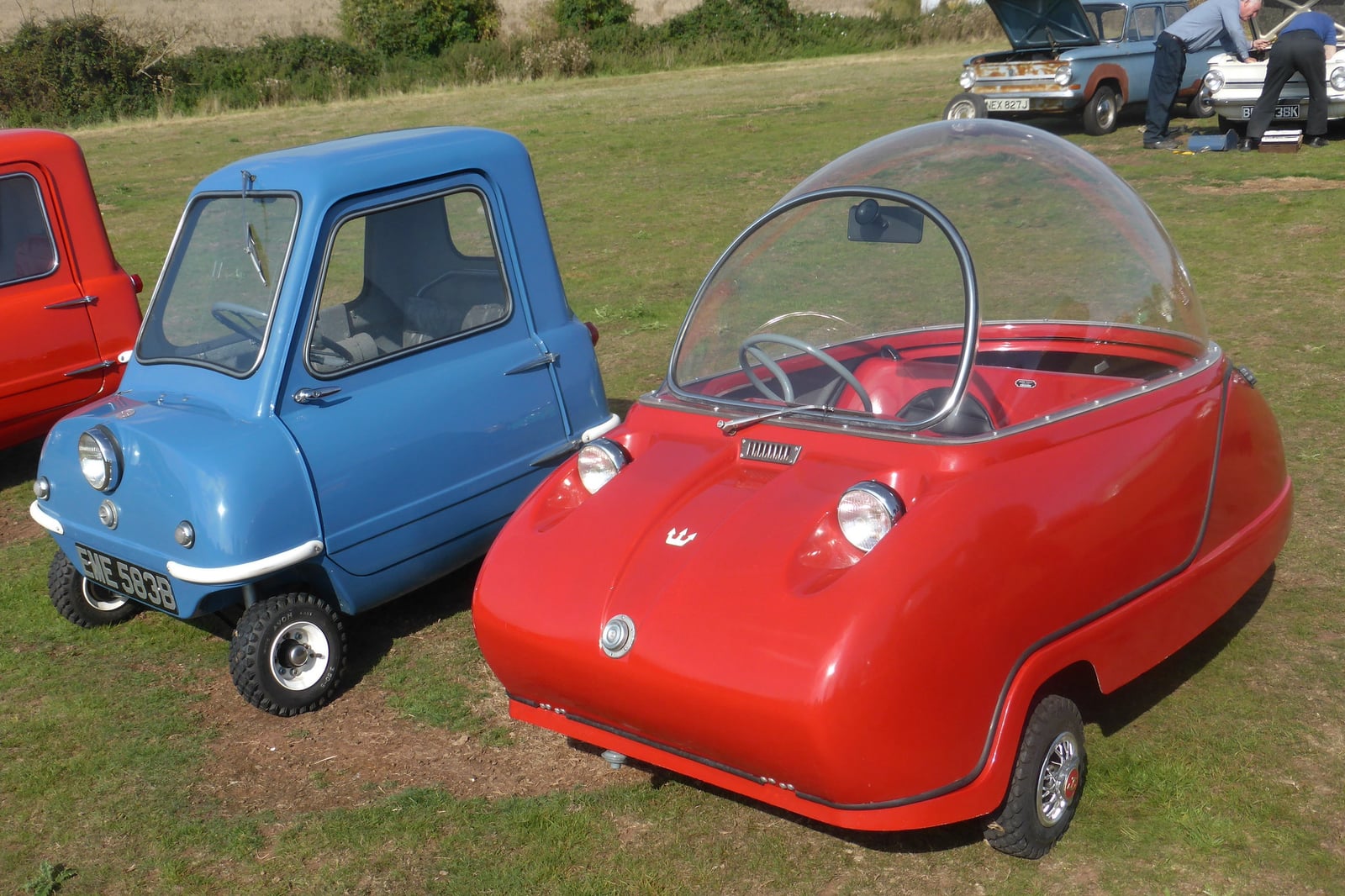
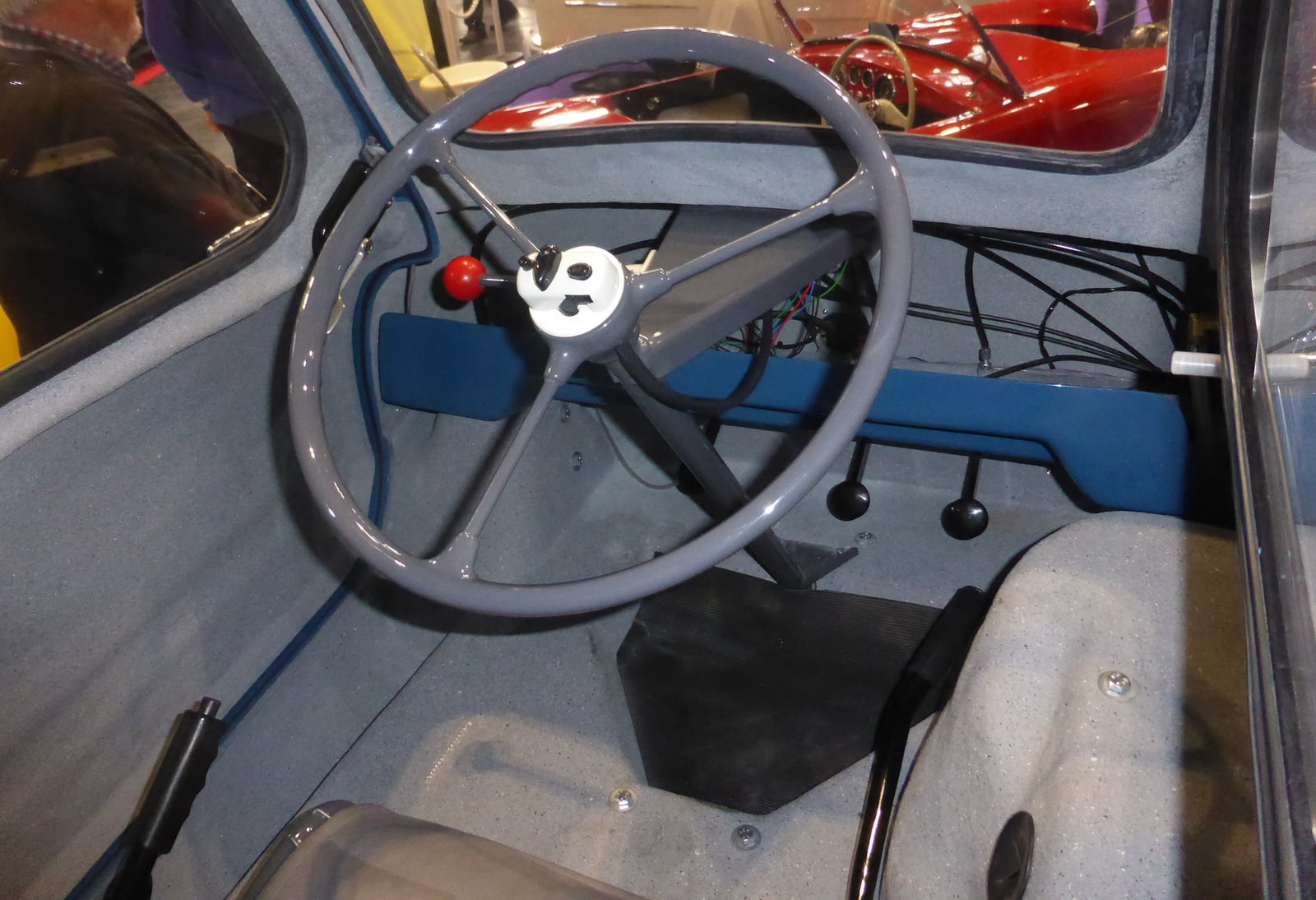
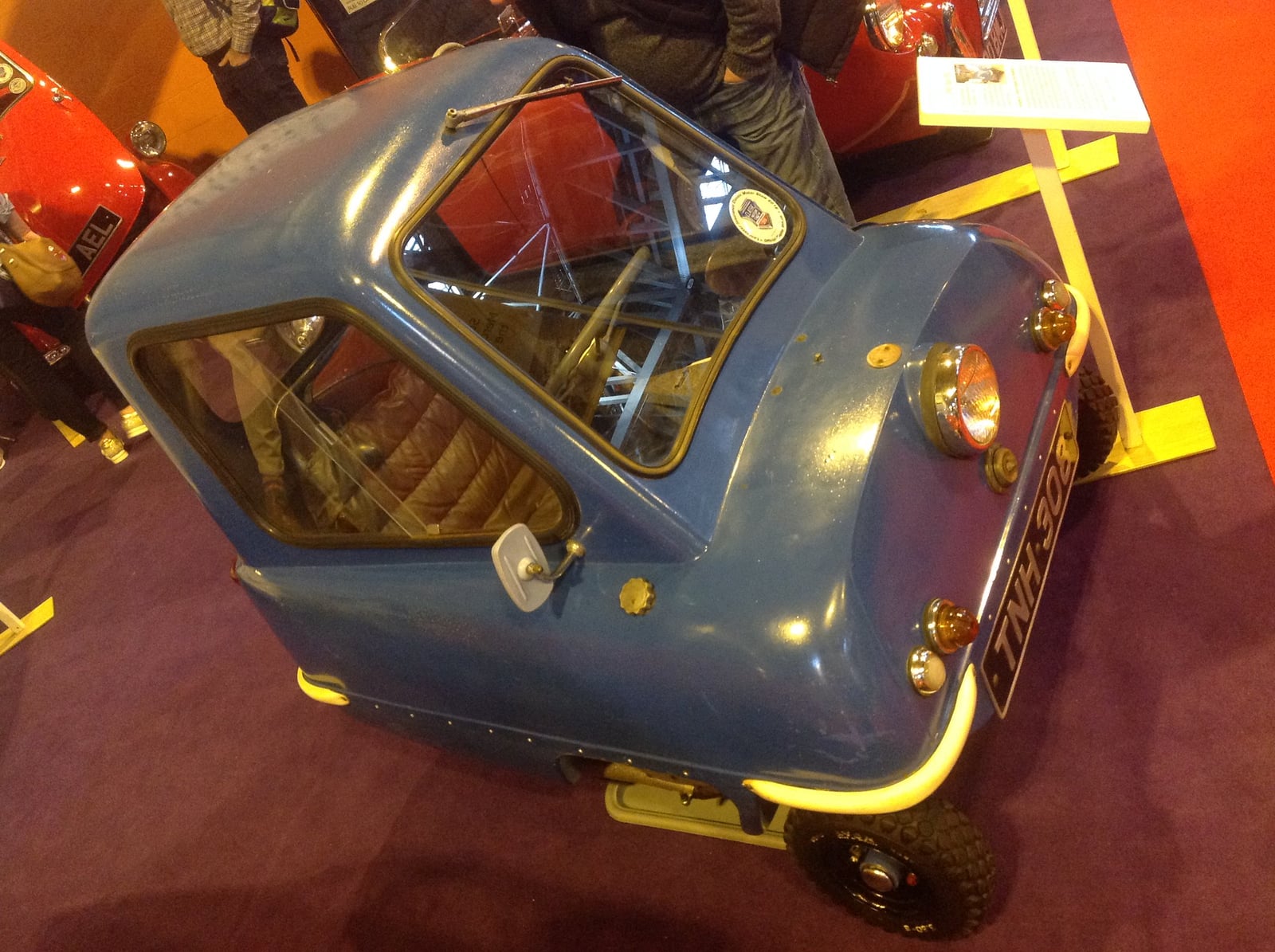
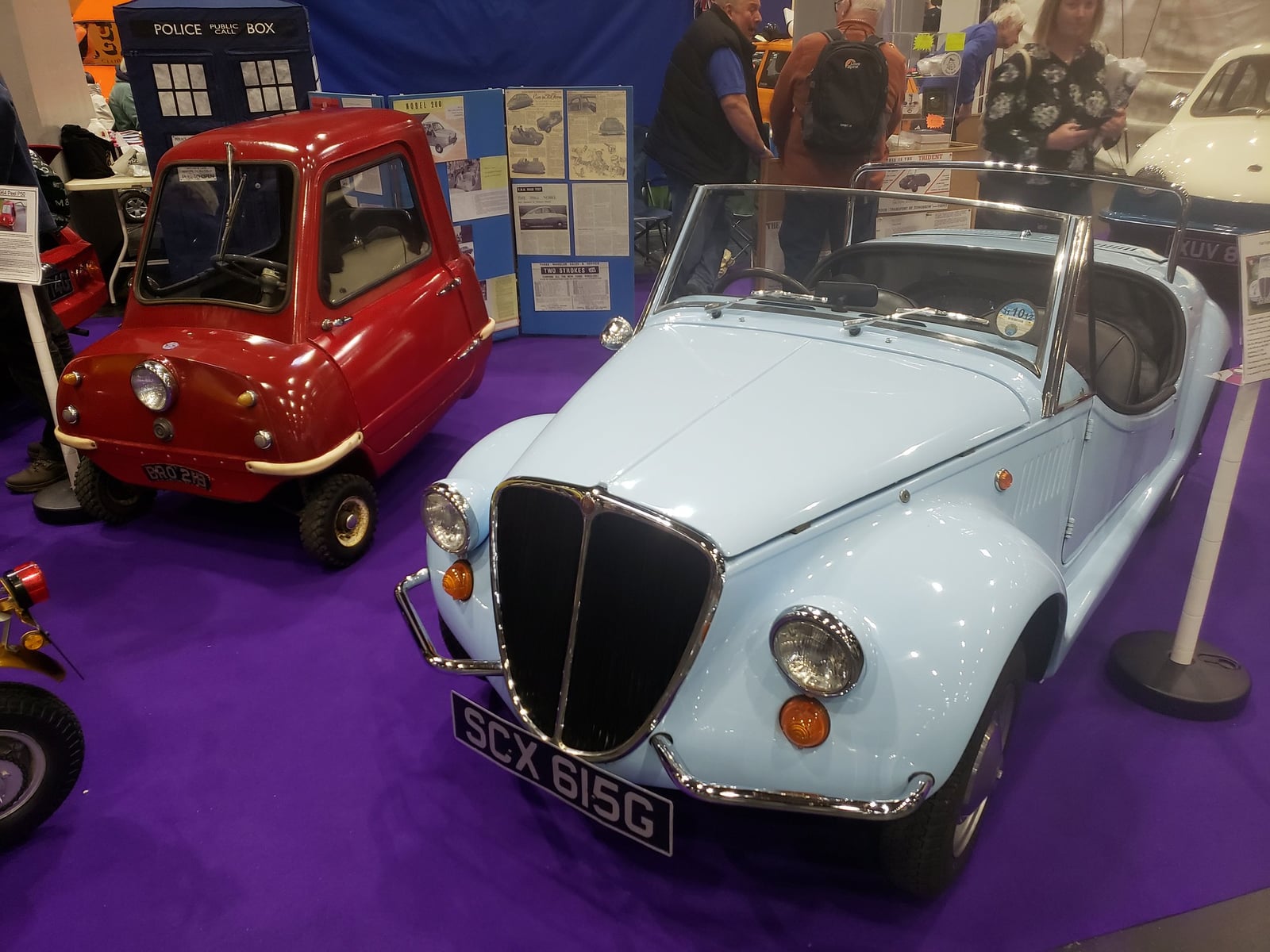
The body is a one-piece fibreglass shell with a single door on the left, one wiper, one headlamp, and a chrome handle on the back. That handle is the famous part: with no reverse gear, the driver gets out, lifts the back of the car, and turns the whole thing around by hand, which is possible precisely because the car weighs so little. It is the detail that has made the P50 a television favourite, most memorably when it was driven through the corridors of the BBC for a motoring programme.
A sister model, the Peel Trident, added a clear bubble canopy and a second seat, but the P50 is the one that holds the record and the one the name now means.

What it is like to use
A P50 is not transport in any normal sense; it is an experience. There is room for one adult and very little else, the ride is bouncy, the engine is loud and slow, and the car is so small that other traffic struggles to see it. On a quiet lane at gentle speed it is genuinely charming, darting and tiny and unlike anything else, and it returns extraordinary fuel economy. On a fast or busy road it is out of its depth and best avoided.
For an owner the appeal is not the driving but the object. A P50 will draw a larger crowd at a show than cars worth twenty times as much. It stores in the corner of a normal garage, or arguably in a hallway. And it is mechanically about as simple as a powered vehicle can be, which makes it easy to keep running for anyone prepared to deal with the quirks of a small two-stroke.

Originals, and the modern revival
The most important thing to understand before buying is the difference between an original and a reproduction. The 47 cars built in the 1960s are the genuine article and are valued accordingly. From 2010 a separate revived company began building new P50s to the original design, in both petrol and electric form, and these new-build cars are sold to this day.
A new reproduction is a fun and usable thing bought for a few thousand to the mid-teens of thousands of pounds, which is where any sensible Peel P50 price conversation starts. A genuine 1960s original is a rare historic vehicle worth far more, and the best have sold for very large sums indeed. The two are easy to confuse and very different in value, so provenance and build date are the first things to establish on any P50 offered for sale.
Where the P50 sits
The Peel P50 is the purest expression of the British microcar idea, the point at which the logic of small, cheap, and economical was taken as far as it could possibly go. It belongs to the same brief, strange moment as the bubble cars and the other British microcars of its day, and it is the one that outlasted all of them in fame if not in numbers. For the other side of the British three-wheeler story, the deliberately fun rather than the austere, see the Bond Bug.
The Peel P50 in dates
- 1962Peel Engineering of the Isle of Man, makers of boats and fairings, shows the P50: 137cm long, 99cm wide, 59kg, with a 49cc DKW two-stroke and no reverse.
- 1964The Trident sister adds a bubble canopy and second seat; the P50 keeps the record.
- 1965Production ends at around 47 cars.
- 2007A drive through the BBC's corridors on a motoring programme makes it a television favourite.
- 2010A revived company begins building new P50s to the original design, petrol and electric, sold to this day.
Peel P50: what to check before you buy
Original or reproduction, first
- The 47 cars of the 1960s are the genuine article and valued accordingly
- Post-2010 reproductions are fun, usable and a fraction of the money
- Provenance and build date are the first things to establish
- The two are easy to confuse, which is exactly the risk
The object itself
- The one-piece fibreglass shell, for cracks and repairs
- The single door, wiper, headlamp and the famous chrome handle should all be present
- The 49cc two-stroke asks the quirks of any small two-stroke
- No reverse gear is correct: you lift the back and turn it by hand
Use and expectations
- Genuinely charming on a quiet lane at gentle speed
- Extraordinary fuel economy and near-zero storage needs
- The appeal is the object, not the driving
- The best originals have sold for very large sums, so insure accordingly
What the Peel P50 sells for at auction
The Peel P50 comes to auction only occasionally: 5 recorded sales since 2013, typically making between £50,118 and £108,936 . With so few sales, treat any single result as a data point rather than a market price.
- £50,118P50
- £45,000P50
- £108,936P50
- £123,144P50
- £77,969P50
Thin evidence. Only 5 recorded sales: read the figures as a sketch of the market, not a price. Based on 5 sold results from public classic car auctions (2013 to 10 August 2026). Sold prices, not asking prices, and not a valuation: condition, history and specification vary from car to car.
Related
The Peel P50 is one of Britain’s microcars and three-wheelers, the small and characterful end of the classic world. For the period it came from, see British classic cars of the 1960s.
More photos


Frequently asked questions
How many Peel P50s were made?
How much is a Peel P50 worth?
Does the Peel P50 have a reverse gear?
Is a Peel P50 road-legal in the UK?
What is the most expensive Peel P50 ever sold at auction?
How often does a Peel P50 come up for sale?
Related across themes
More from Microcars

Bond Bug: Reliant's tangerine three-wheeler (1970–1974)

Heinkel Kabine and Trojan 200: the bubble car Britain built in Croydon (1956–1965)

Messerschmitt KR200: tandem seats, a bubble canopy and the fighter-plane school of motoring (1955–1964)


